Process Notes

FLUX: Motu Mutatio

A garment patterned for zero gravity during my MFA, shelved for three years, and finished for a choreography film about movement and transformation.

June 2026

I ripped the pattern for this out of a 2022 MFA study on Halston's costumes for Martha Graham, specifically the Acts of Light pieces, where the costume becomes something the movement just passes through. Halston understood that a garment on a dancer is an entirely different object than one on a body standing still. The construction is identical, but the physics shift.


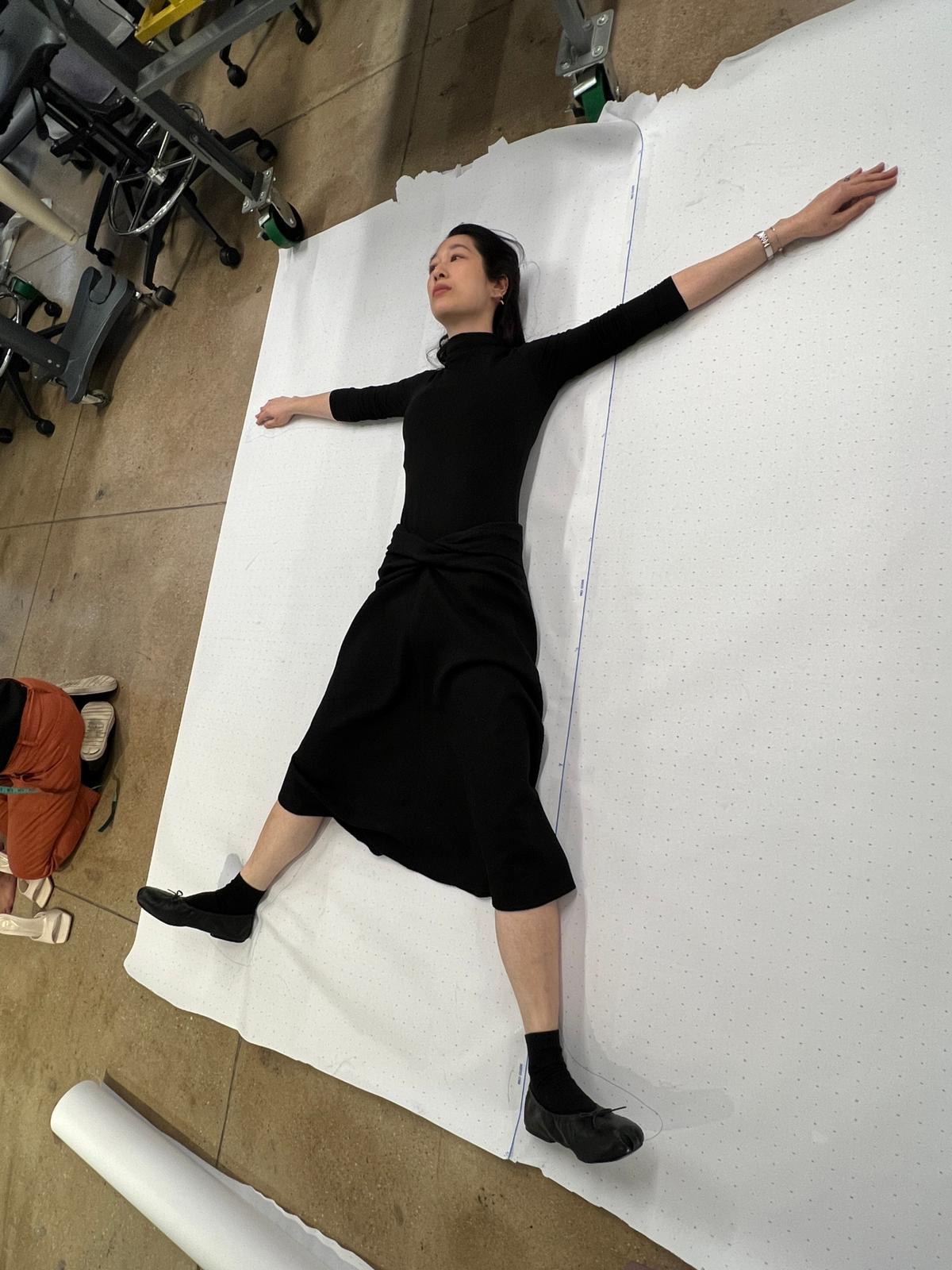
My goal was to translate that to zero gravity. I draped on myself, lying flat on pattern paper with arms extended to map the body's range of motion. The concept was a closed square with only the hands and feet exposed, a flat 2D shape that only becomes three-dimensional when the body moves inside it.


I shelved it for three years. Not because of construction, but because of vulnerability. Wearing something that body-revealing in a zero-g habitat, where you're already disoriented, felt like the wrong kind of exposure. It lacked psychological shelter. On a dancer, though, that absolute visibility is the entire point.
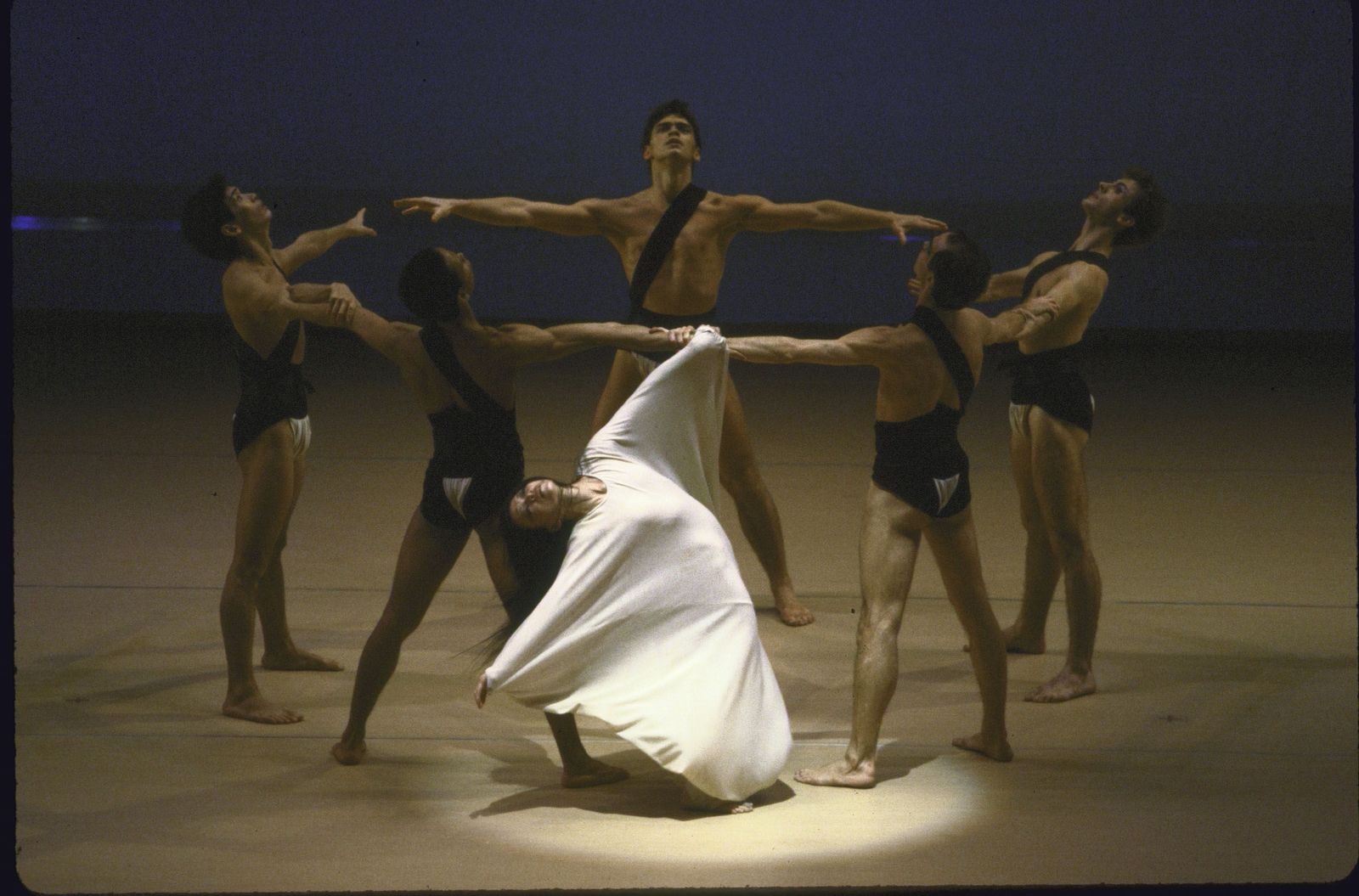
Martha Graham Dance Company performing Acts of Light with Yuriko Kimura, 1984. Costumes by Halston.

Martha Graham Dance Company performing Acts of Light with Yuriko Kimura, 1984. The costumes disappear into the choreography.

Photograph by Martha Swope. Billy Rose Theatre Division, The New York Public Library for the Performing Arts.

Deborah Won draping on herself during MFA, lying on pattern paper with arms extended

Draping on myself during my MFA, mapping the body's range on pattern paper. The garment starts from this posture.

Deborah Won.

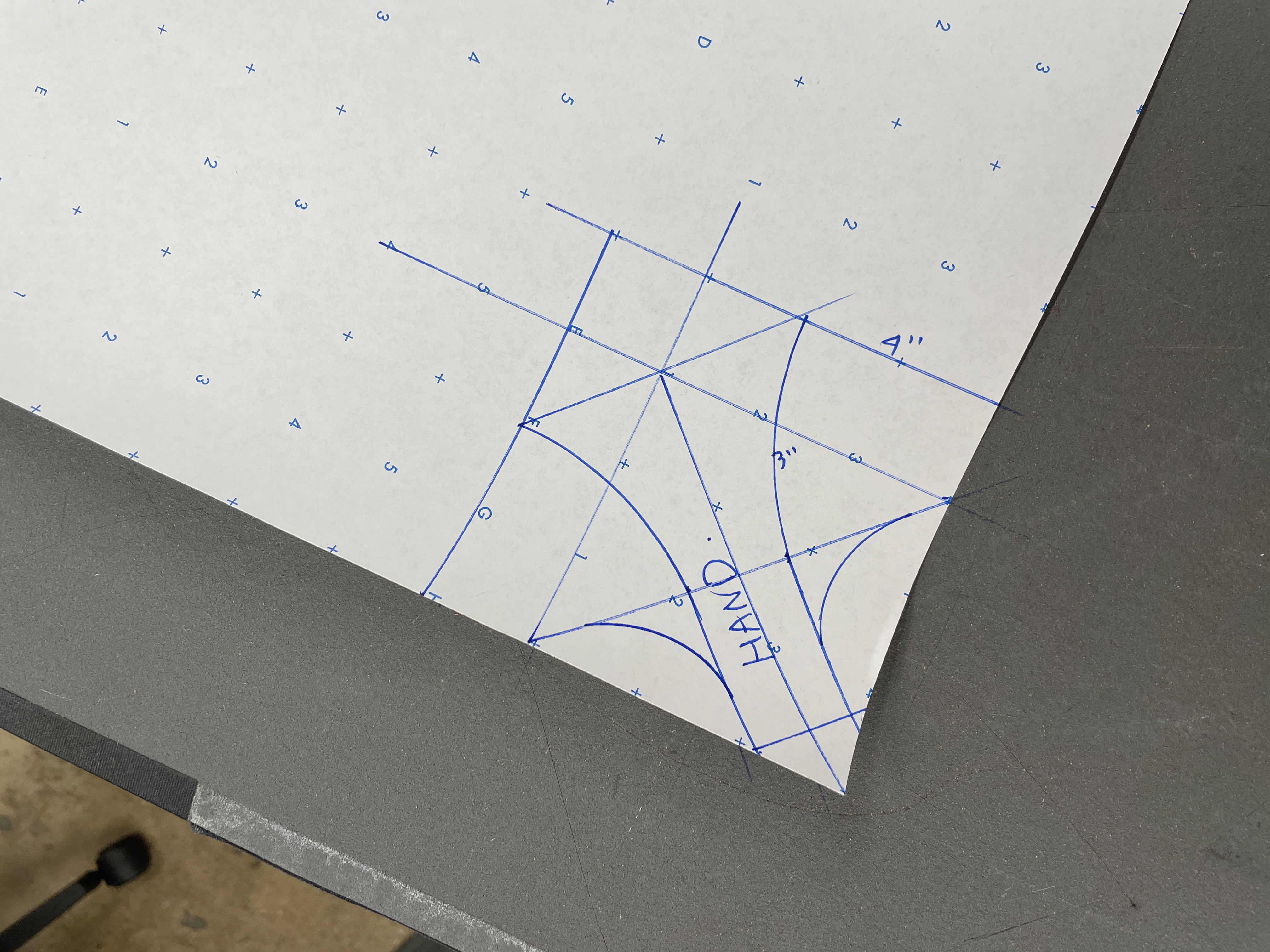
Hand-drawn pattern detail showing hand opening with blue pen measurements

Pattern detail for the hand opening, drafted from body measurements taken flat on the cutting table.

Deborah Won.

Early fitting during my MFA, slowed down. Testing how the garment moves before I'd resolved the zero-gravity question.

Dancer: Kayla Hendrix. Garment: Deborah Won.

When stylist Lara Backmender reached out about costumes for a dance film, the brief felt like an echo. She needed fabric that didn't just dress the dancer, but actively drove the choreography. The project was FLUX: Motu Mutatio, a film directed by Polly Beale, with Scyld Bowring as creative director and MaryAnn Chavez performing and co-choreographing alongside Monika Felice Smith. The garment I'd shelved for space was exactly right.


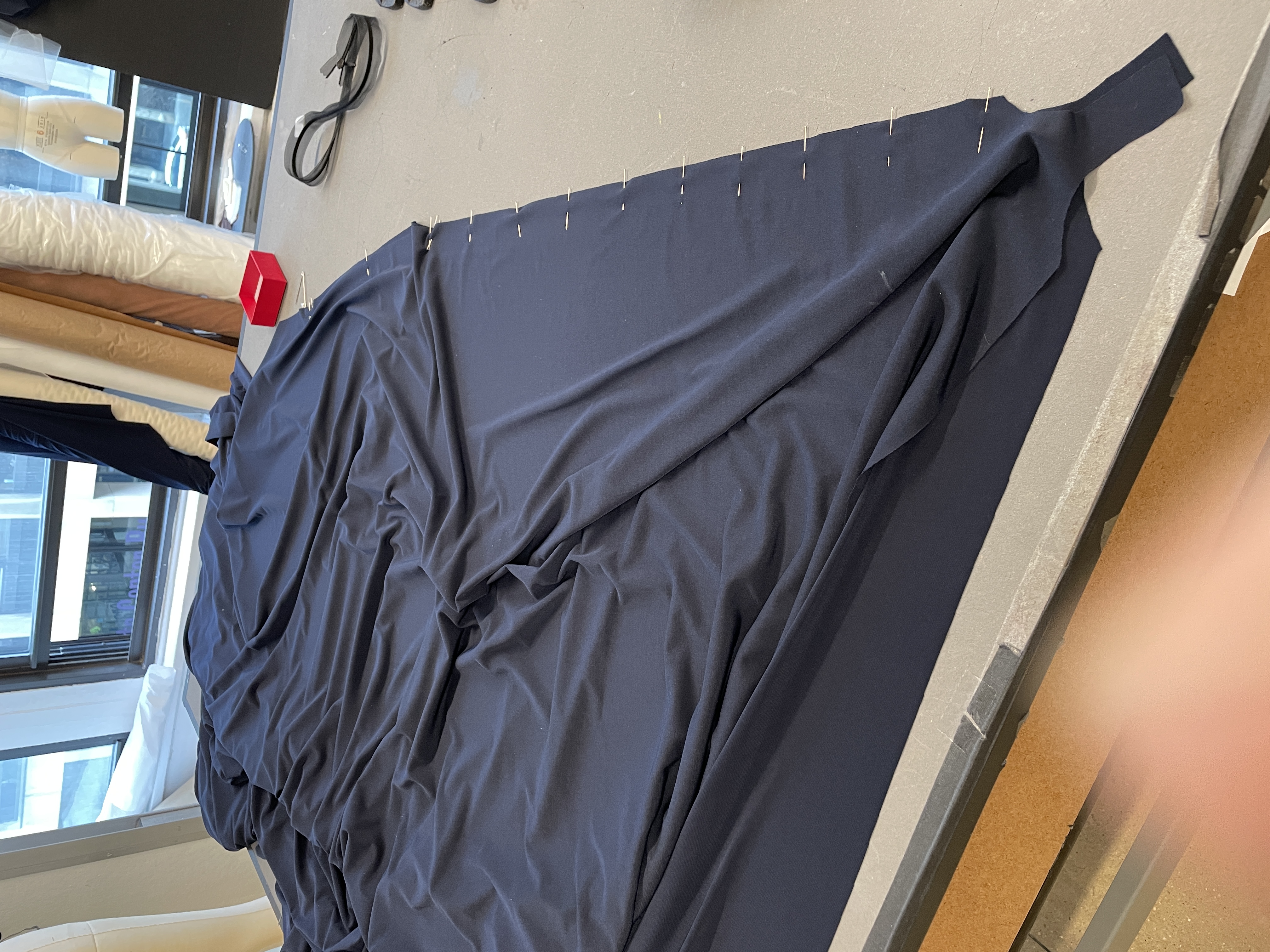
I pulled the pattern out of storage, graded it to MaryAnn's measurements, and cut it from ITY jersey in New York. The high-twist interlock has enough recovery to track every joint articulation without lag. Shipped to LA in March 2026.

ITY jersey mid-construction, pinned to studio wall

The ITY jersey mid-construction, pinned to the studio wall.

Deborah Won.

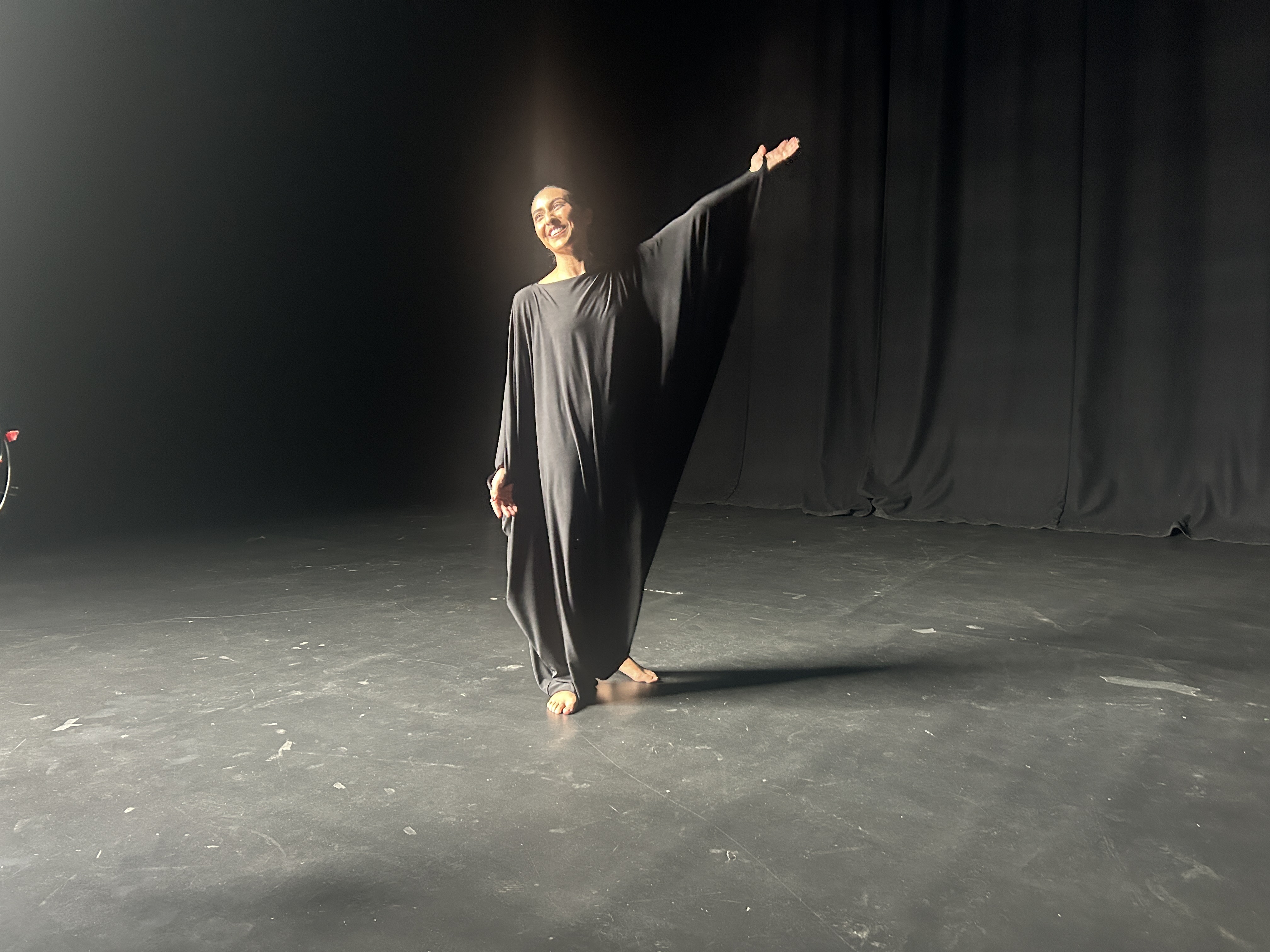
MaryAnn Chavez in the garment on set, fabric reading as a single continuous surface

MaryAnn Chavez in the garment on set. The fabric reads as a single continuous surface until she starts moving.

Dancer: MaryAnn Chavez. Garment: Deborah Won. Cinematography: Luis Guizar.

The transparency is the point. The fabric follows the body perfectly, no binding at the joints, no seam pull, zero lag. But it does more than get out of the way.


Reviewing the footage, I noticed that when MaryAnn accelerates, the displacement of air lifts the sleeves and hem slightly off the skin. Even at its quietest, the garment has a physical relationship with the air. It registers kinetic force on camera before you even see the full gesture.


And the 3D geometry is wild. The silhouette shifts entirely based on her arm position. One garment, one construction, but an infinite visual range because the body does all the shaping. Halston knew this. Graham knew this. Seeing it on my own pattern, in a context I hadn't originally designed for, is what made me understand why I'd been drawn to the shape in the first place.

Multi-axis movement through rotation and extension. The square changes shape depending on what the body does inside it.

Dancer: MaryAnn Chavez. Garment: Deborah Won.

A second movement sequence. The fabric lifts off the body when she accelerates, settles when she stops.

Dancer: MaryAnn Chavez. Garment: Deborah Won.

The original zero-g question ended up answering itself in reverse.


In dance, gravity is still there, but momentum overwrites it. The speed of a turn or extension reorganizes the fabric independently of downward pull. For the duration of a gesture, the garment is organized by the body first, gravity second. That cycle, body-organized movement alternating with gravity-organized drape, is what makes the fabric look alive on camera.

"The body generates enough force to temporarily overwrite gravity's effect on the fabric. That's the zero-gravity condition I'd been looking for."

The zero-gravity question hasn't gone away. The FLUX work proved the shape is sound and the body-fabric relationship can sustain real choreographic force without the garment adding interference or offering resistance. What I don't know yet is what happens when there's no gravity underneath any of it, when the square has to organize itself without downward pull. That's the next test.

FLUX: Motu Mutatio. The full film.

Directed and produced by Polly Beale. Creative direction and performance direction by Scyld Bowring.


Back All Investigations
Next Zero-Gravity Textile Behavior Embodied Materials