Fashion for the body freed from gravity.
2023
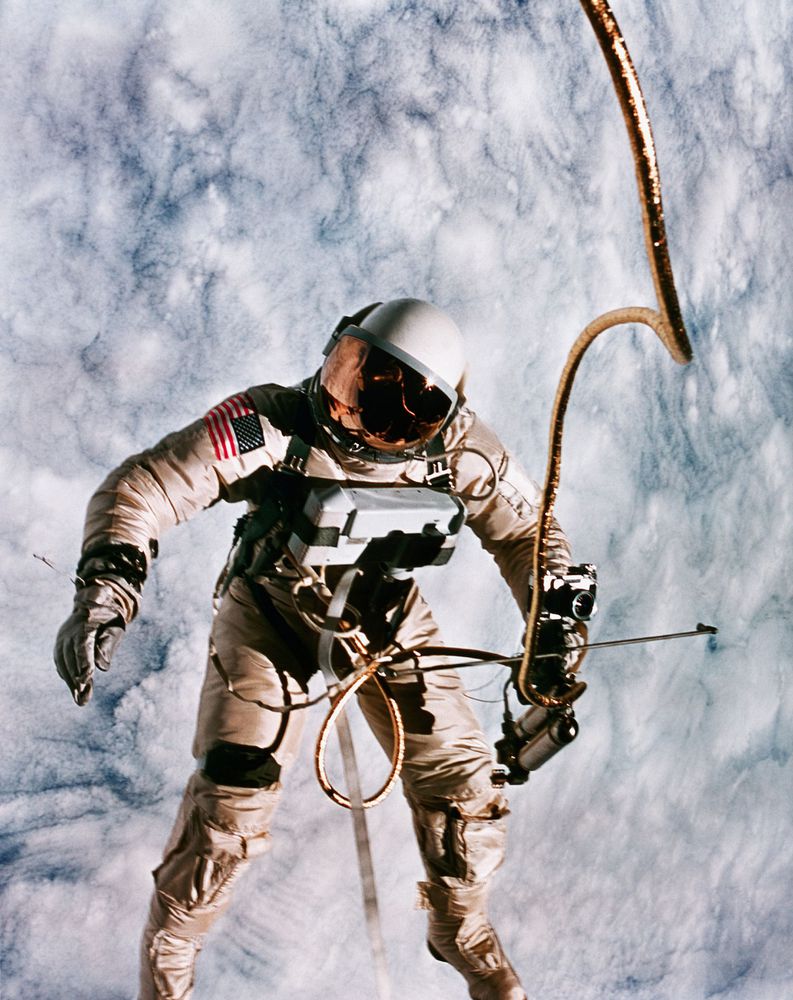
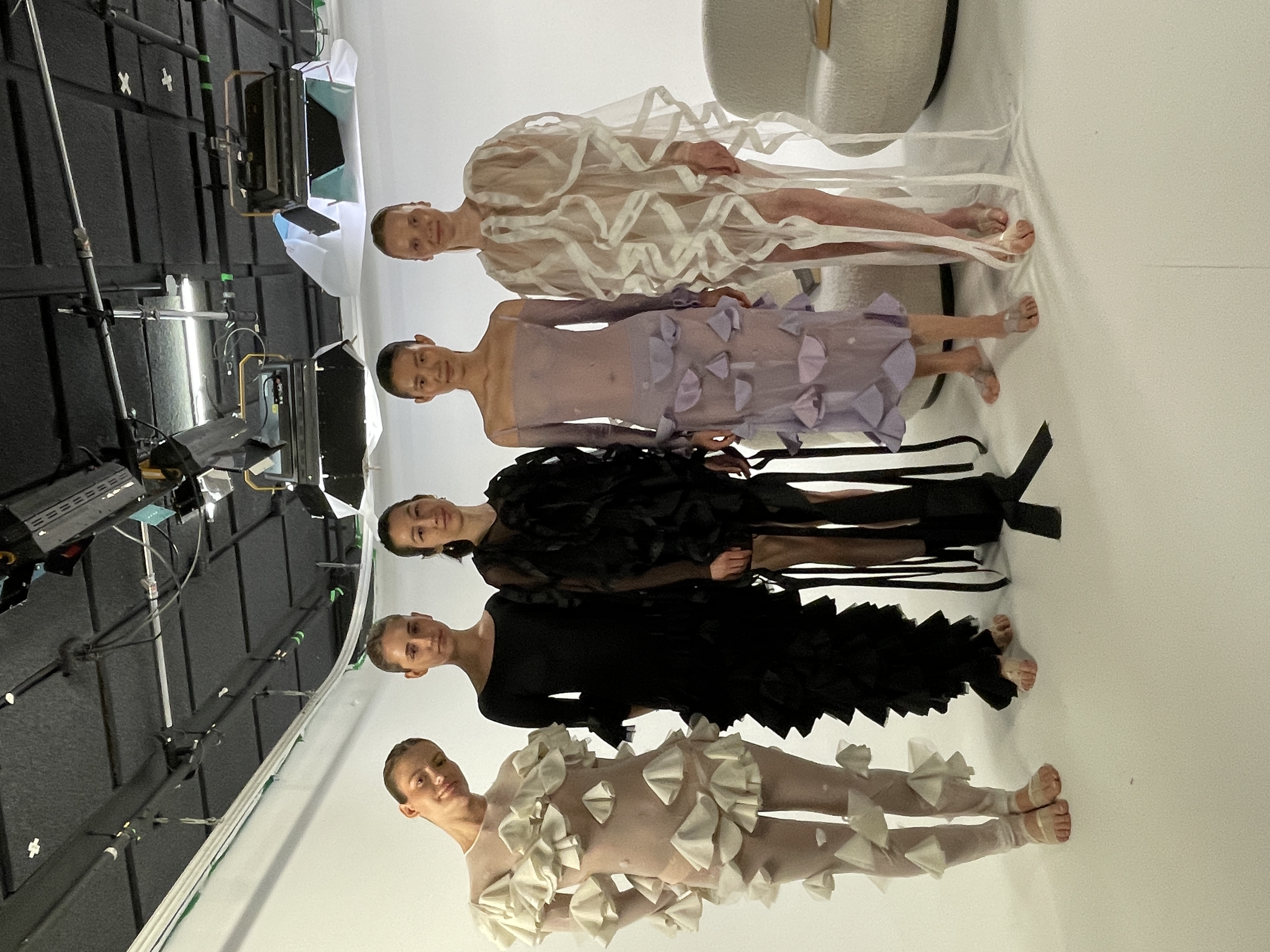
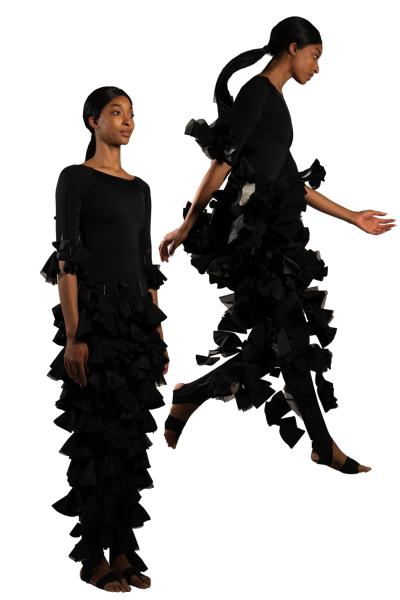
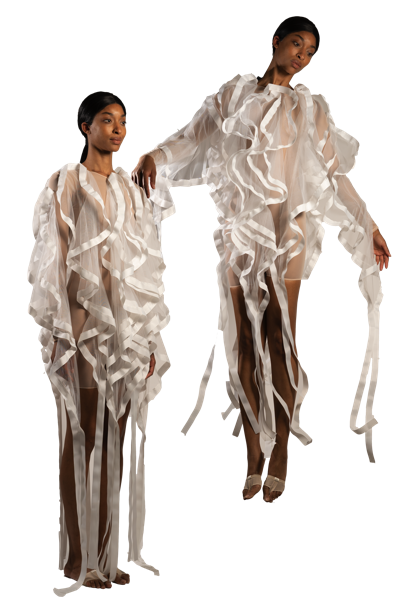
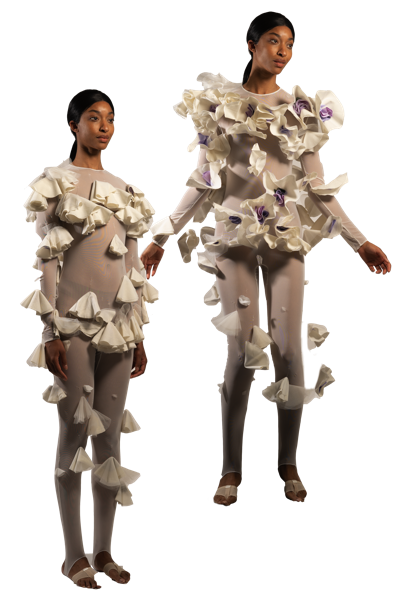
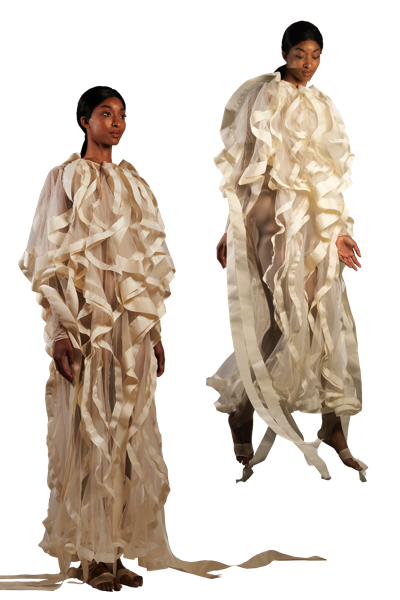
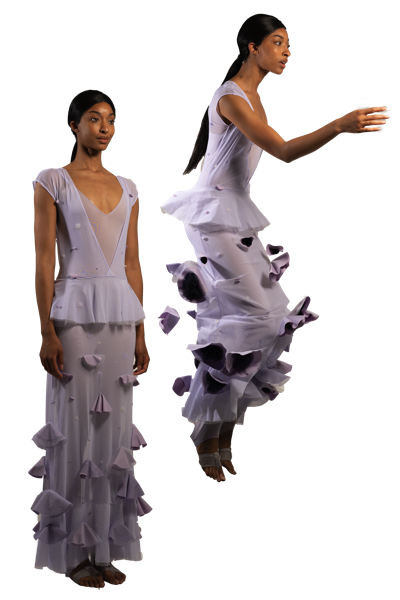
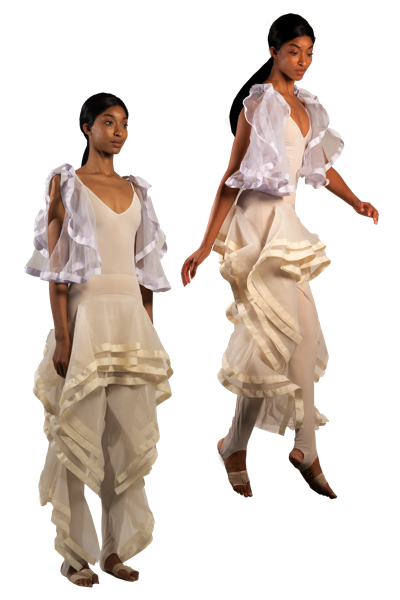
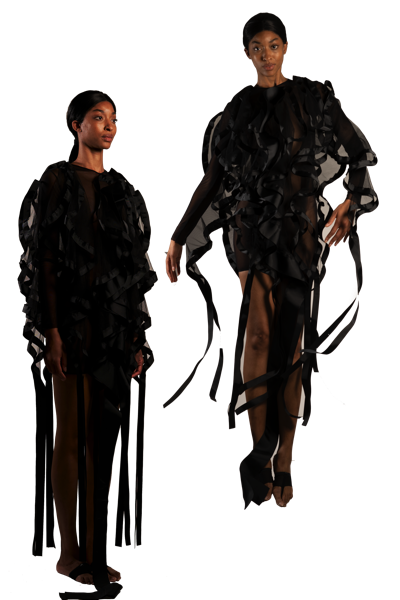
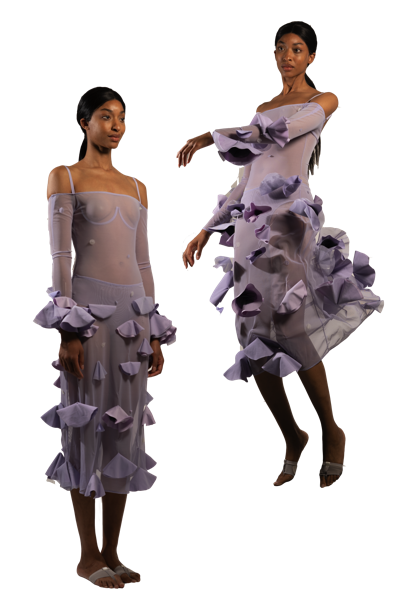
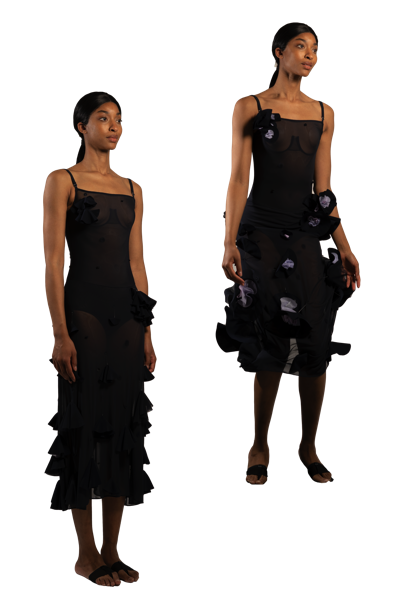
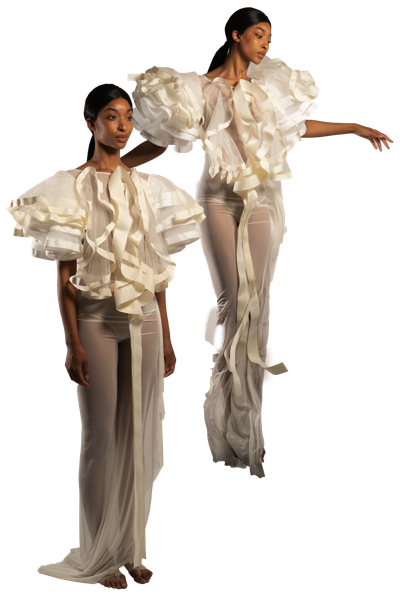
"Arise" was created as the thesis collection for a Fashion Design MFA at the Fashion Institute of Technology. It is a statement on how our collective lifestyles will change in the future. The premise behind the garments is that humans will visit environments outside of Earth's atmosphere and therefore must be designed to enhance movement in zero gravity.
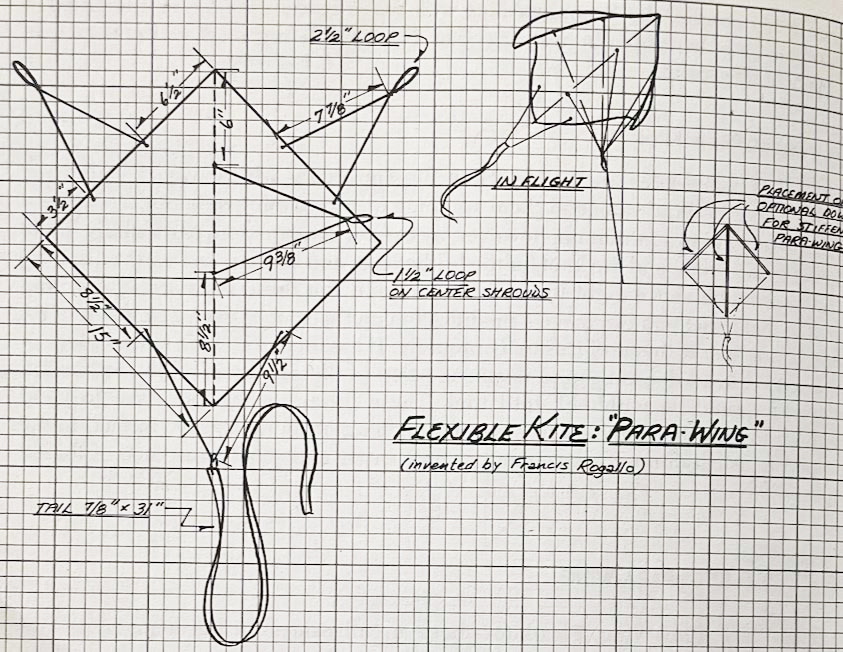
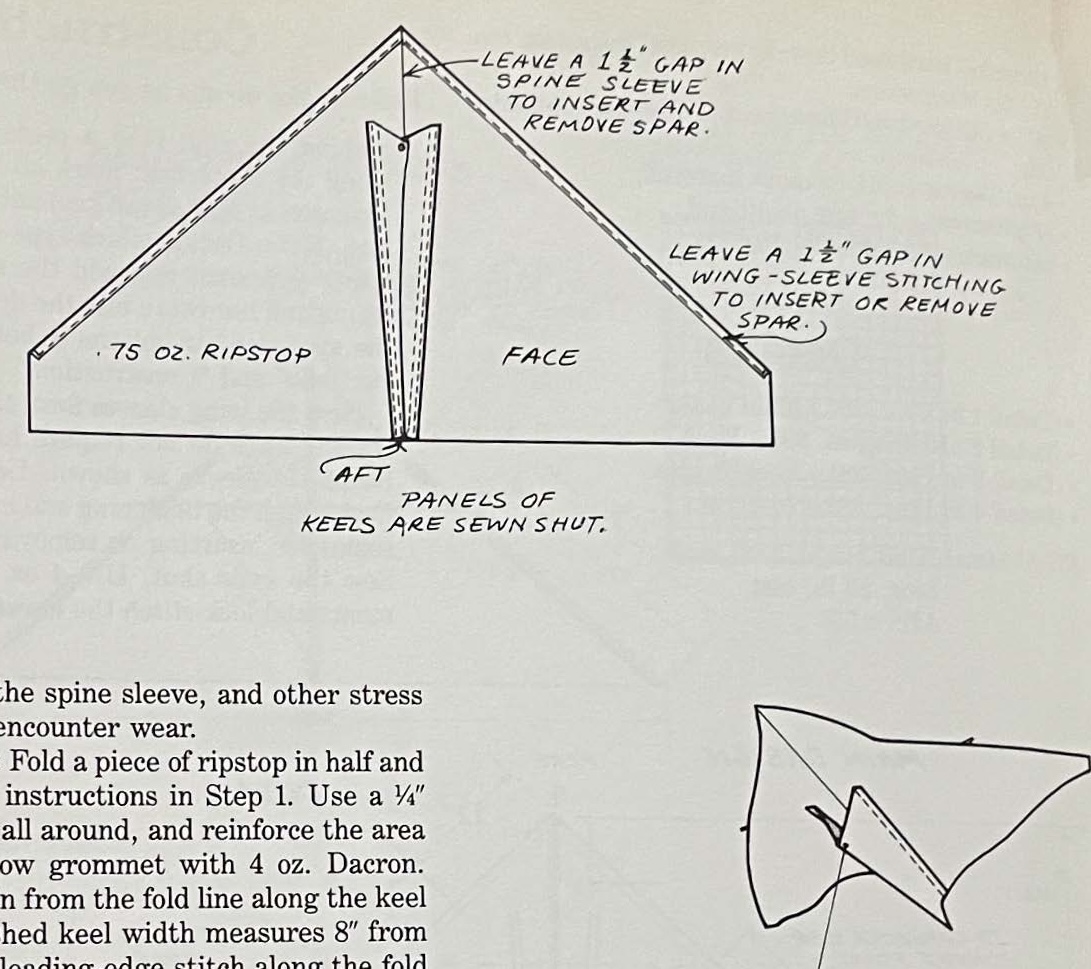
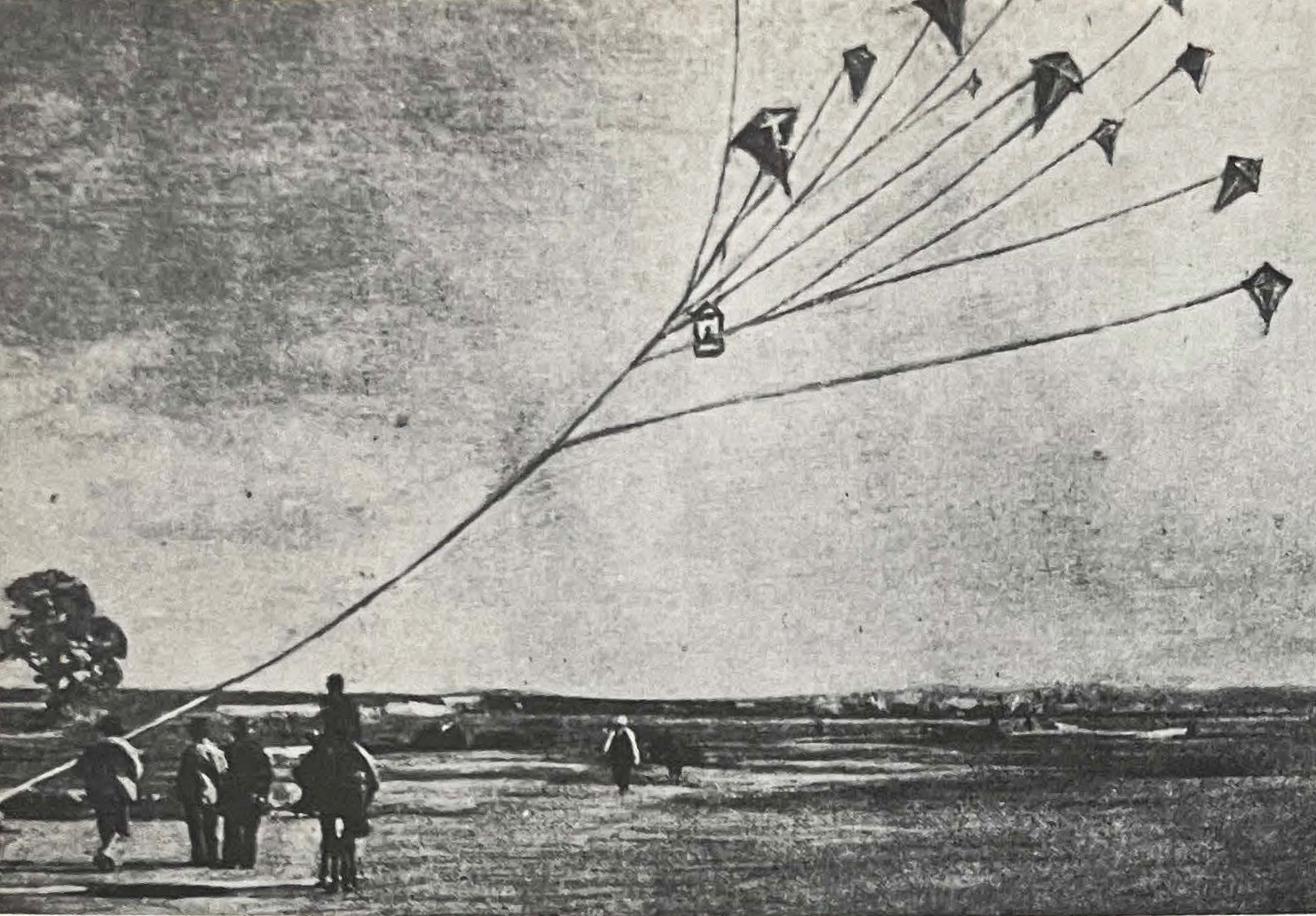
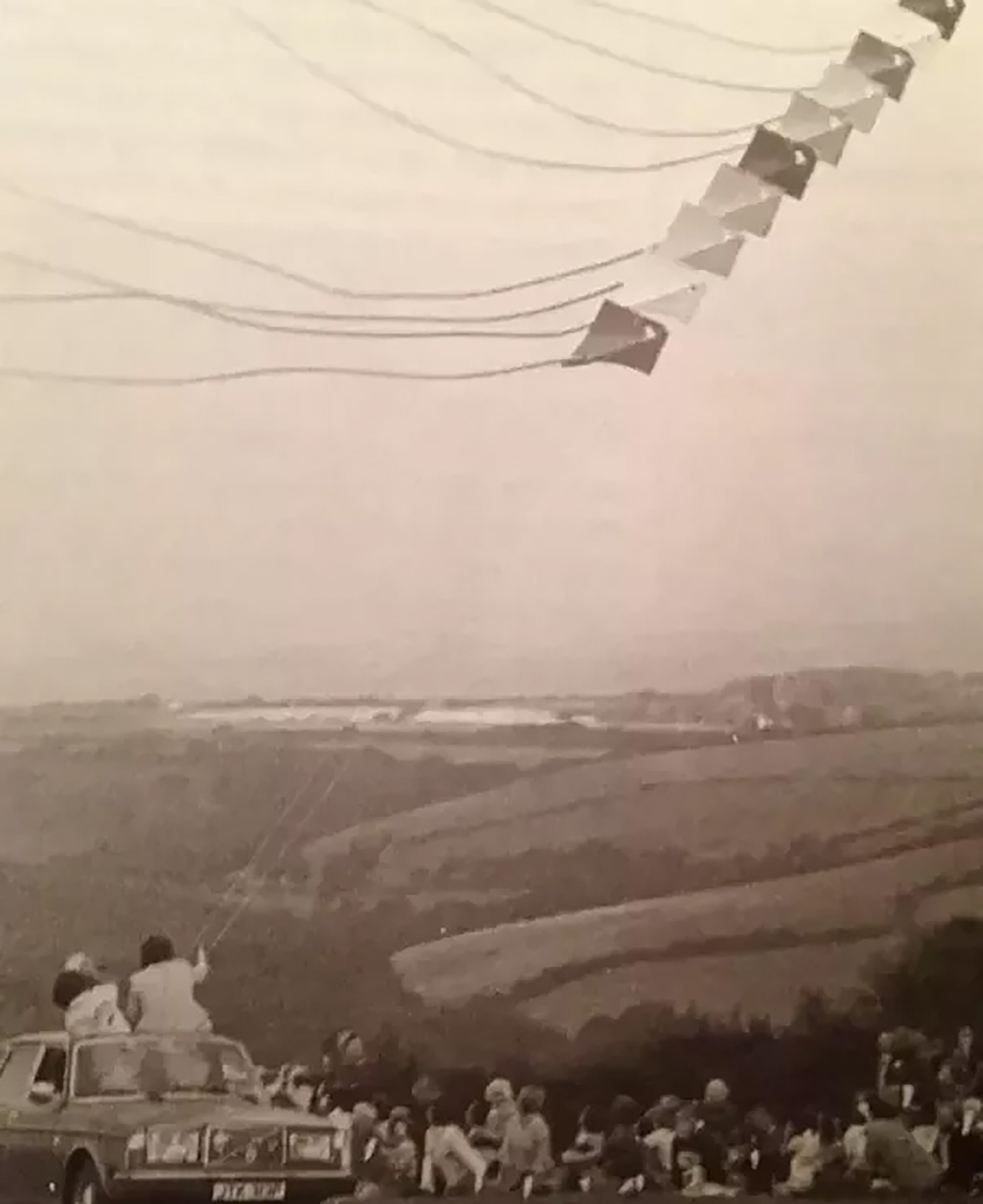
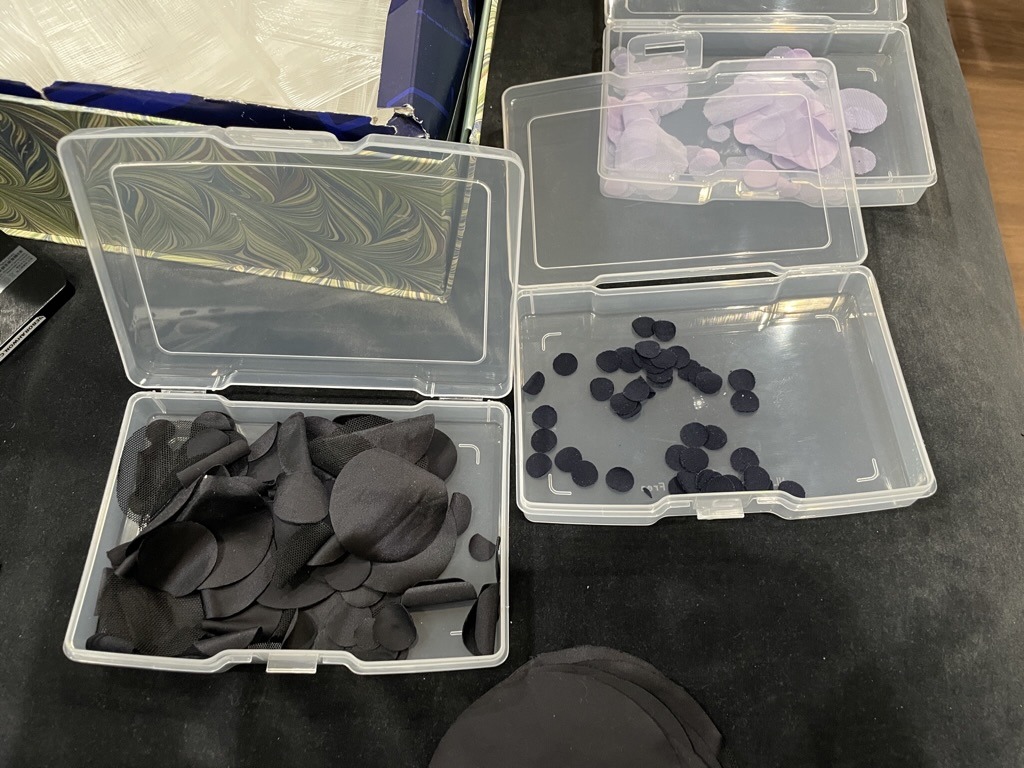
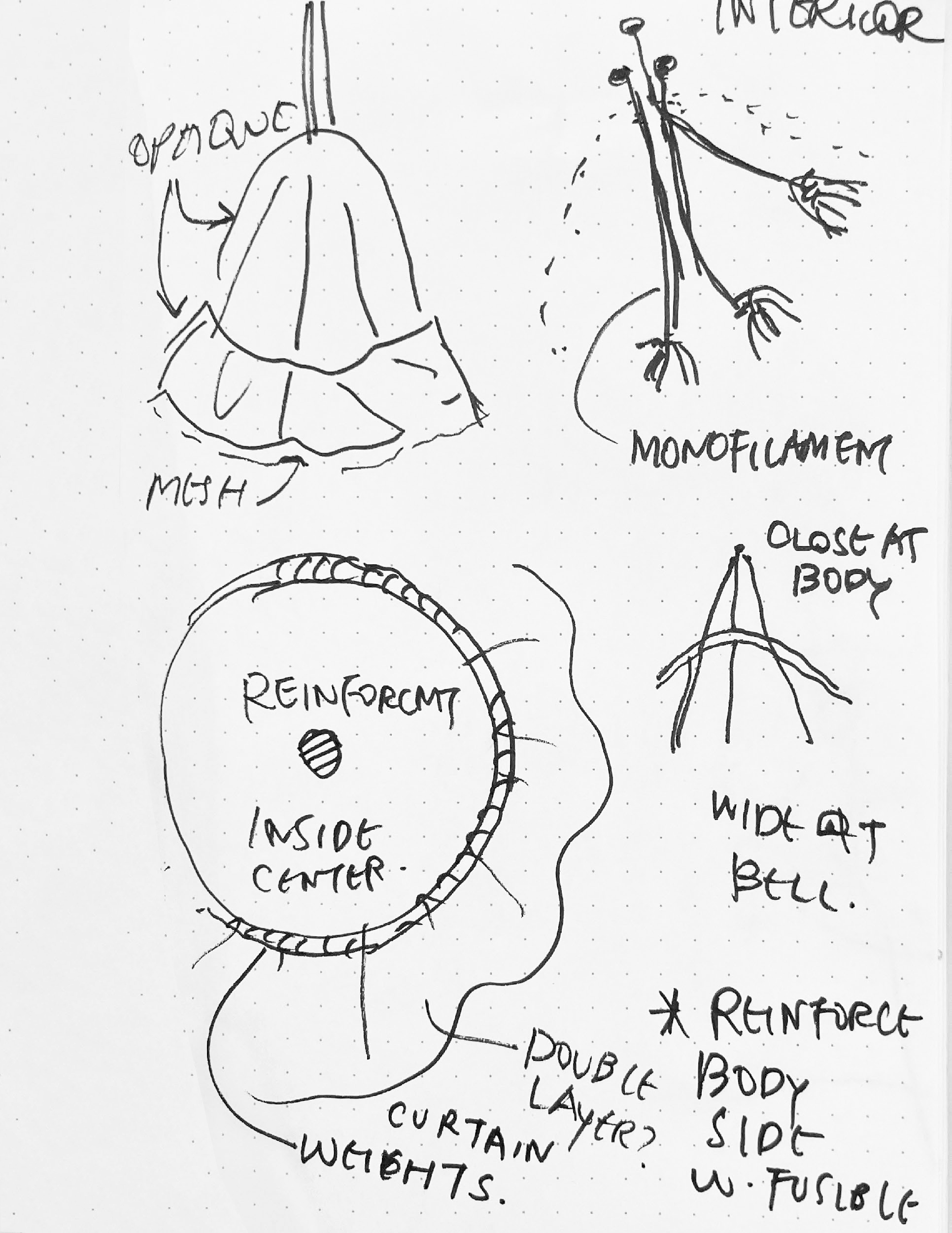
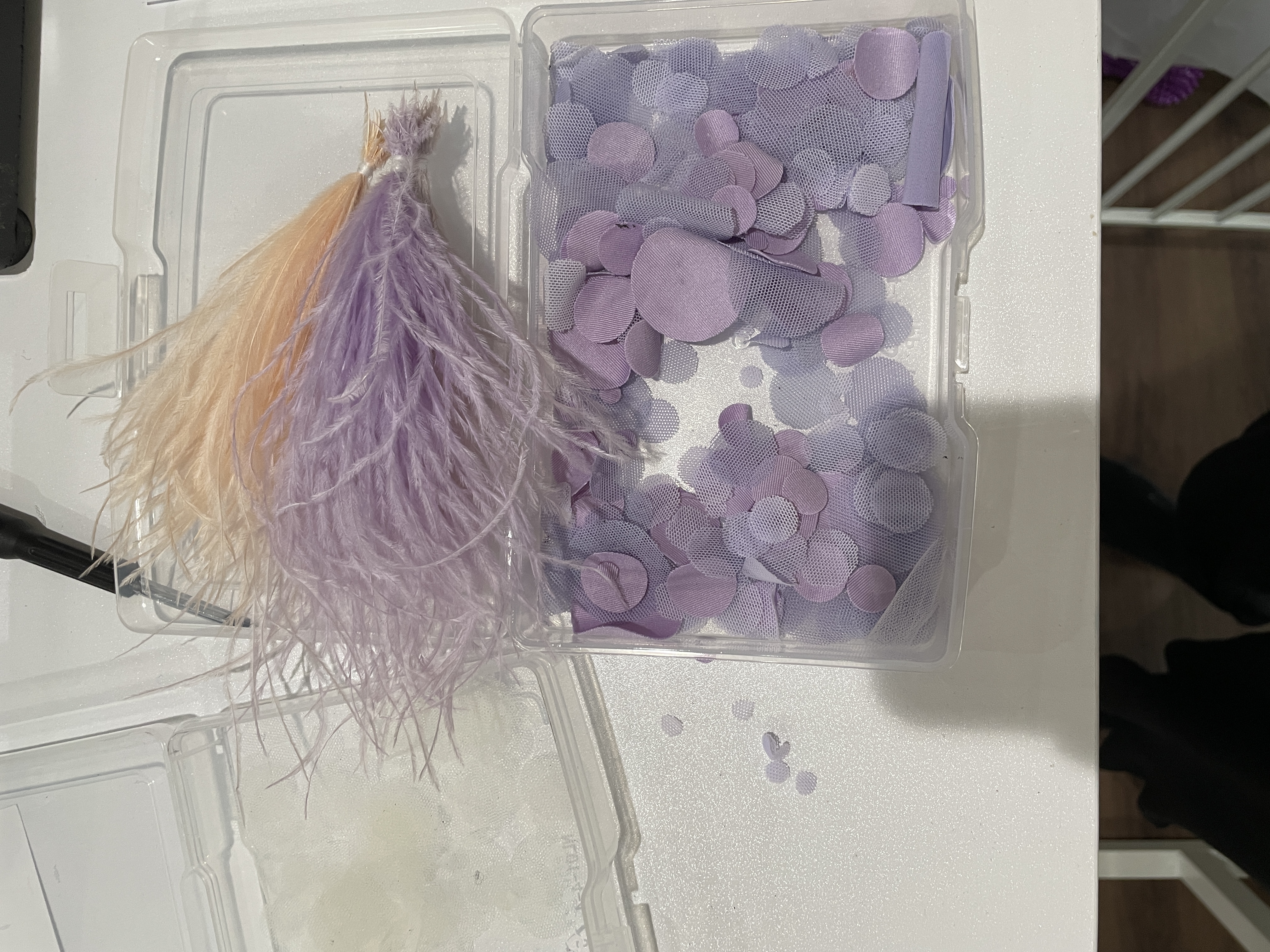
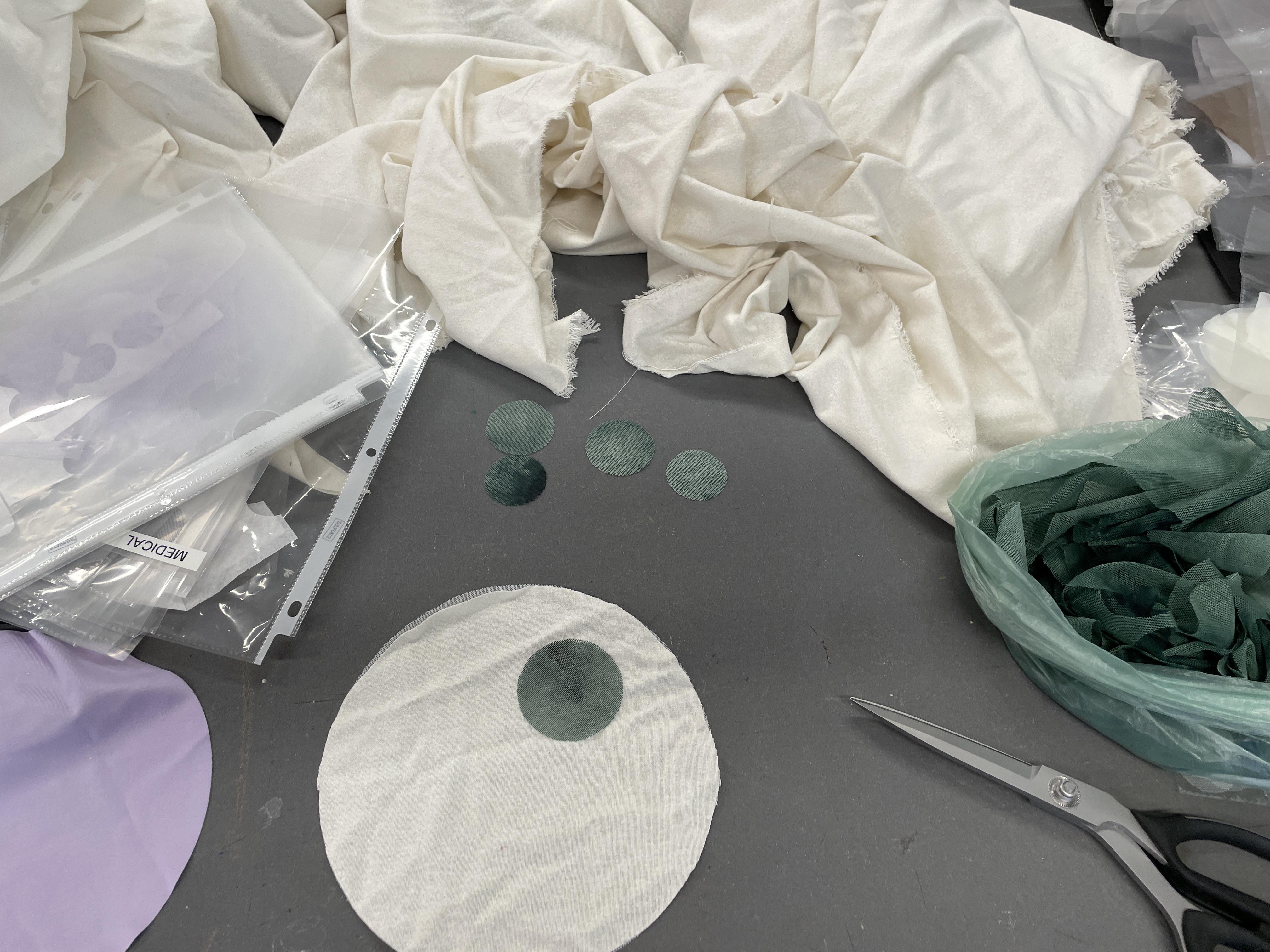
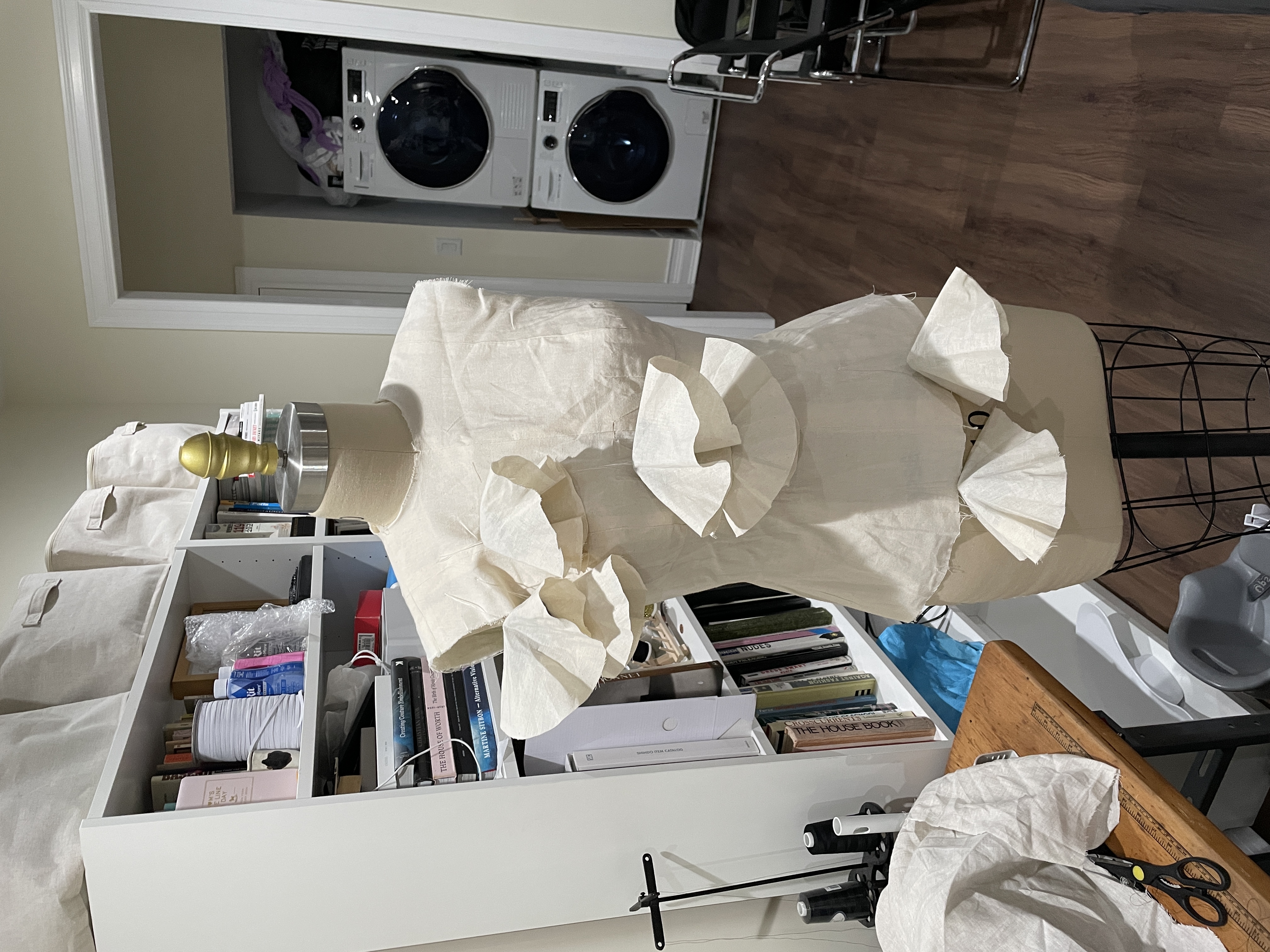
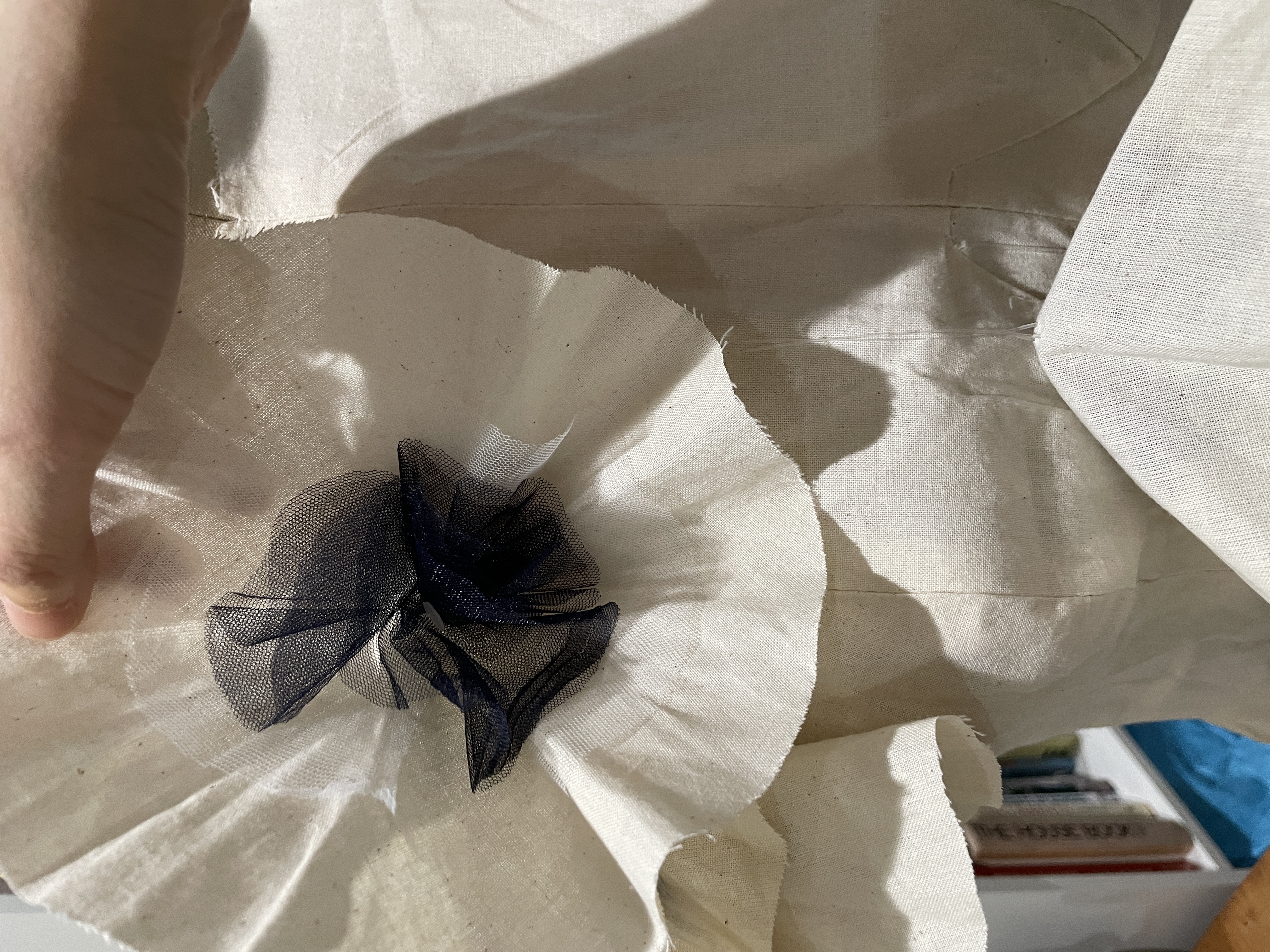
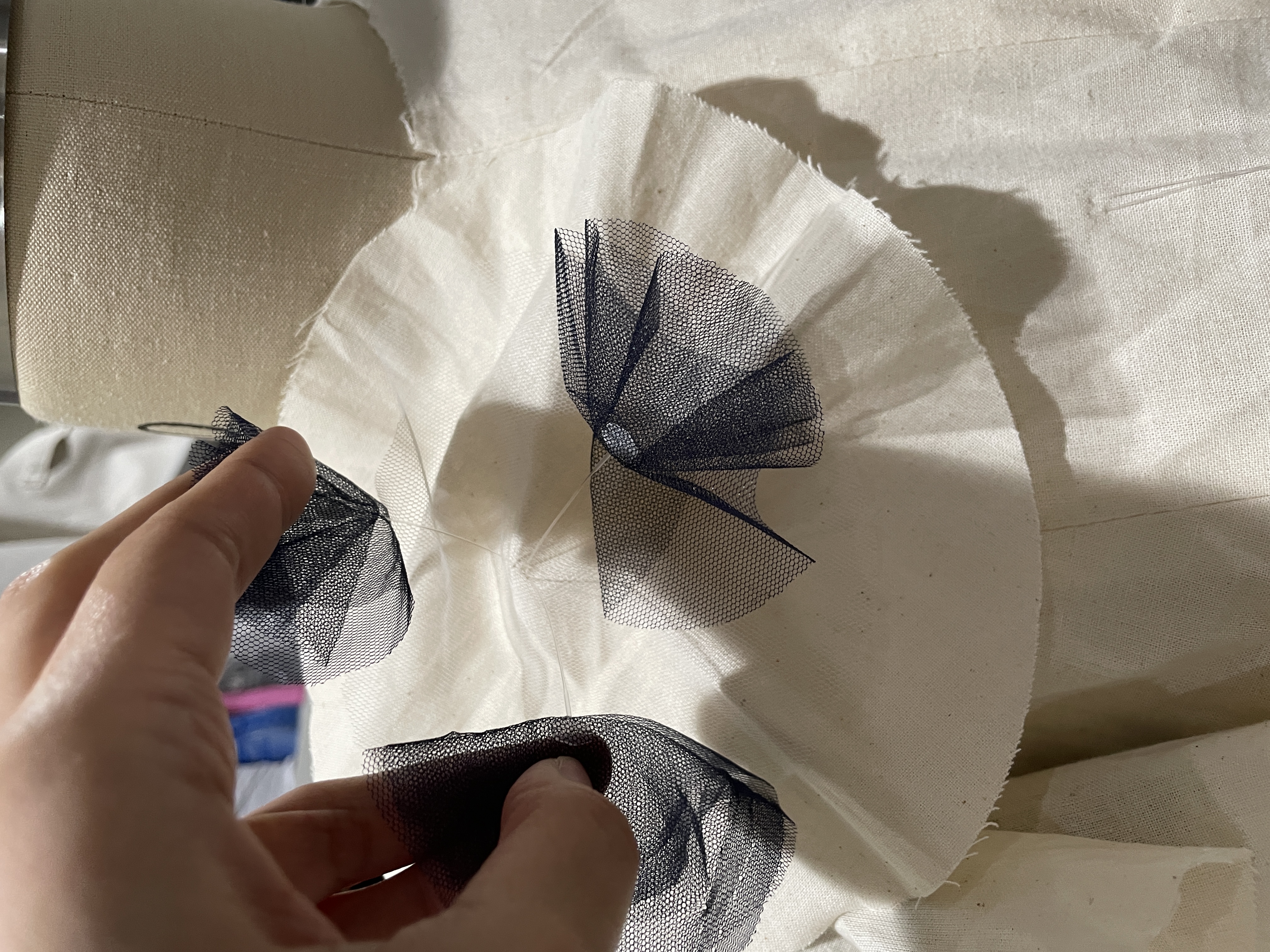
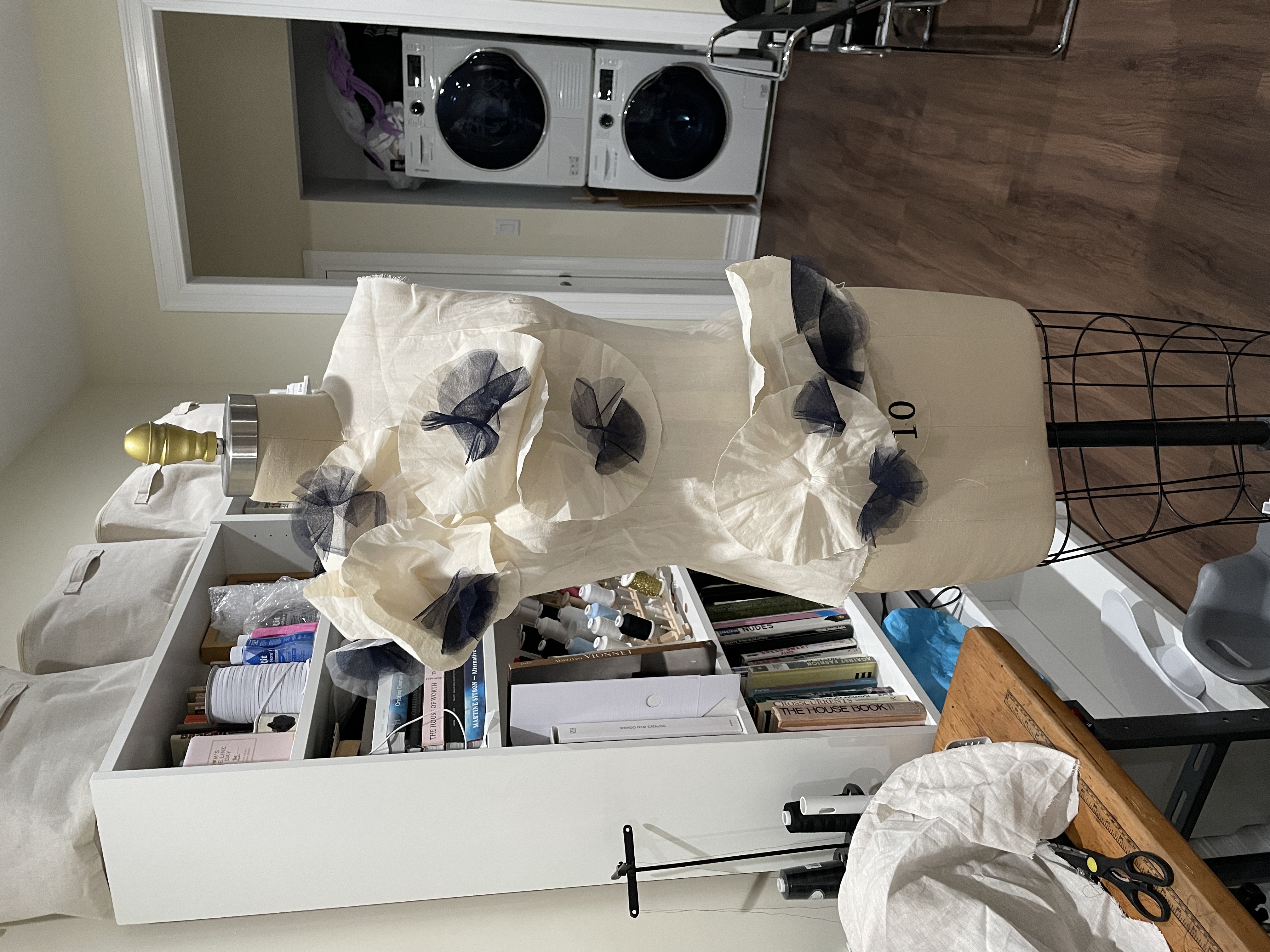
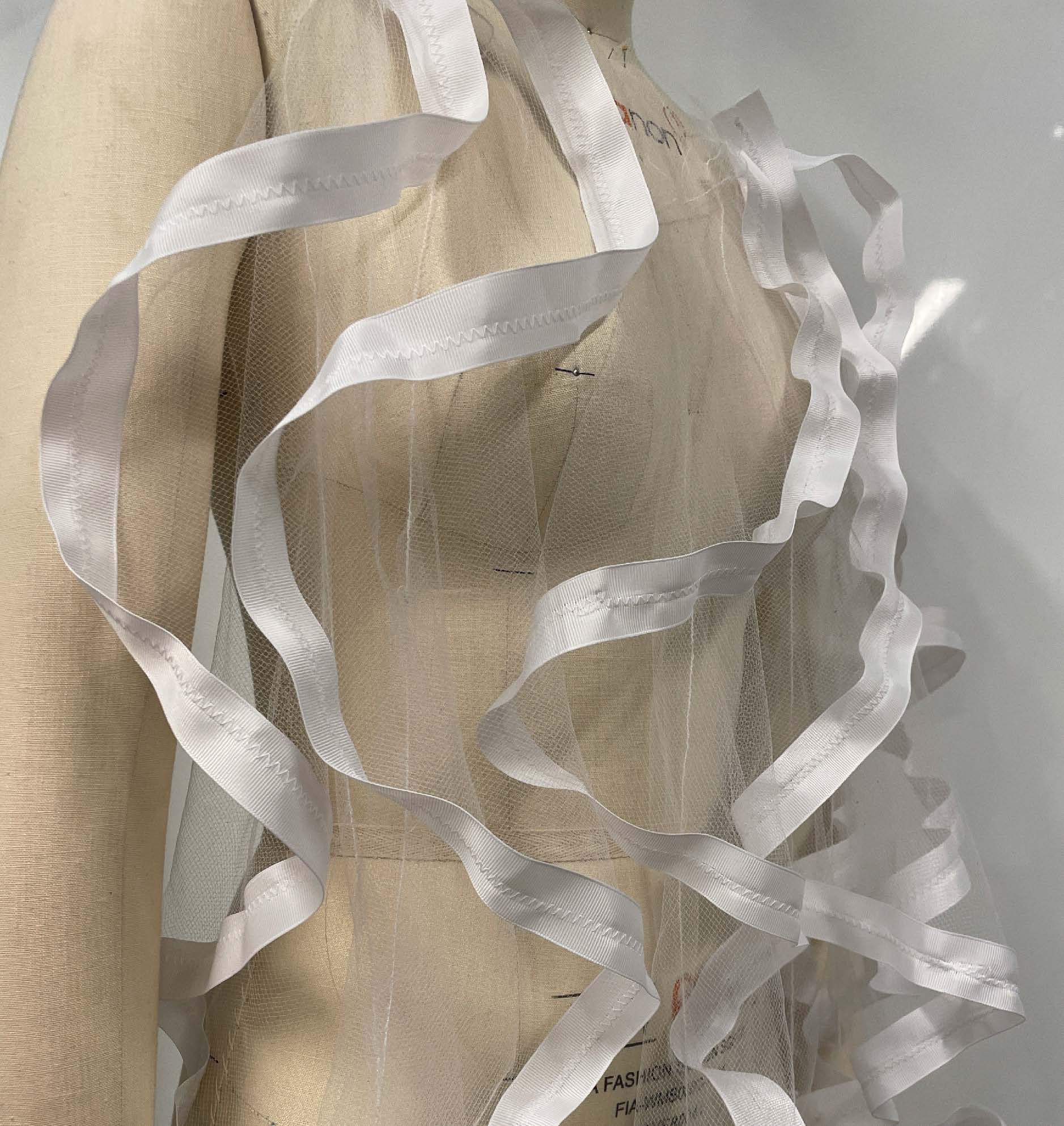
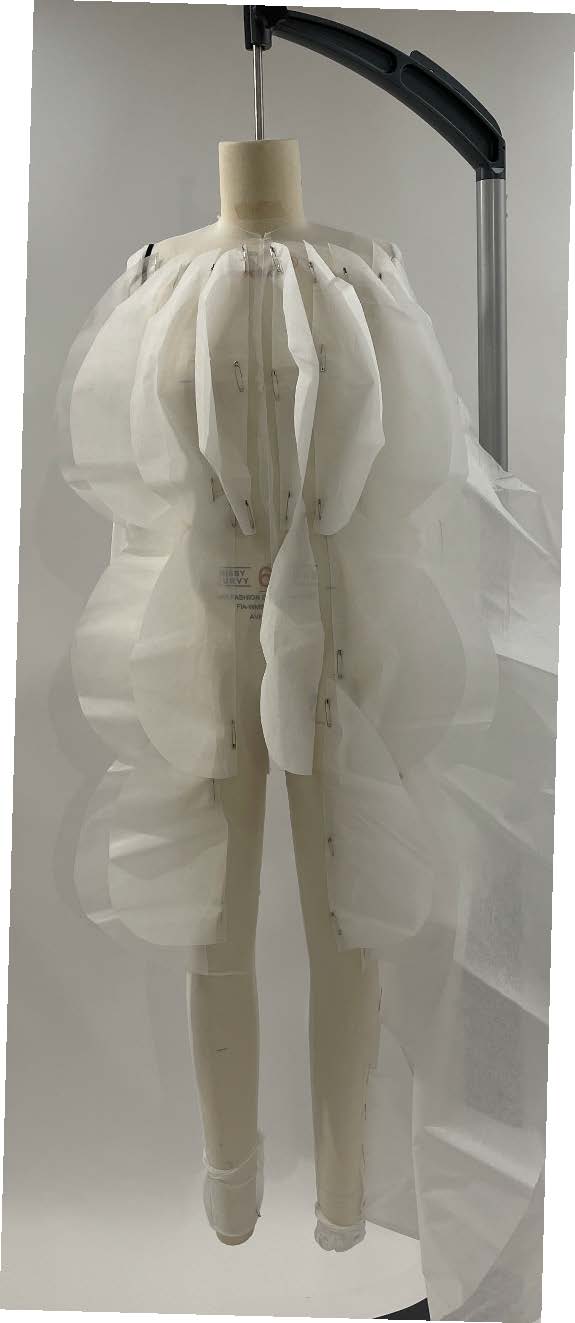
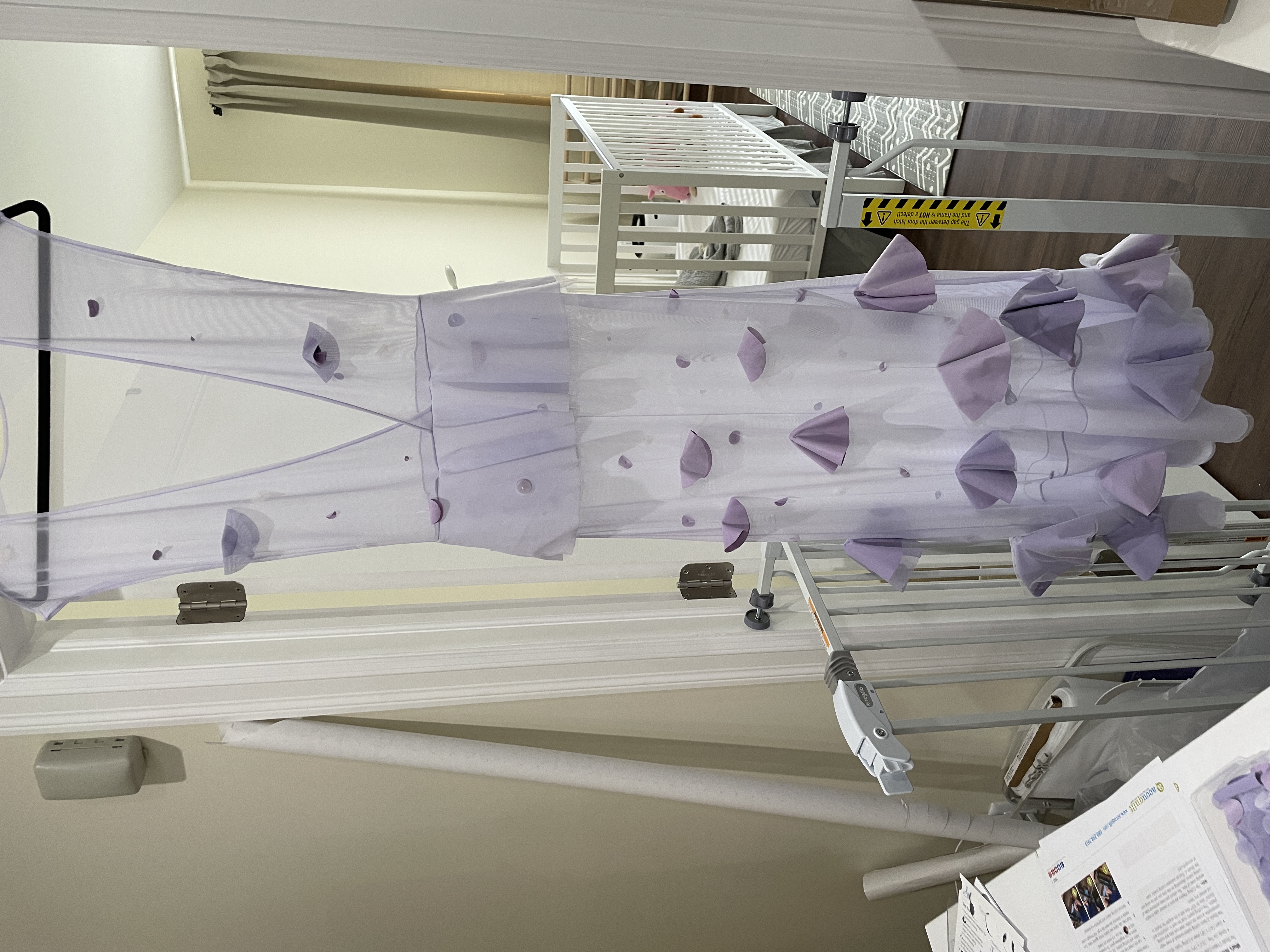
Aesthetic and constructional details are inspired by kites, the oldest manmade aerial device, and zero-gravity flight indicators, objects that highlight the transition from 1g to 0g. Blossoming embellishments embody the floating nature of these indicators. Variable opacity fabrics and feminine-focused silhouettes combine to make ethereal fashion for the new frontier.
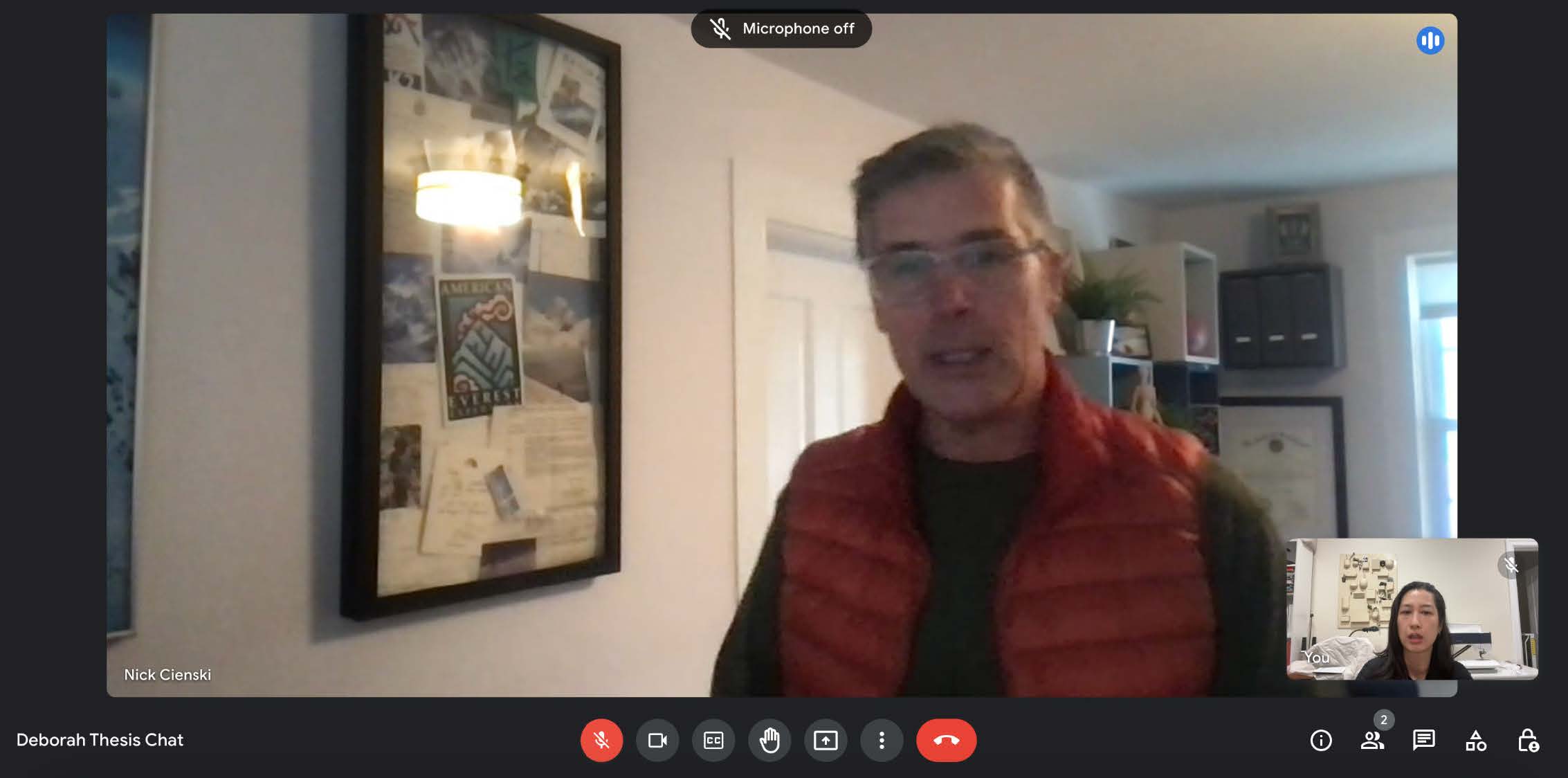
The research drew on conversations with aerospace engineers and space-fashion pioneers, from Helen Sharman's firsthand account of movement aboard Mir, to Barbara Brownie's scholarship on how zero gravity transforms the relationship between body and garment. Nikolai Moiseev and Ted Southern of Final Frontier Design shared insights on pressure-suit ergonomics and decompression that informed the adaptive patternmaking, while Daniel Wurtzel's kinetic air sculptures, fabric suspended and animated by invisible currents, offered a poetic model for how garments might behave when freed from gravity. Dialogue with Nick Cienski, original designer of the Virgin Galactic spacesuit, confirmed that dignity across every orientation, and designing for transformation, not just destination, would be central to the work.
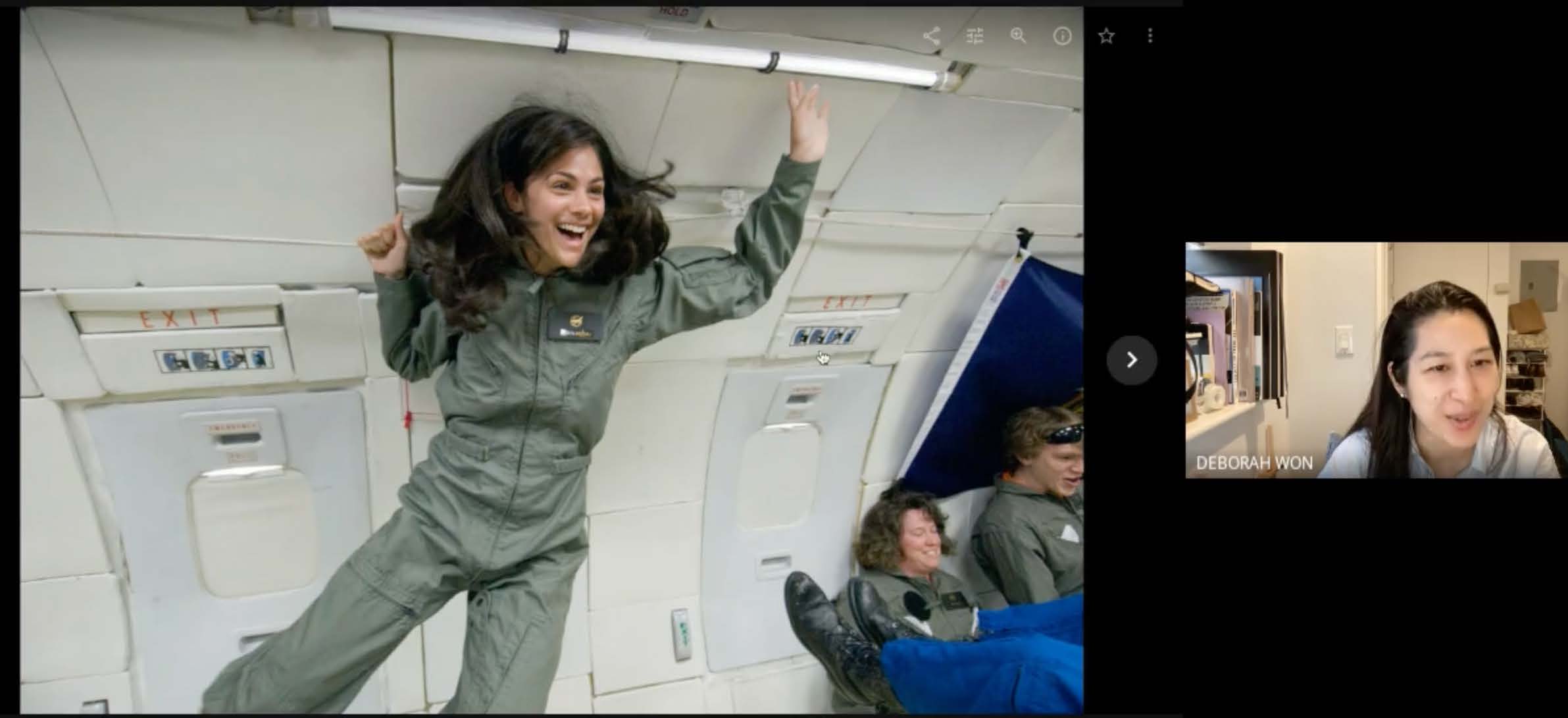
A version of this collection would evolve into Rhododendrons, which was designed for and tested aboard a parabolic flight, bringing the zero-gravity premise of Arise from concept into lived experience.
Out of the Present (Andrei Ujică, 1995). The vision for Arise begins with the ephemeral beauty of Helen Sharman's pink ruffled jumpsuit worn aboard Mir space station.
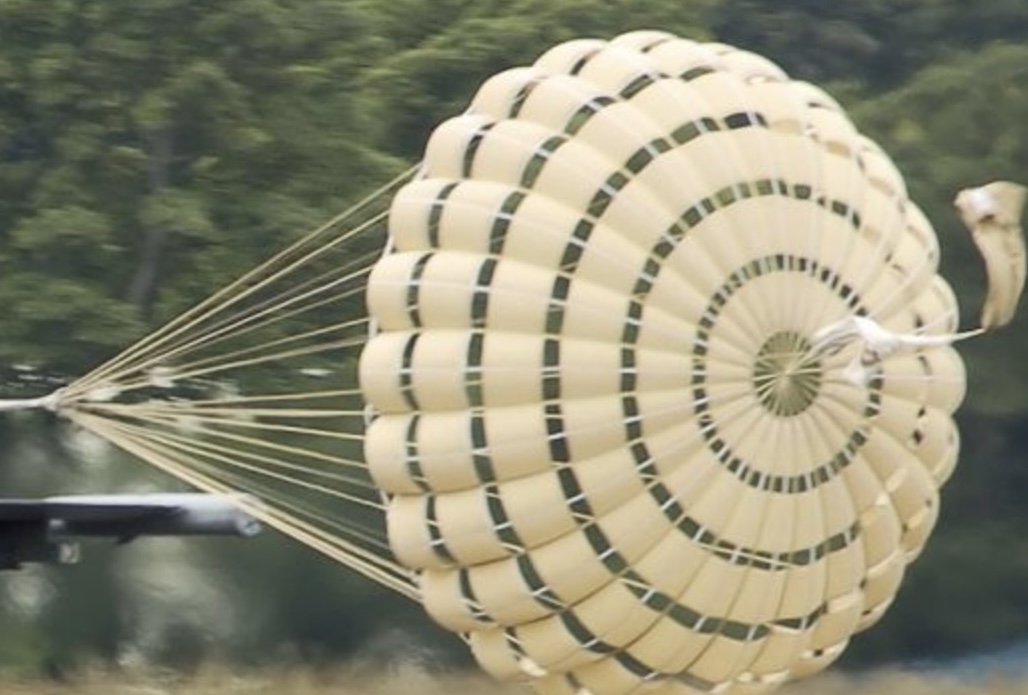
In addition to texts on aerial devices, interviews with aerospace engineers and space-fashion pioneers informed the research.

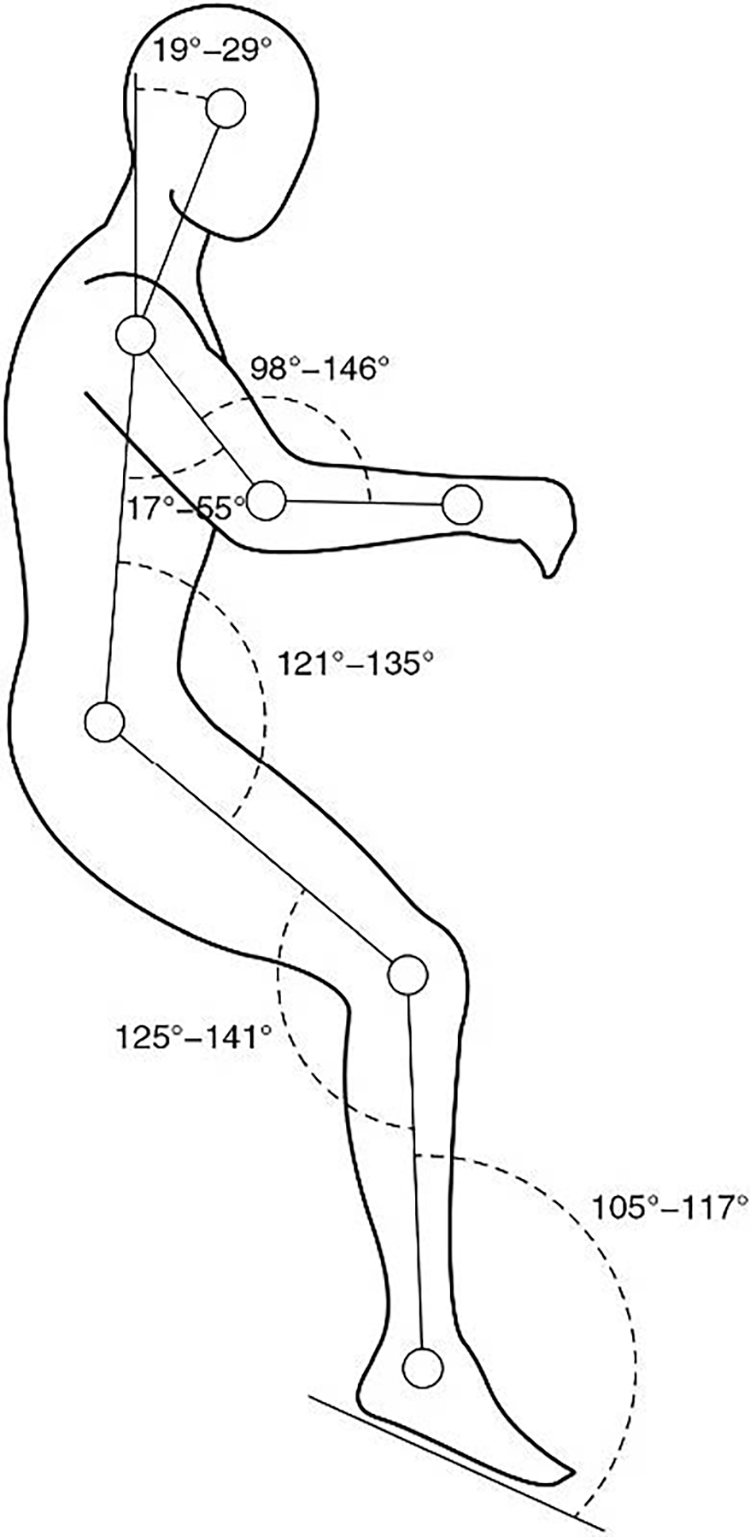
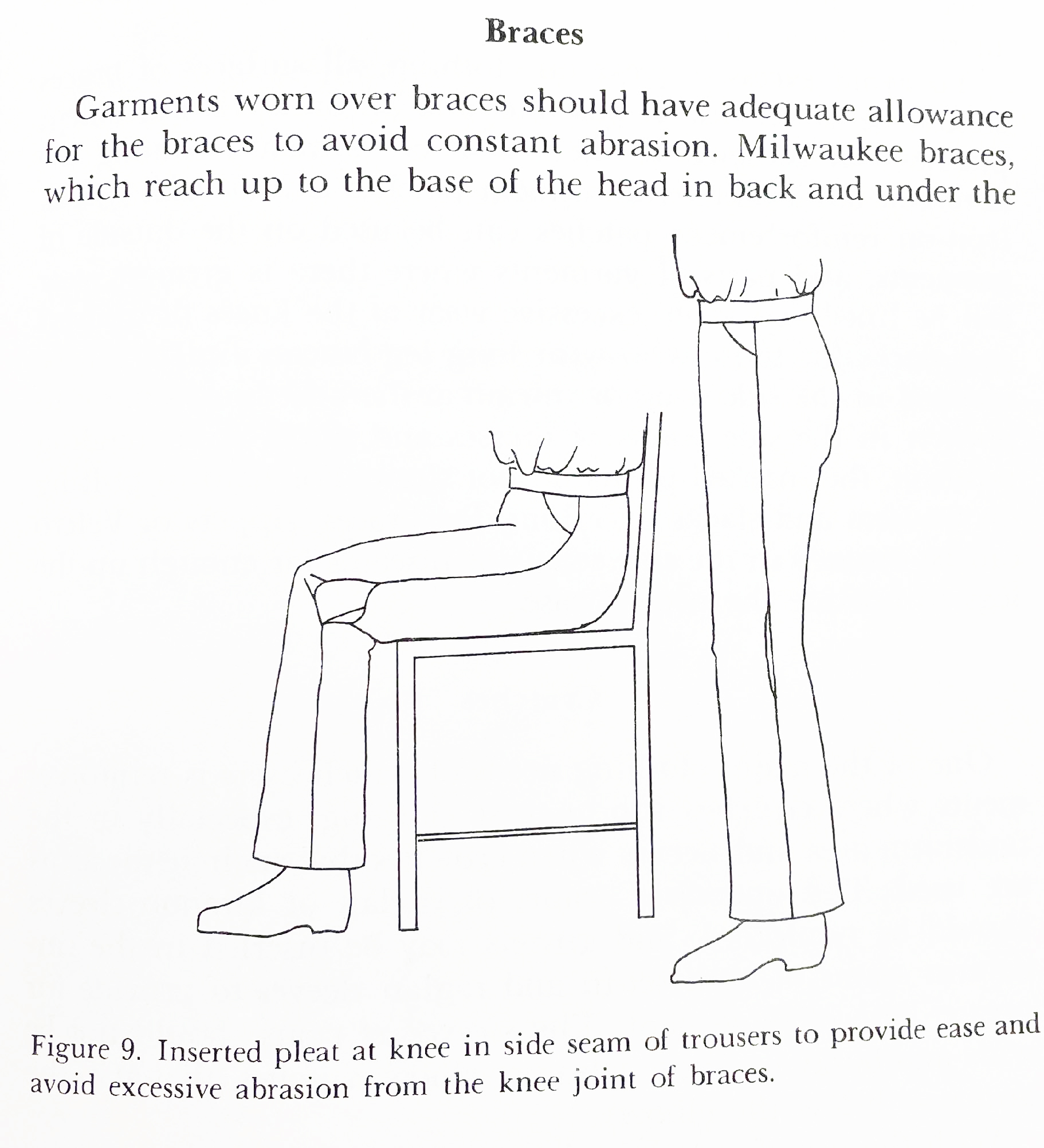
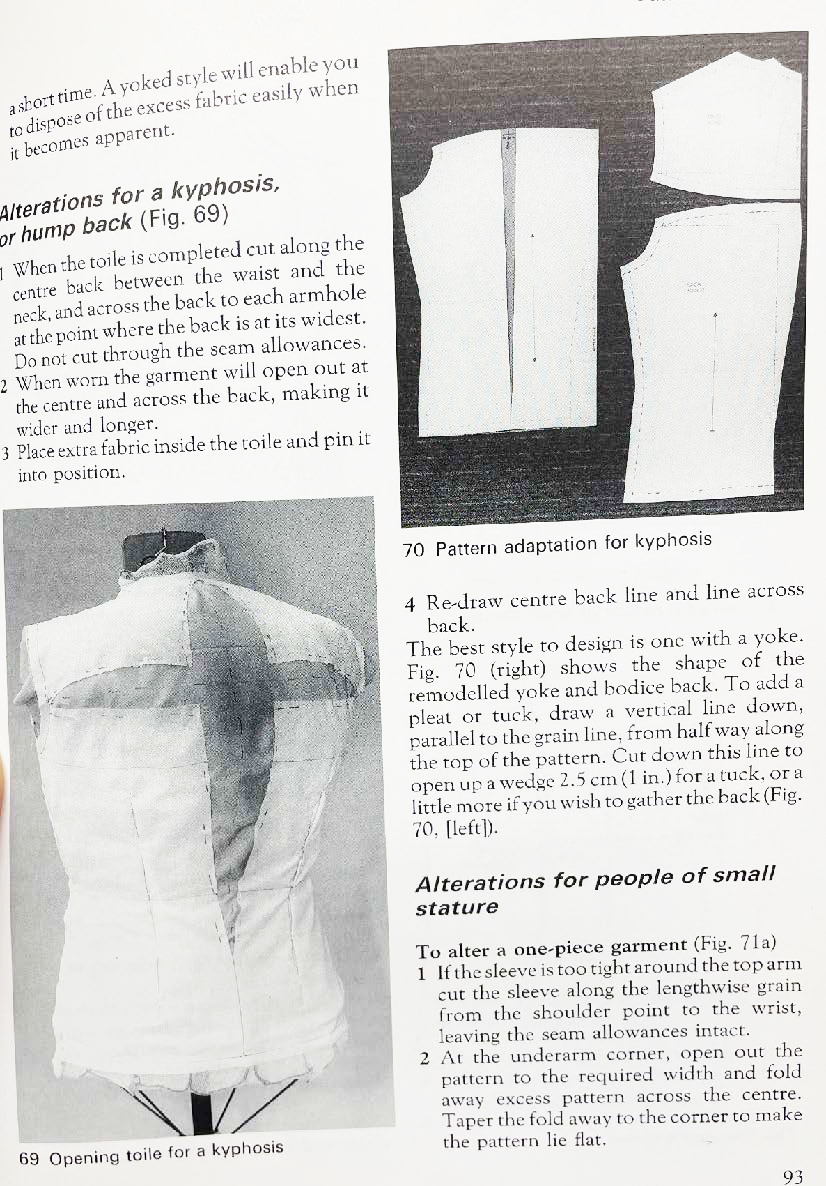
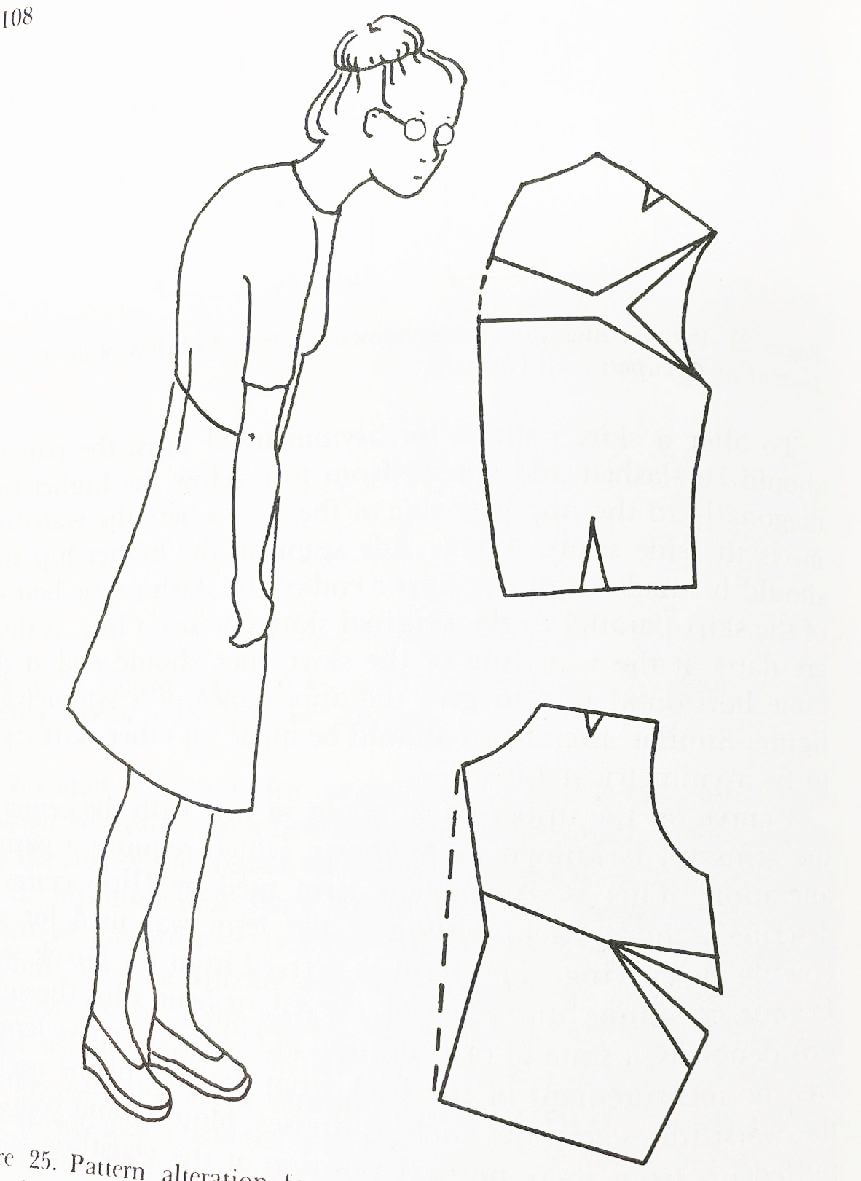
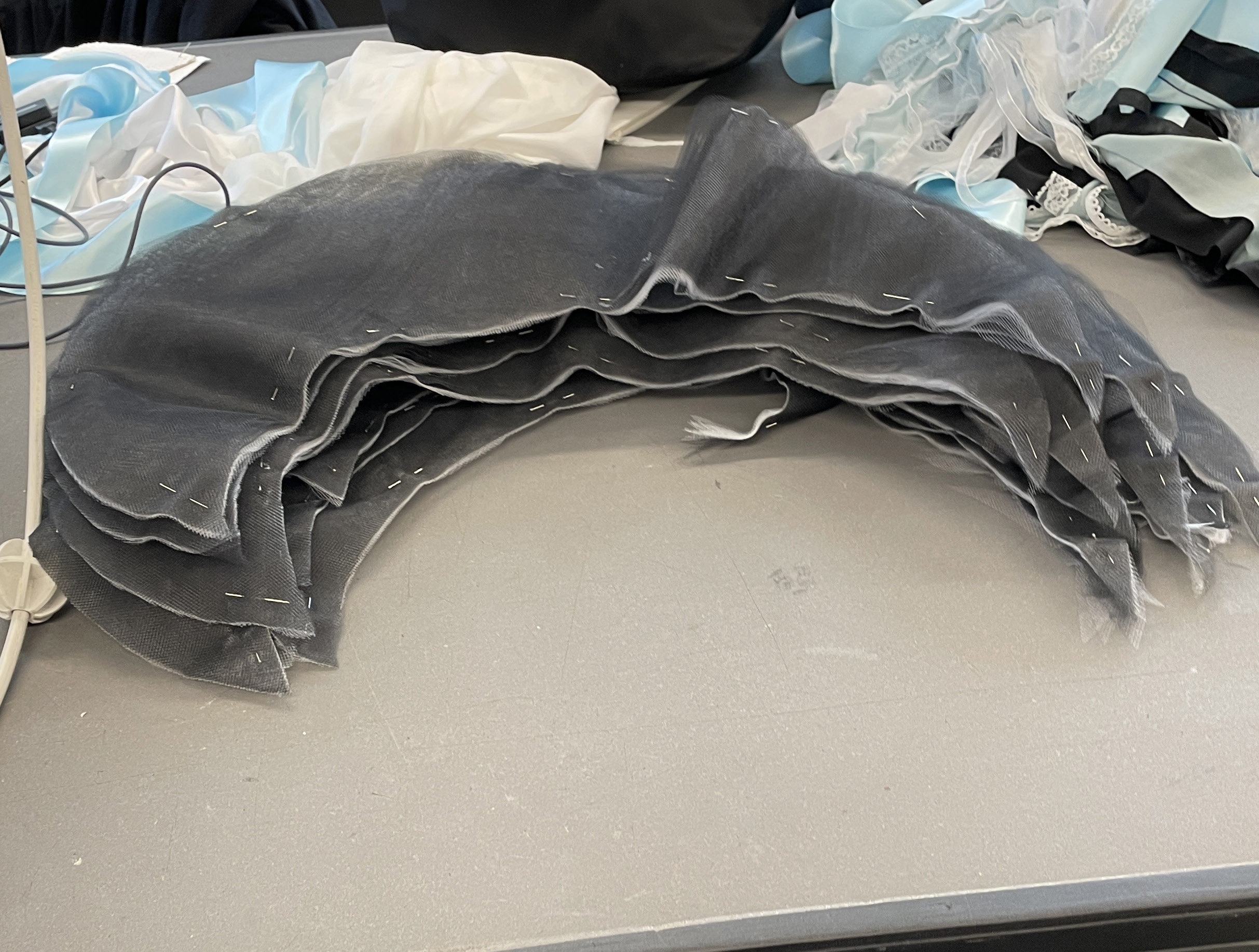
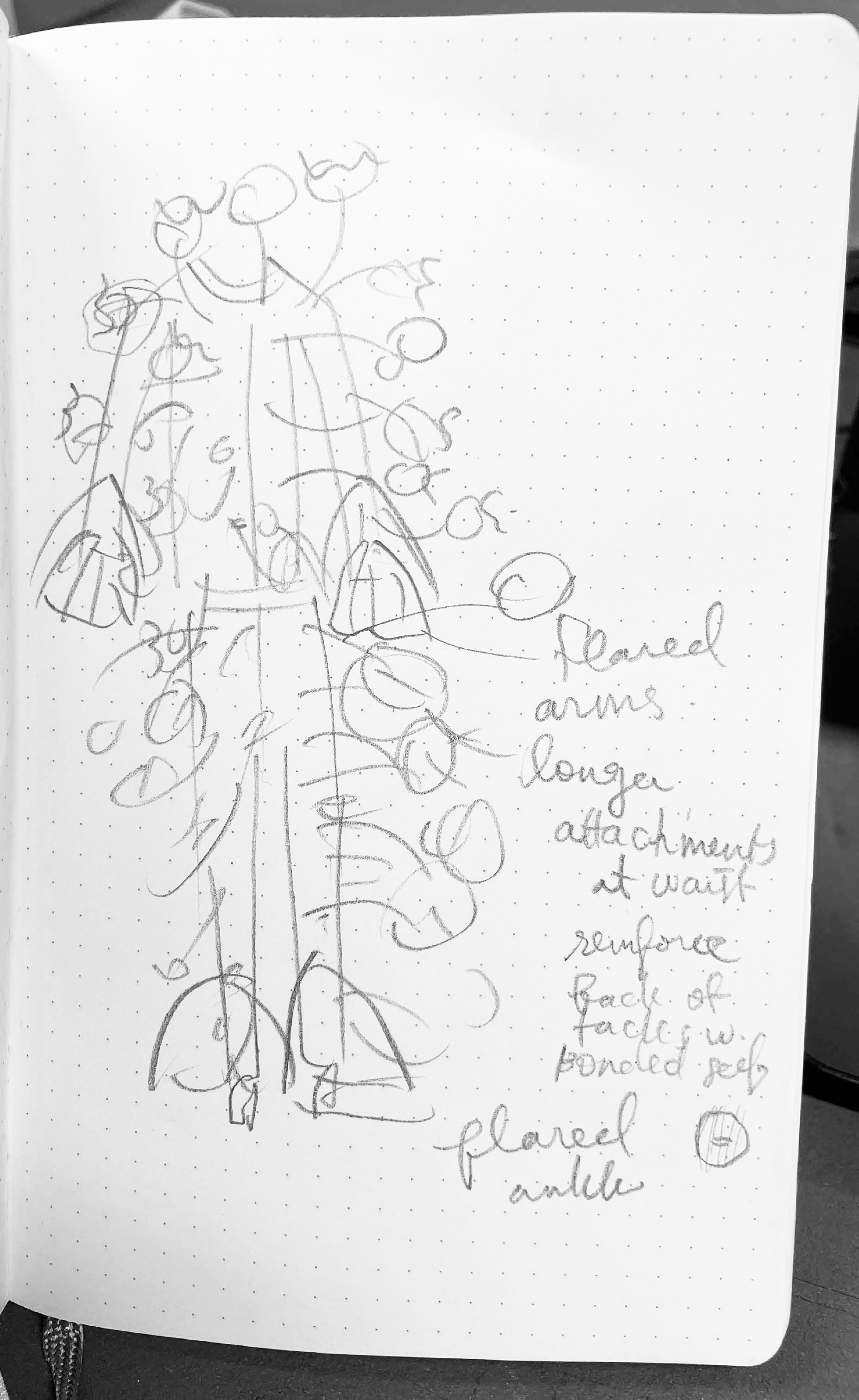
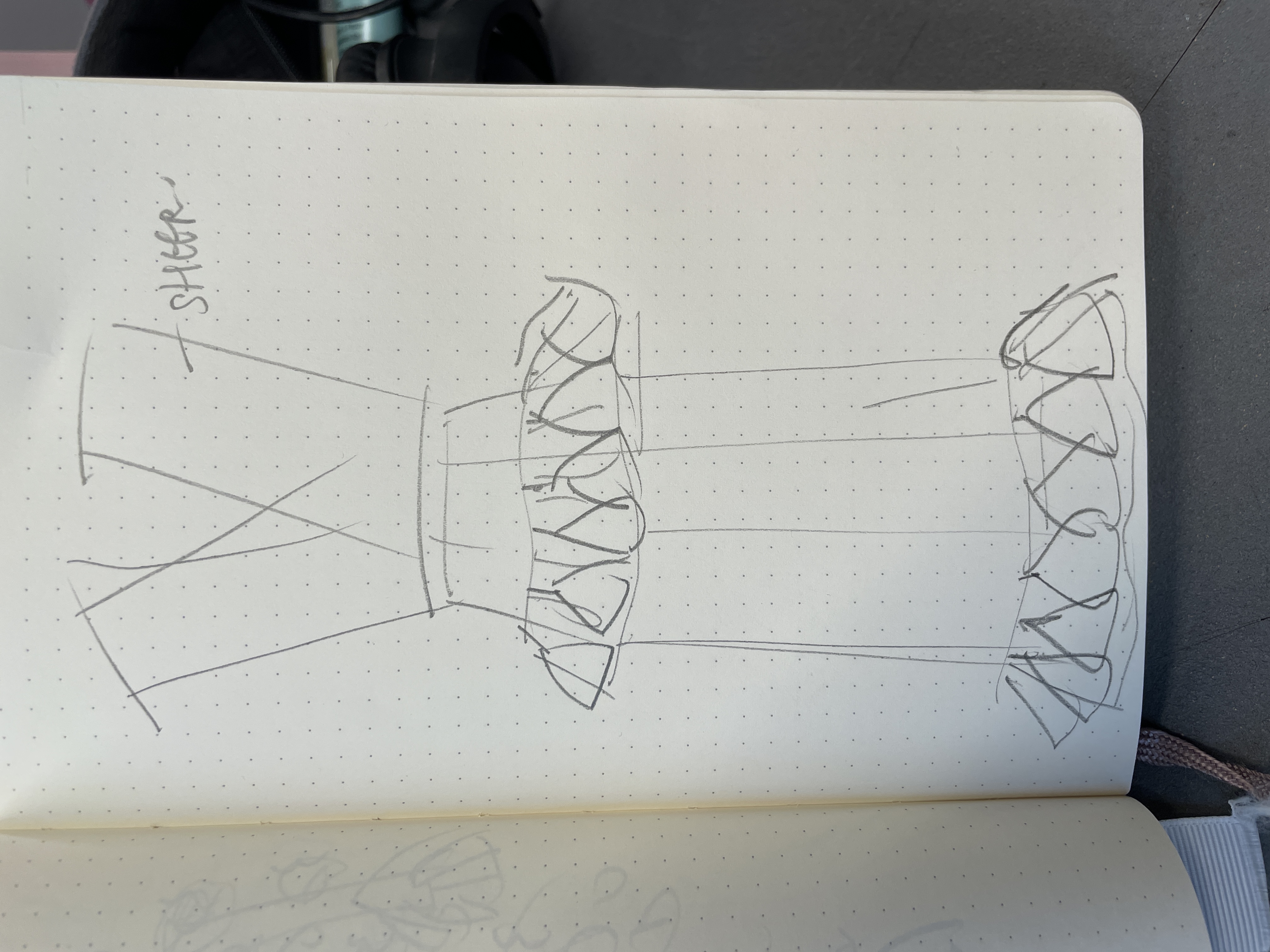
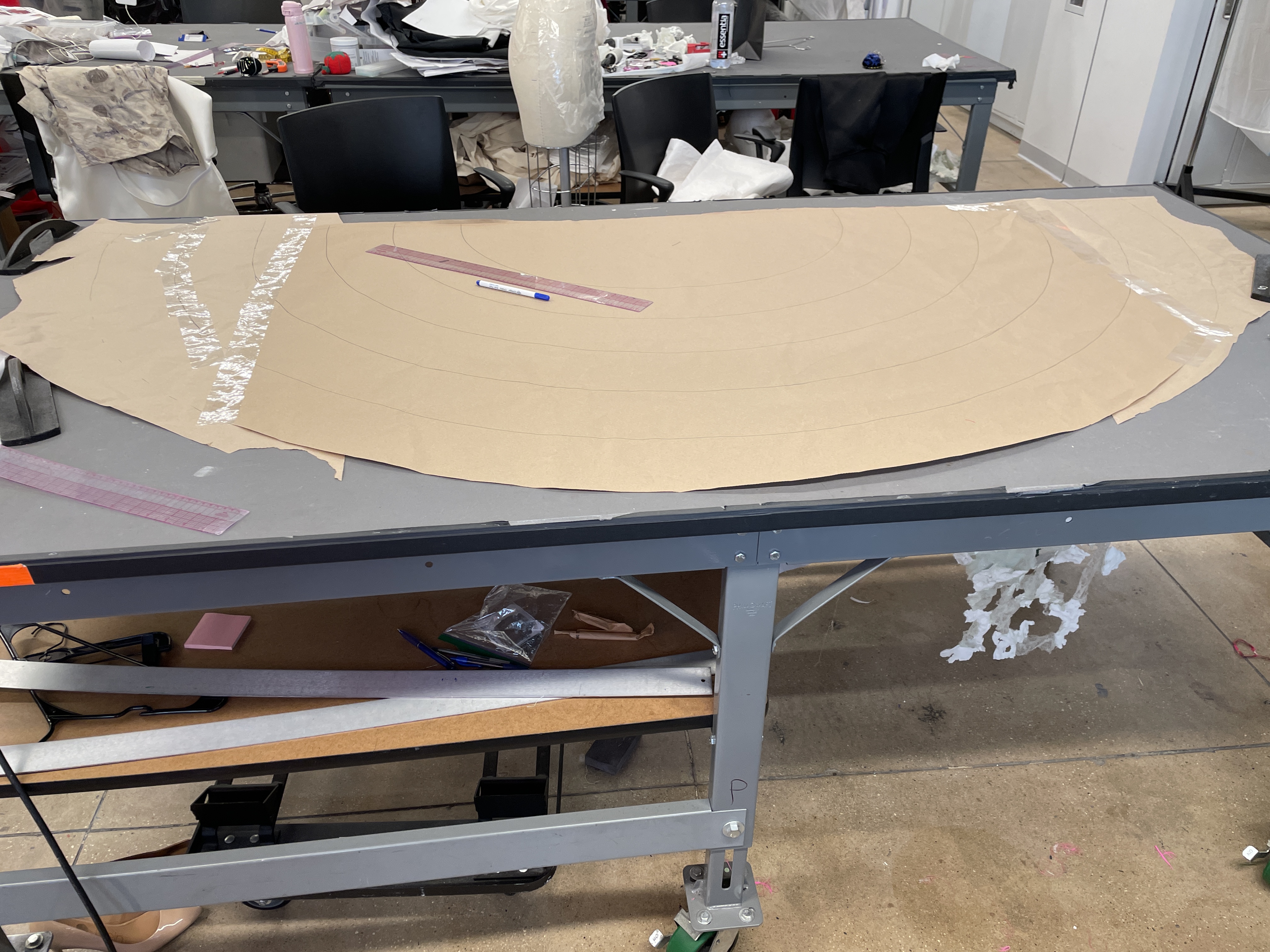
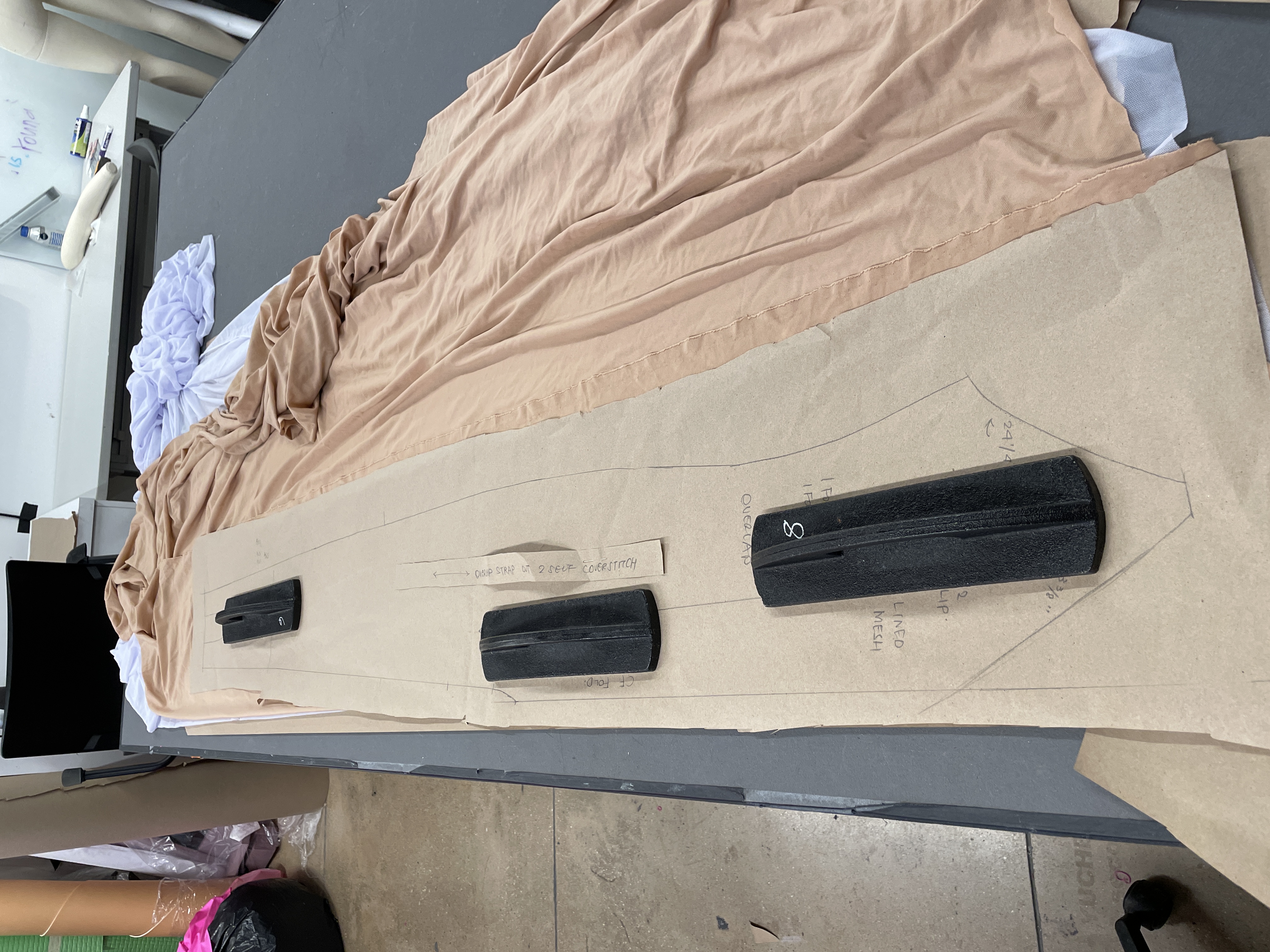
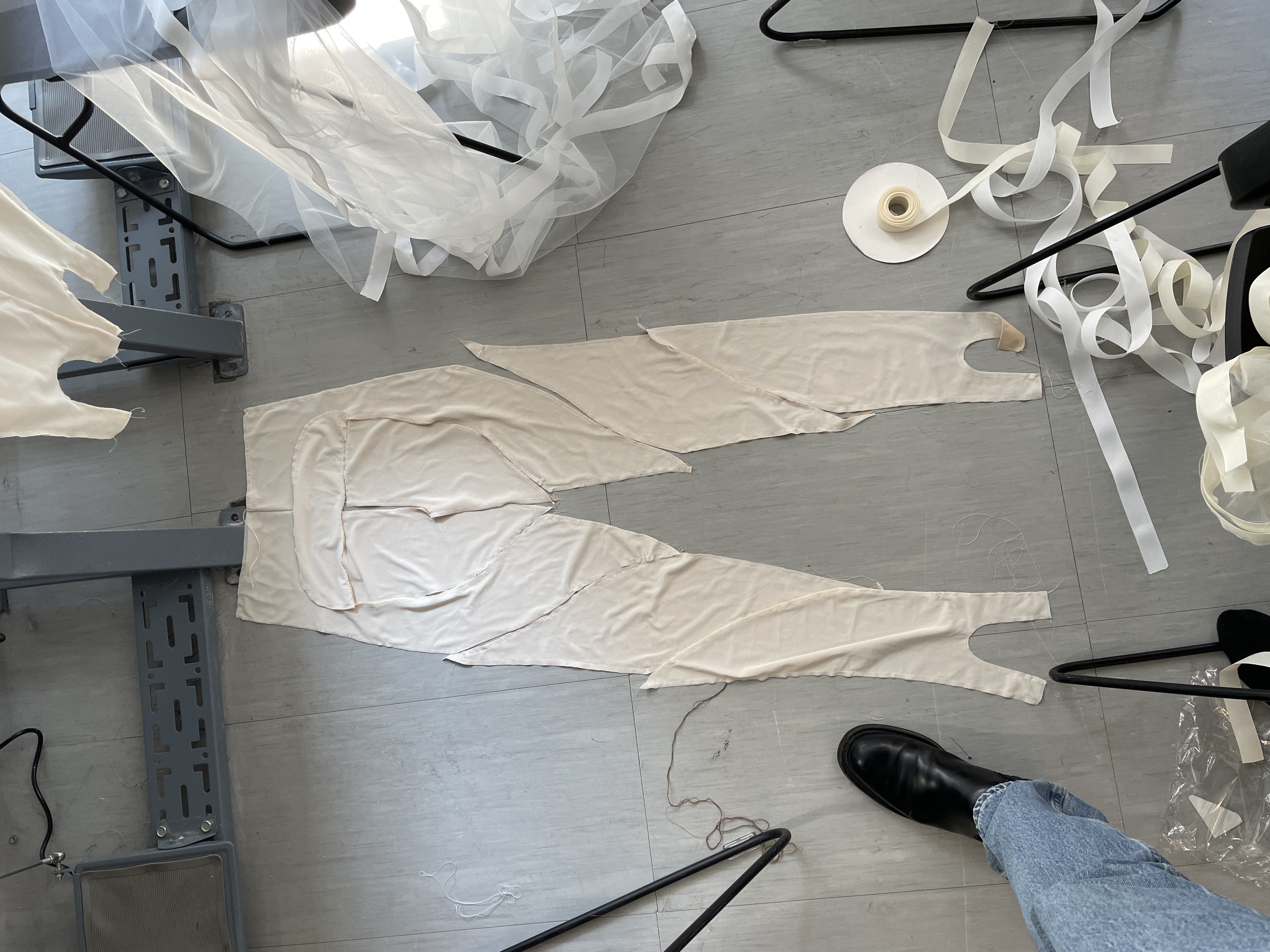
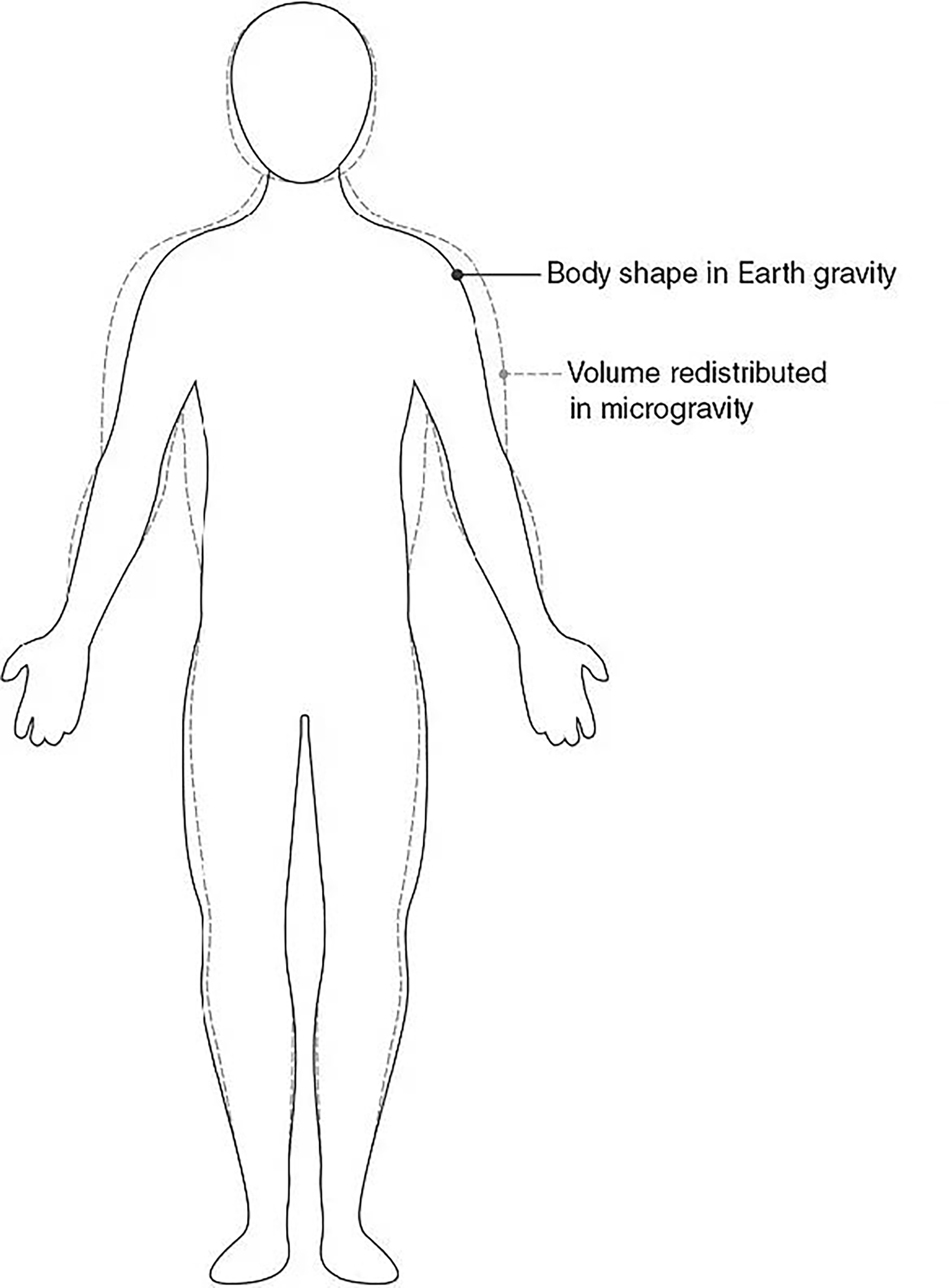
Designing a second skin to support the body in zero gravity. Adaptive patternmaking was studied to adjust for the postural and fluid changes the body undergoes in weightlessness.
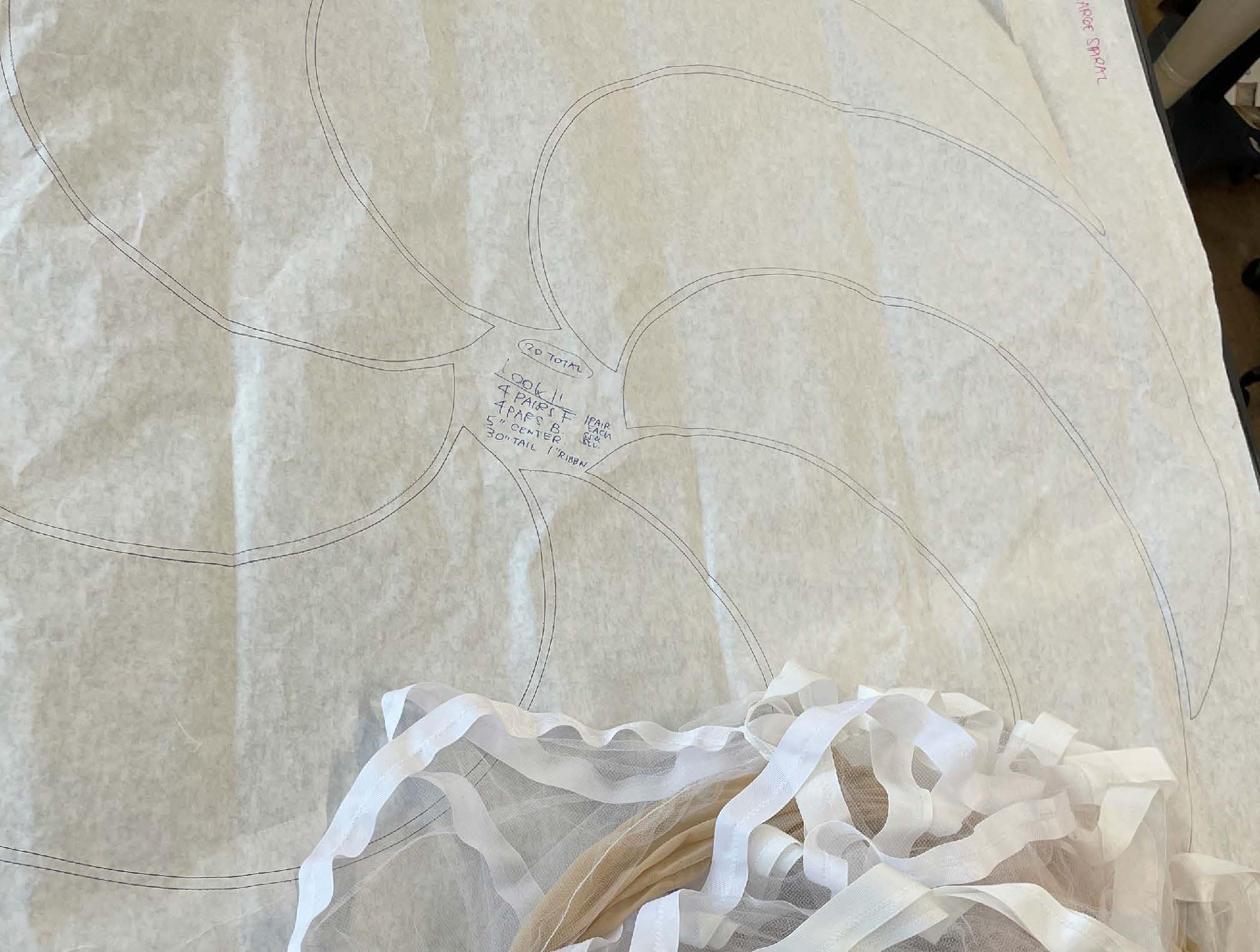
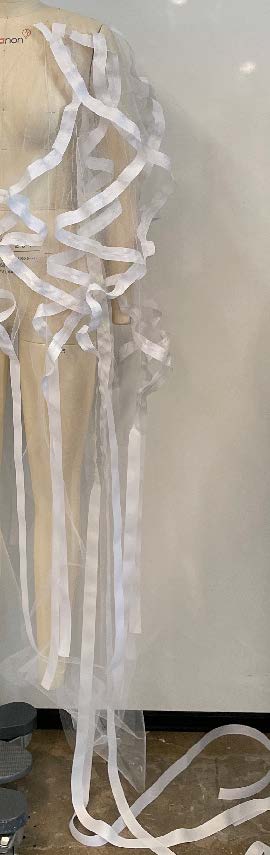
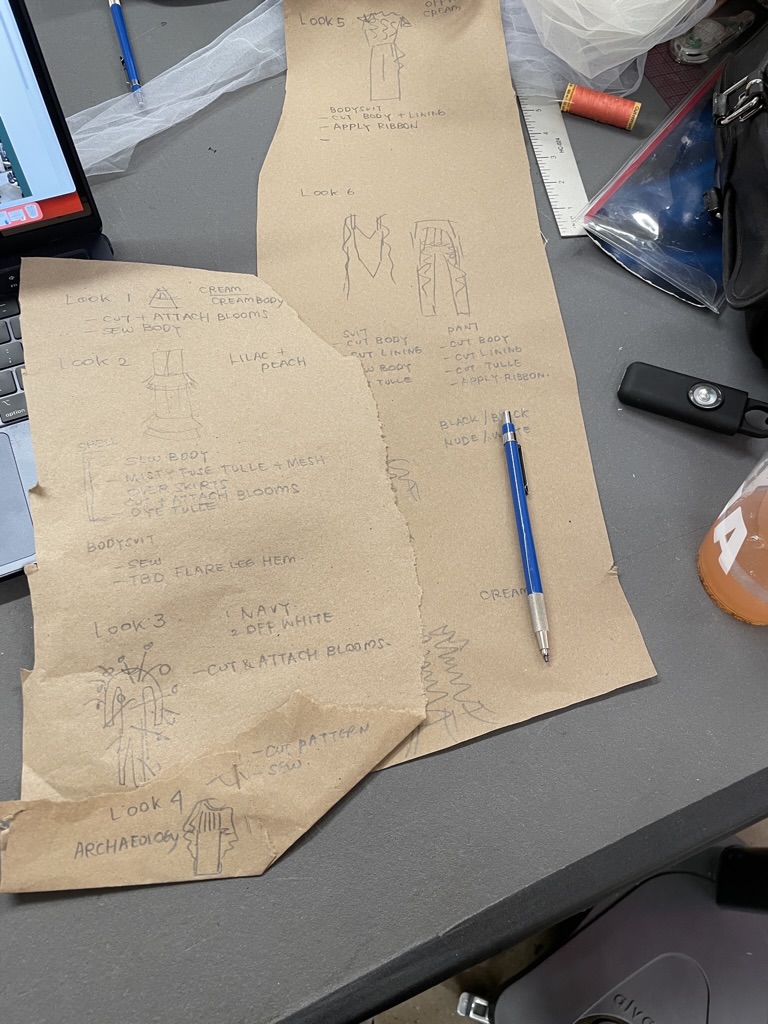
Endless combinations of panels were generated to create ribbons engineered to enhance motion.
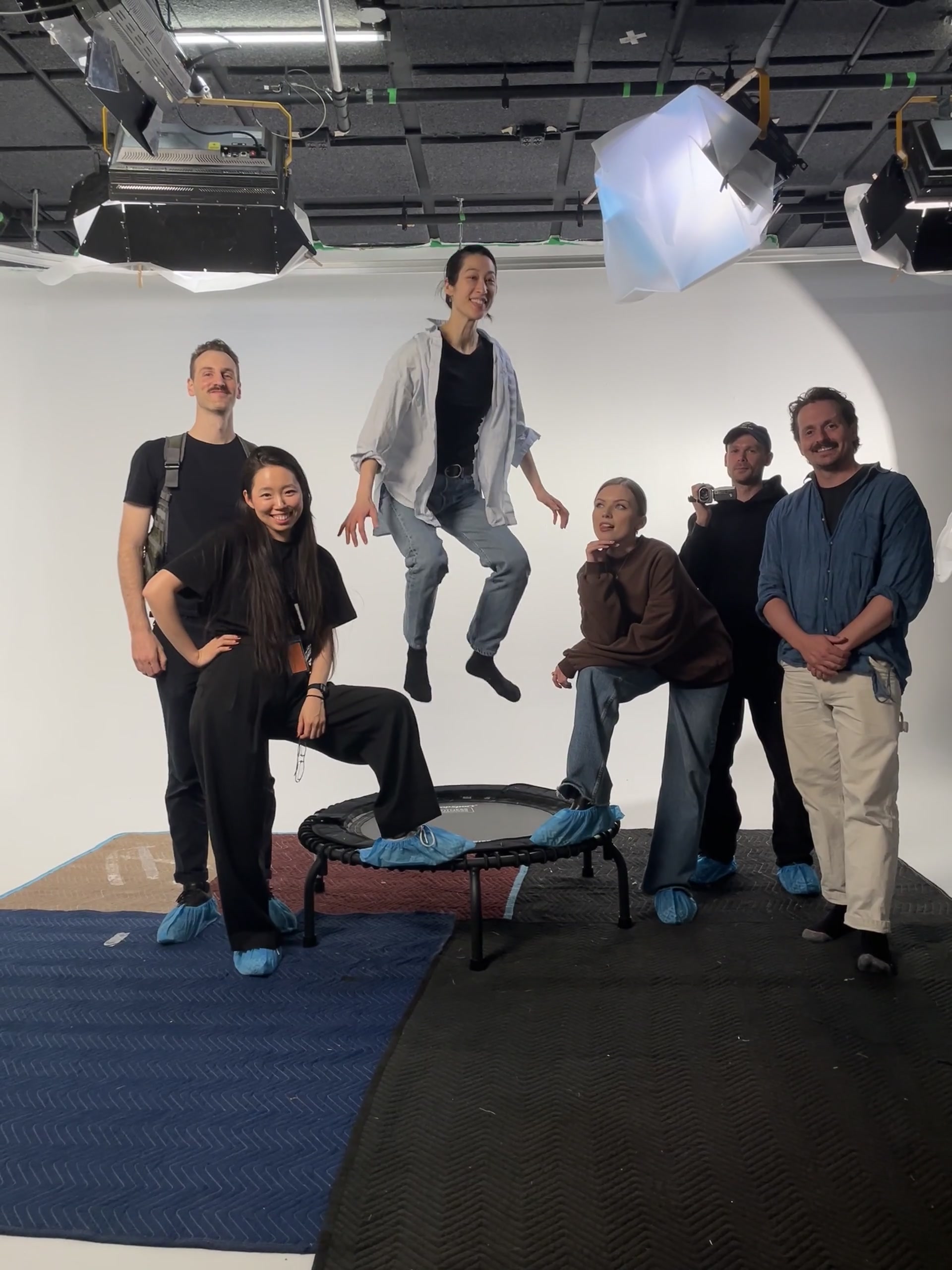
Trampolines were used to test garment kinetics. Captured in slow motion for accurate zero-gravity visualization.
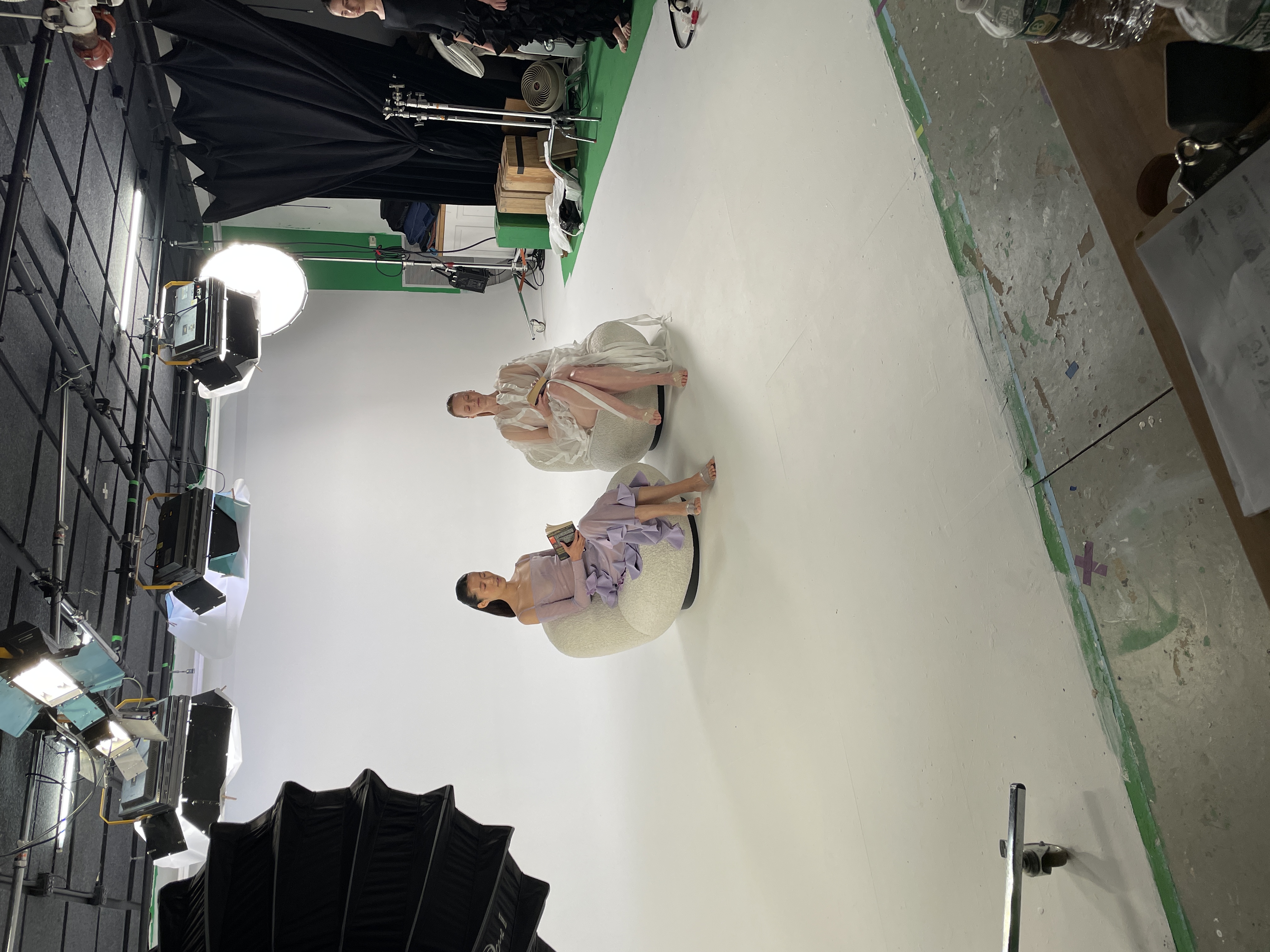
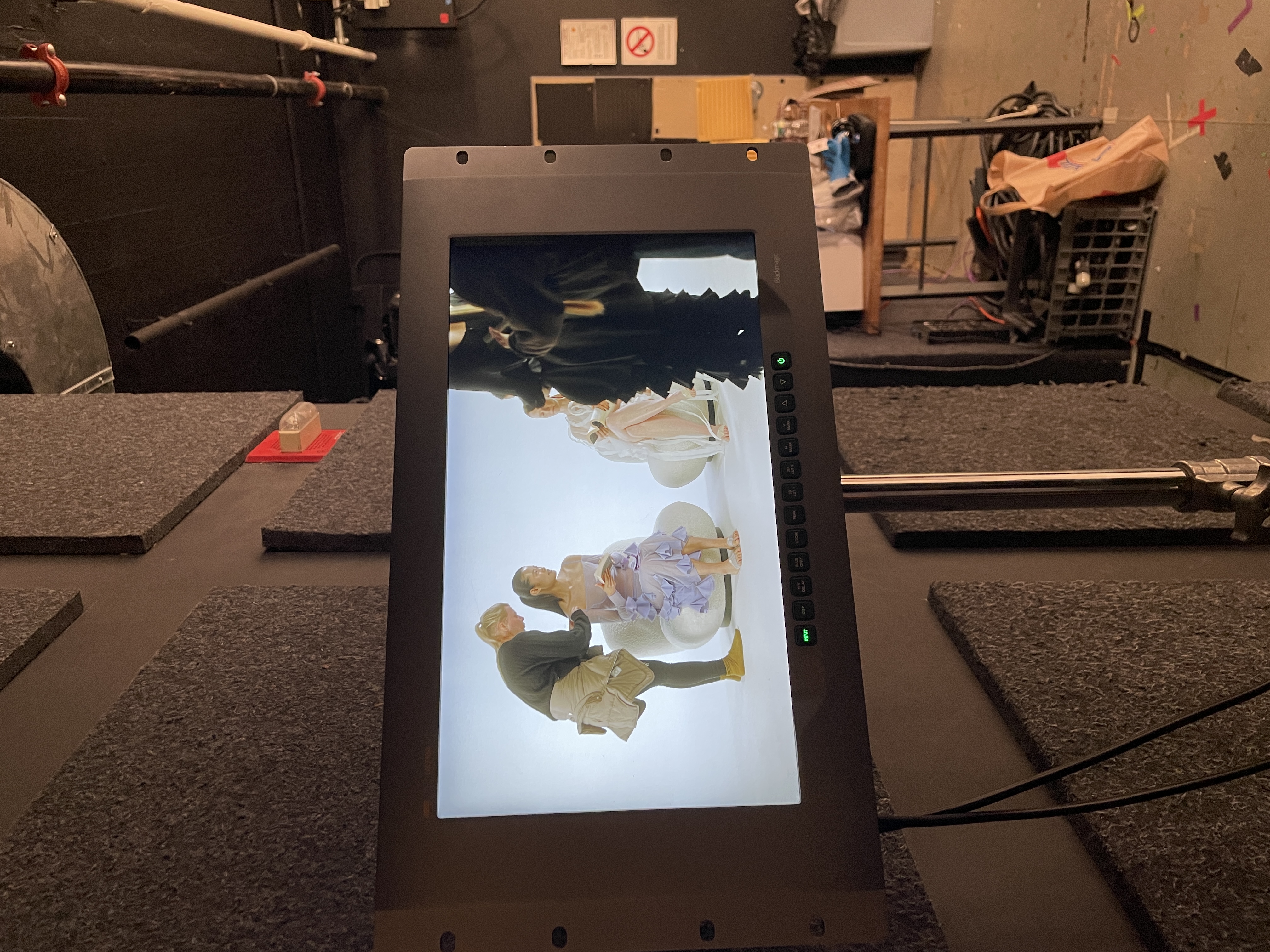
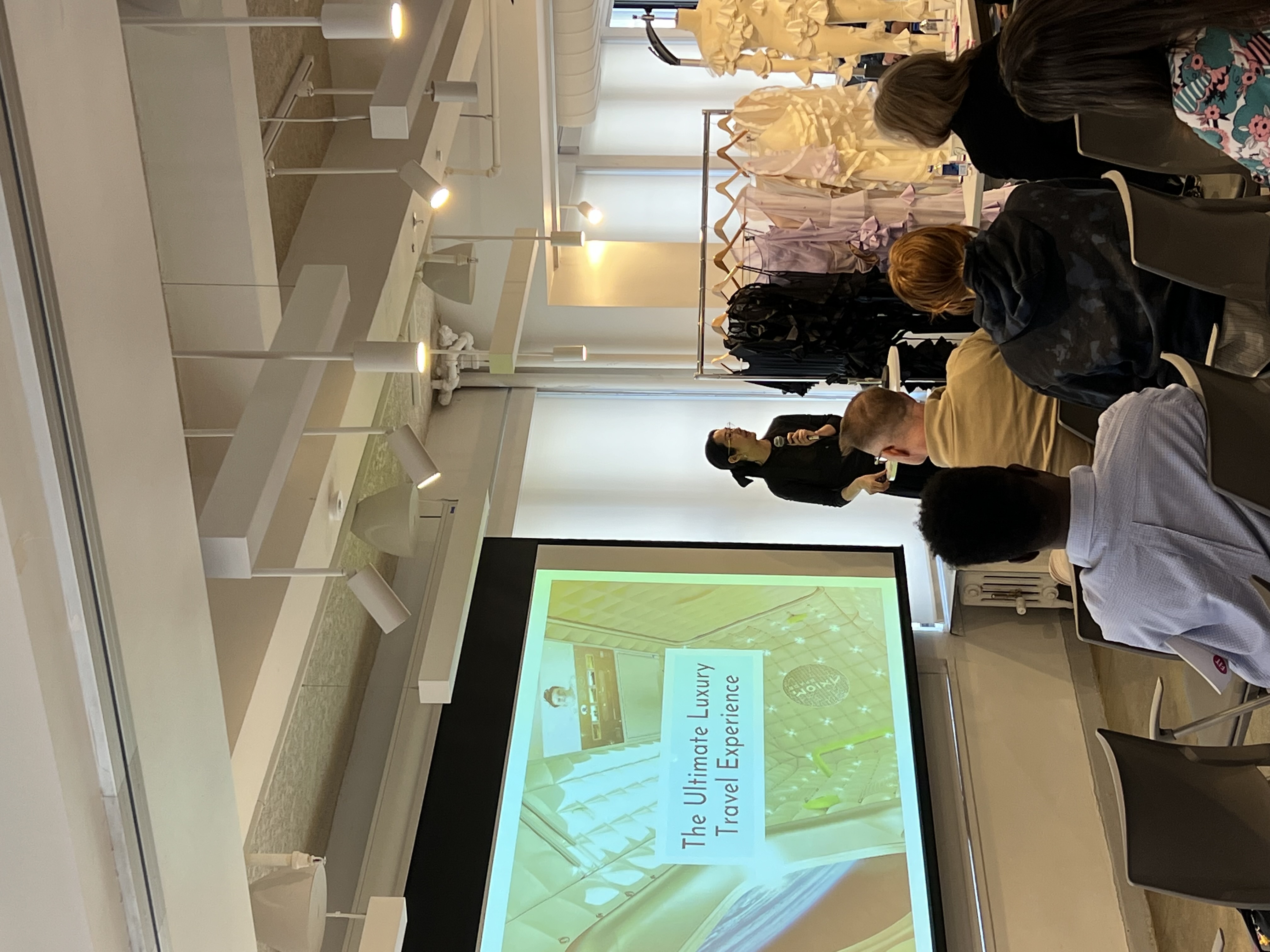
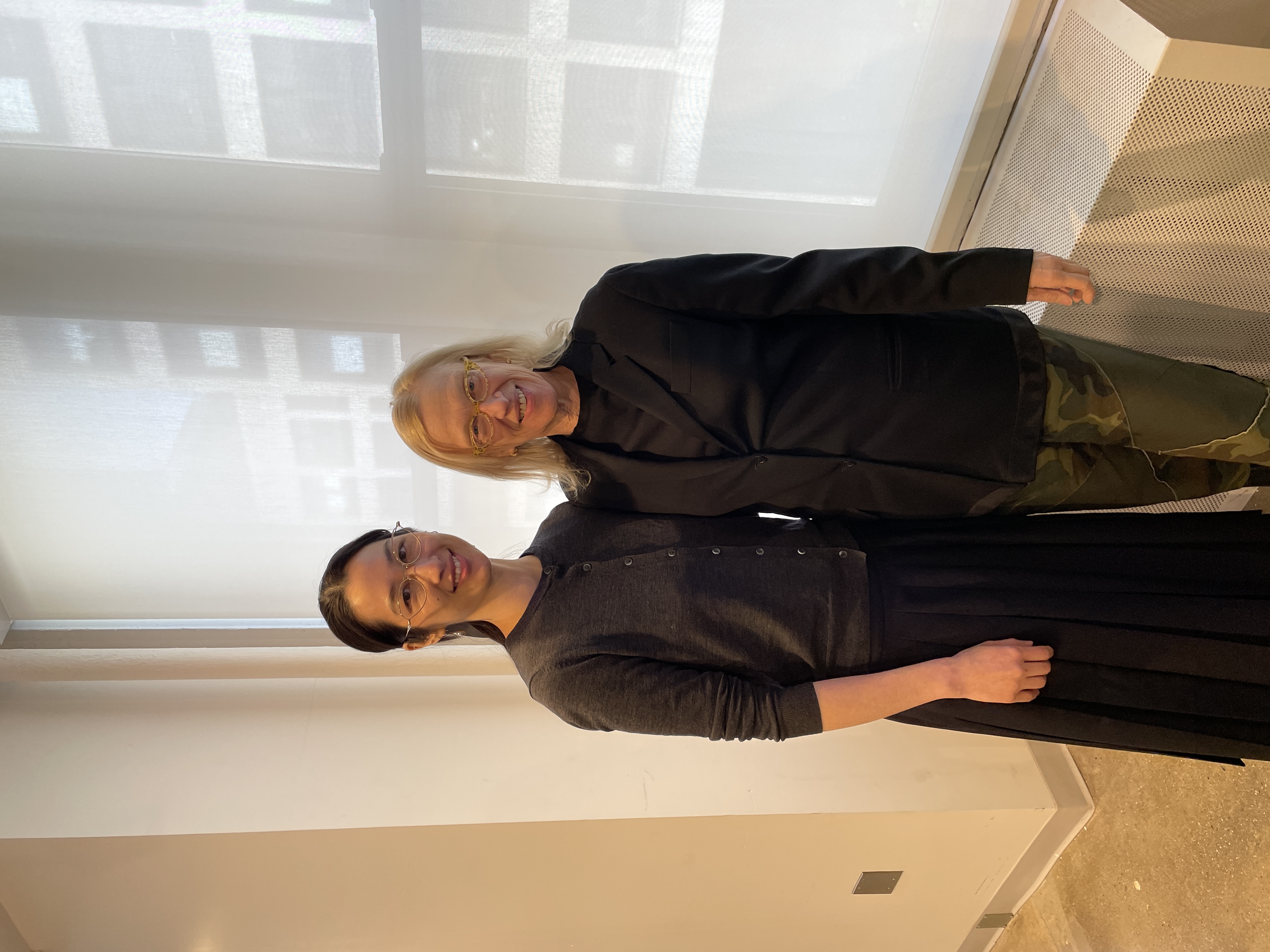
Presenting the work in front of esteemed industry and academic leaders.


scroll to view all looks
NYFW September 2023
Credits