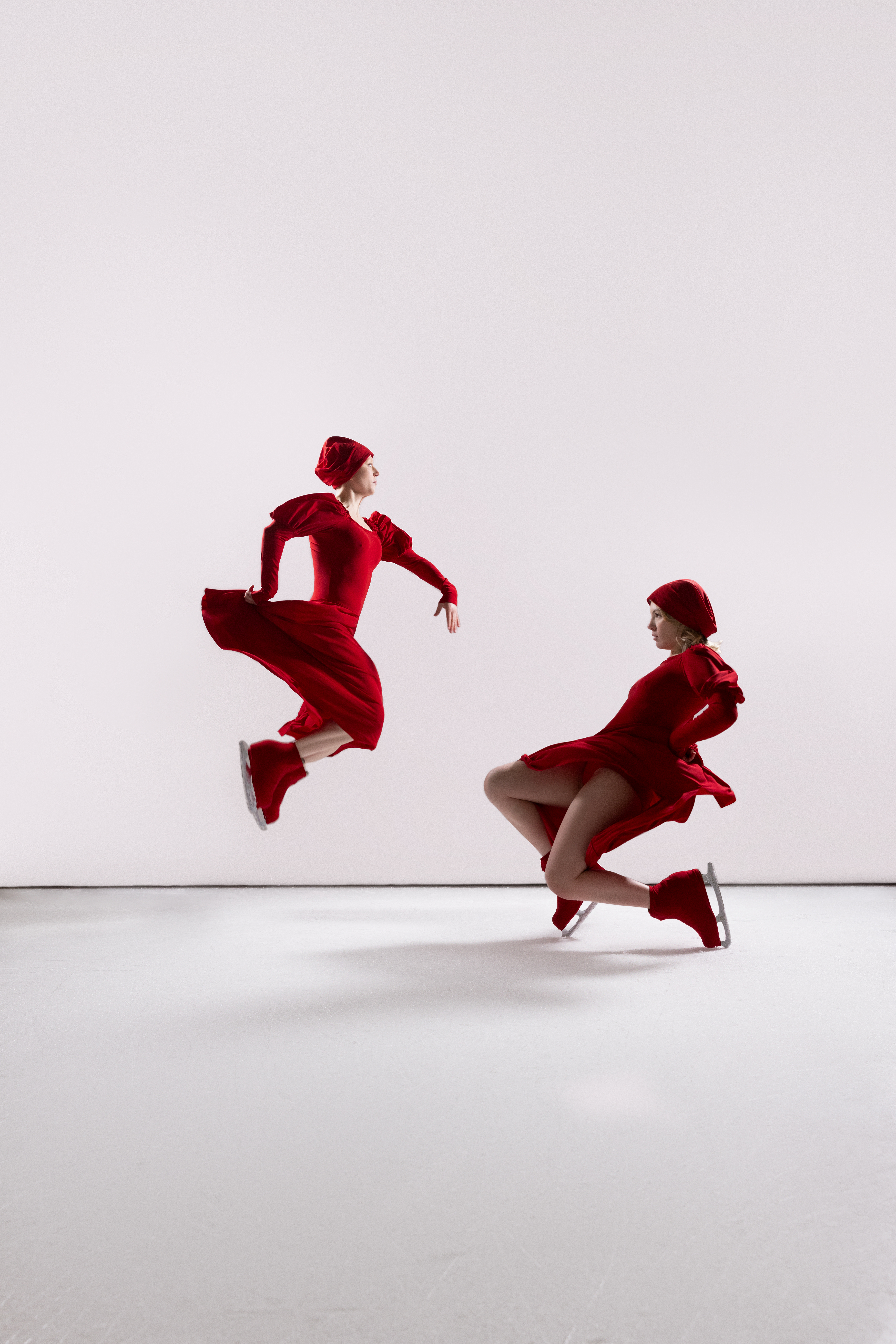
Synchronized movement on ice
Two bodies align, then begin to separate.
2024
Artemis and Callisto explores garments as a system responding to divergence. The work investigates how a shared pattern system behaves when two bodies move in alignment, then apart.
This project demonstrates that garments built from the same base will resolve differently when the bodies inside them stop matching.
Both garments begin from a single pattern. Same structure, same silhouette, same construction logic. Two figure skaters wear them on ice, moving in synchronization: mirrored gesture, shared rhythm, equivalent form.
The test was what happens when that alignment breaks. The skaters separate. Each body moves independently.
The garments diverge. Fit shifts, silhouettes no longer mirror, and each system becomes specific to its wearer. The body changes first. The system follows.
Synchronized movement on ice
In the myth, Artemis and Callisto are companions. They move together, hunt together, mirror each other's gestures until the two are nearly indistinguishable. Then Callisto's body changes. The synchronization breaks. Artemis no longer recognizes her, and what was shared becomes specific, singular, no longer returnable.
The collection takes this as its condition. Two garments. Two bodies. One shared origin. The question is not whether they match. It is what happens when they stop.
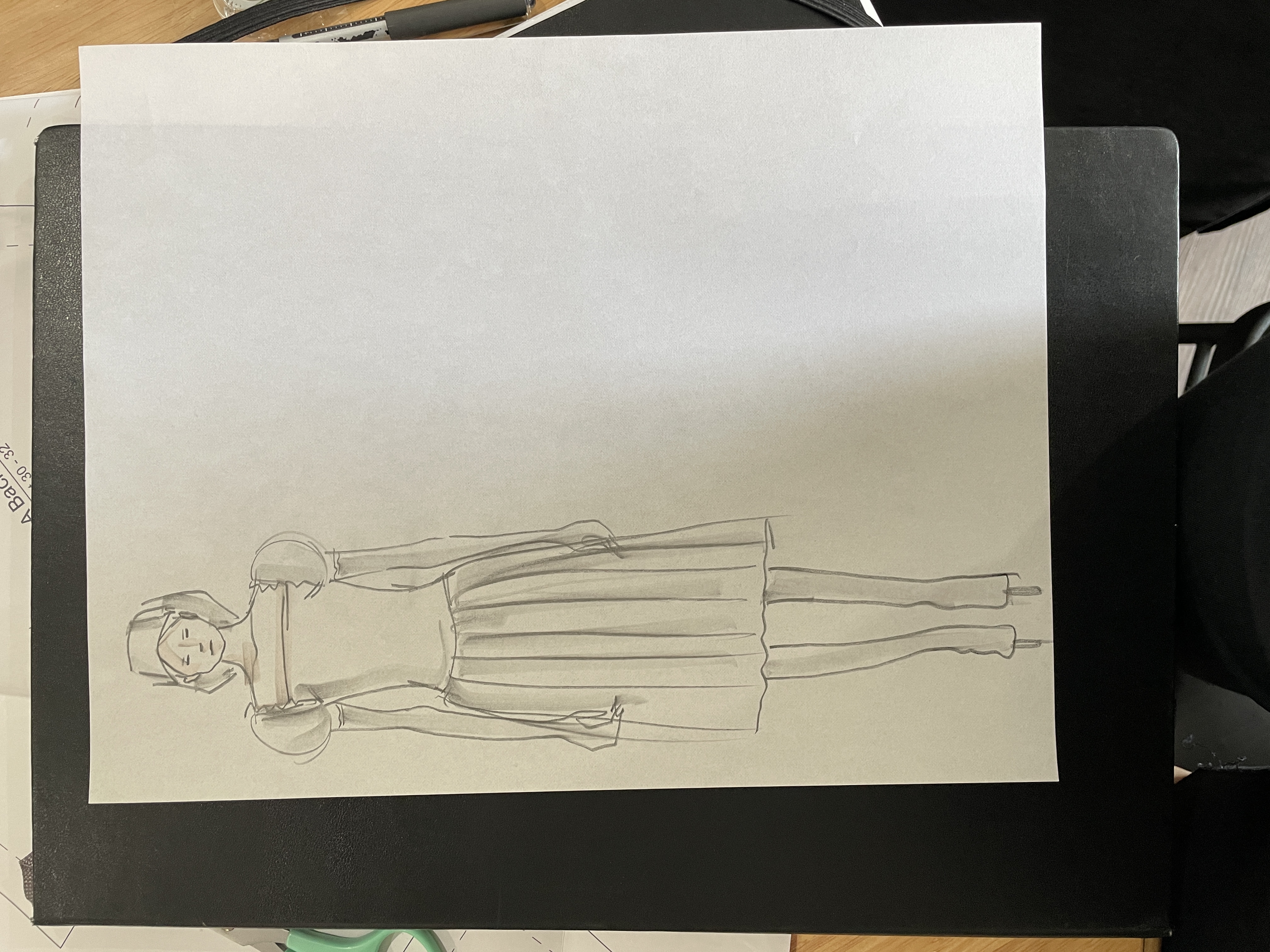
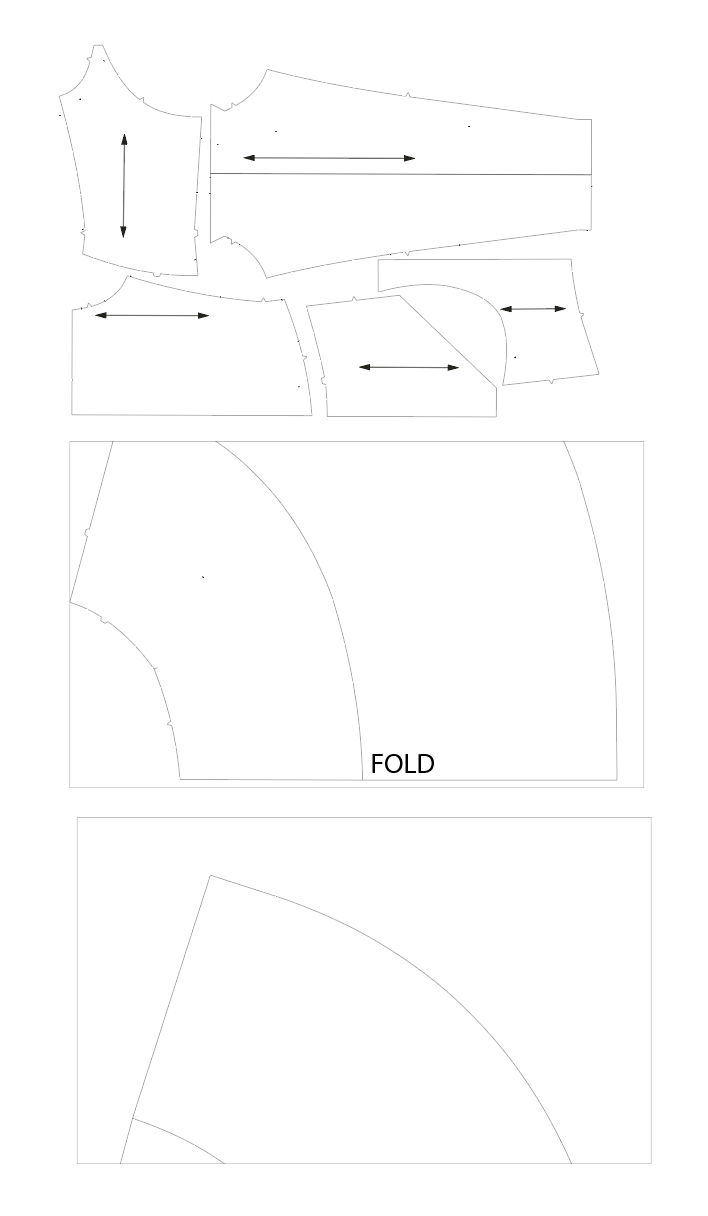
Initial garment sketch and sewing pattern, shared base for both garments
The silhouette is modeled after a peasant dress, with puffed sleeves and gathered shoulders. The construction allows the fabric to move freely from a fixed gathering point, so the garment shifts with the body rather than holding a rigid line. The material is a super lightweight ITY jersey, stretchy enough to follow every gesture. Physical movement translates into liquid fabric movement, so the garment never resists the body. It just keeps up.
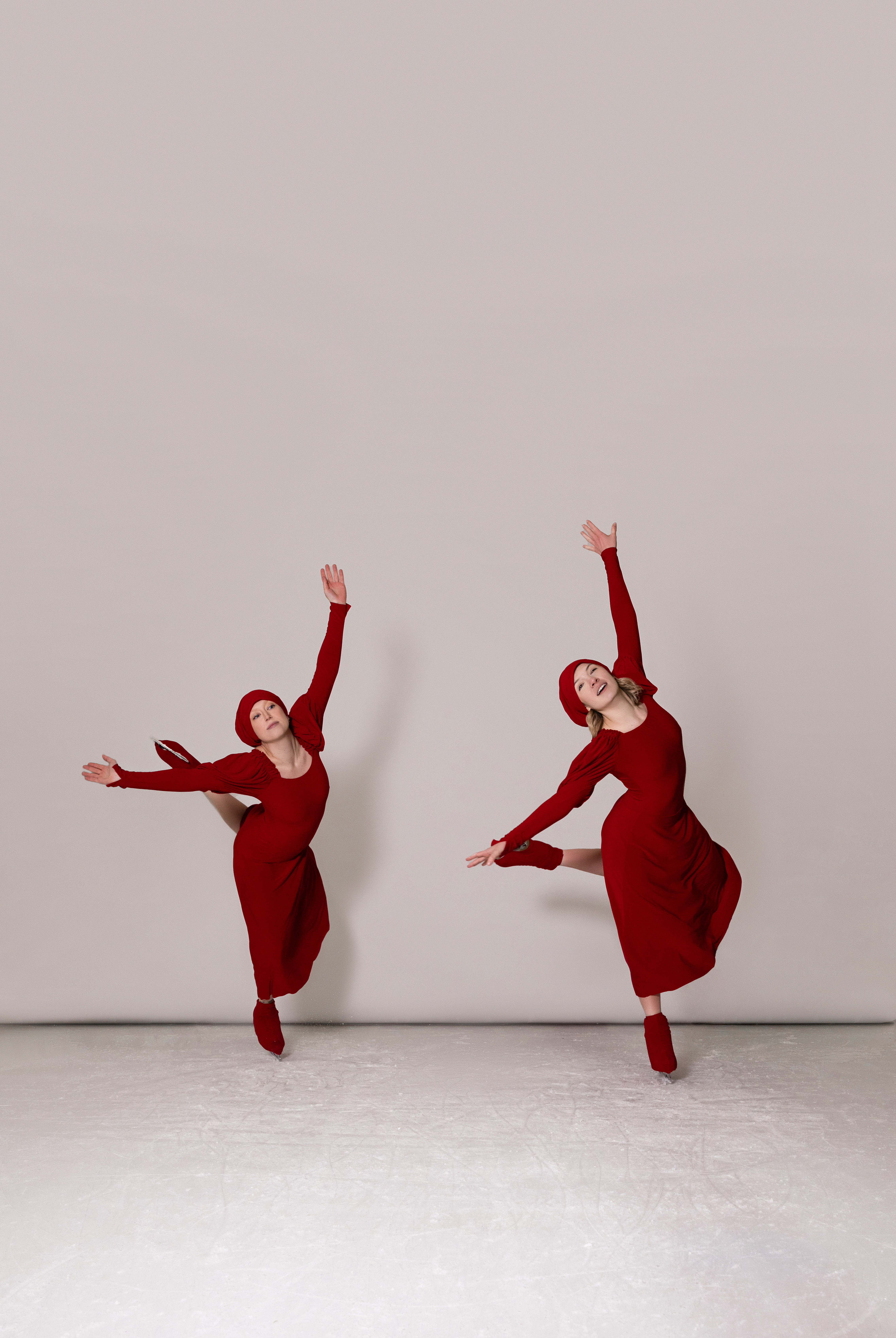
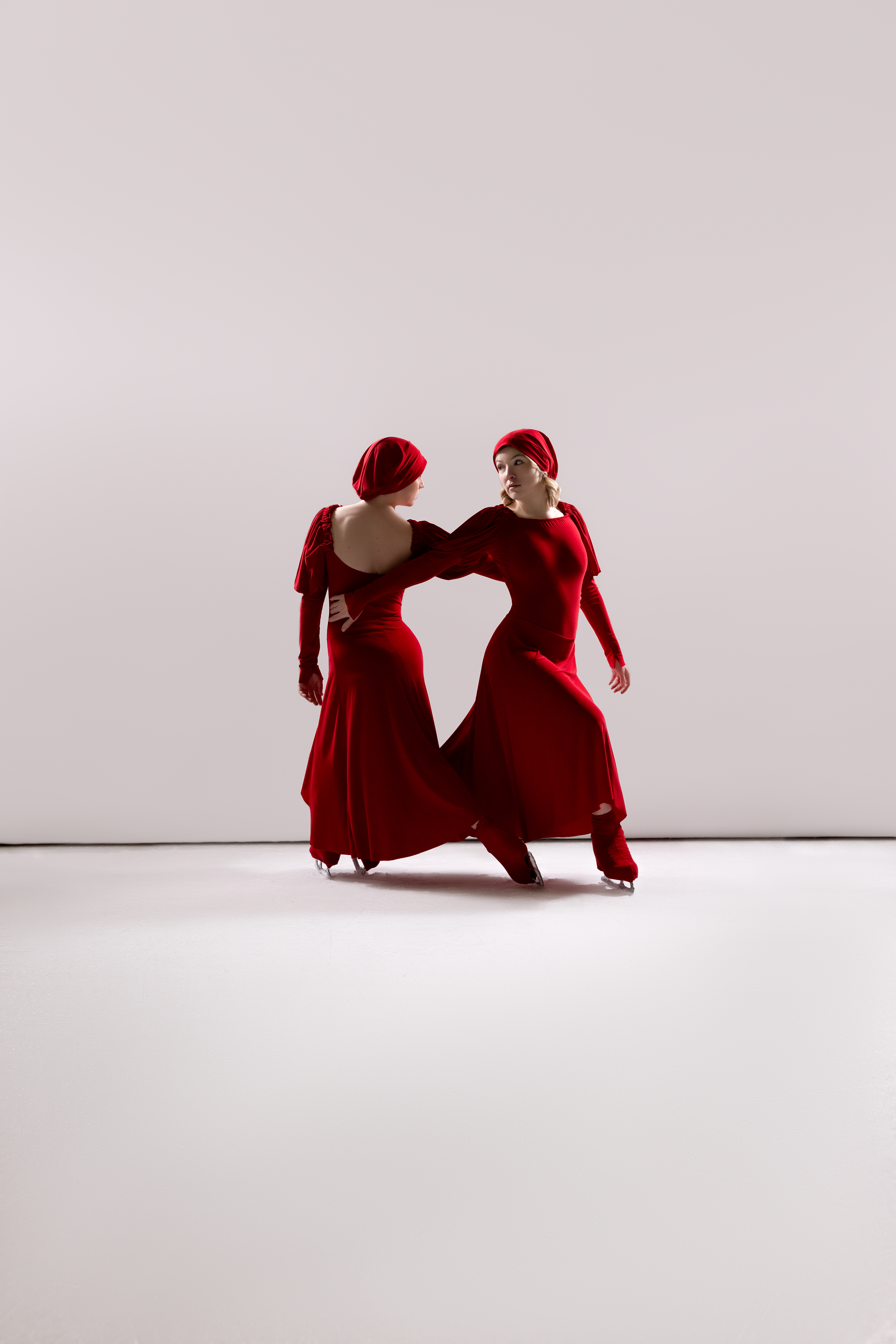
Alignment: shared movement, shared structure
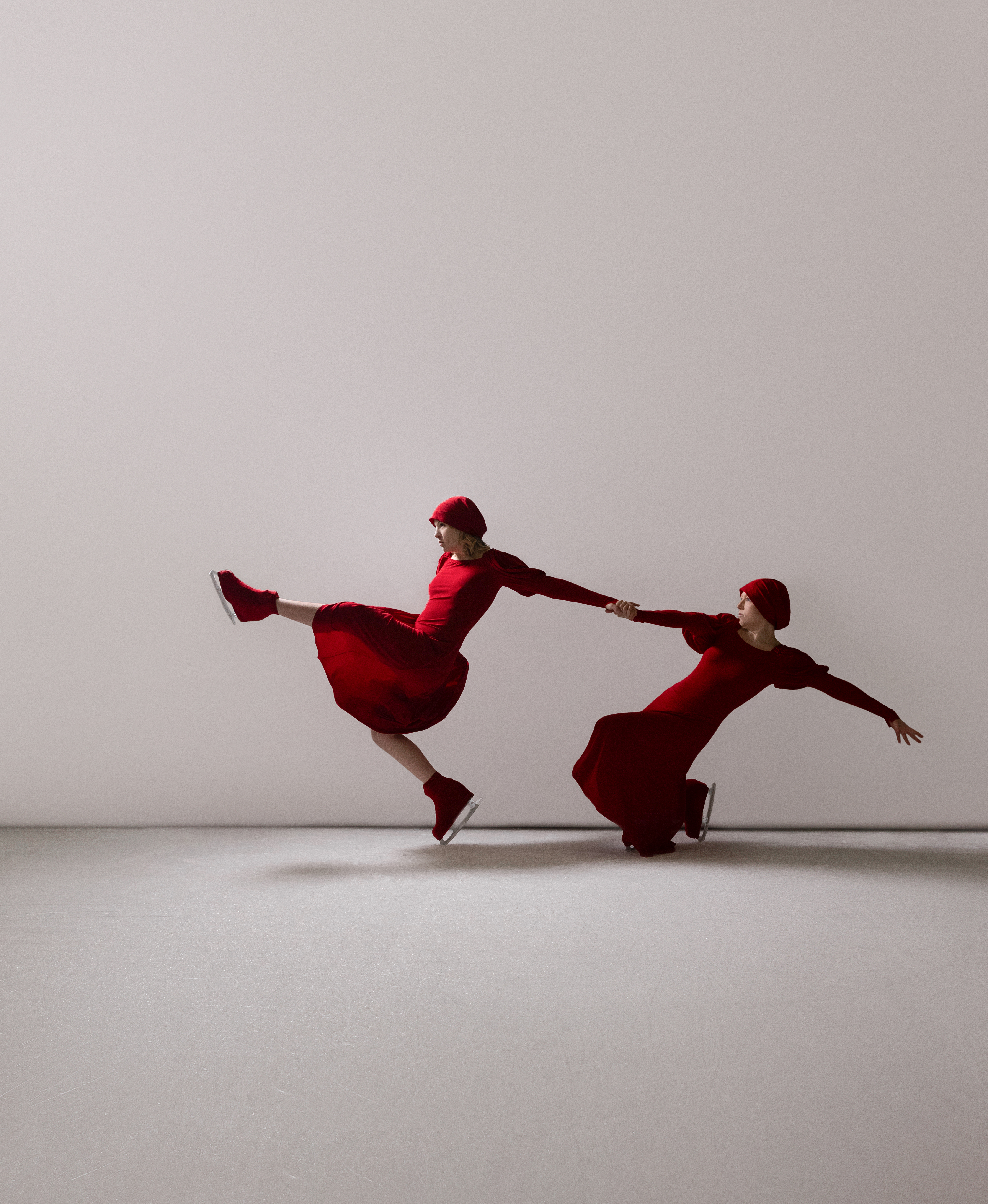
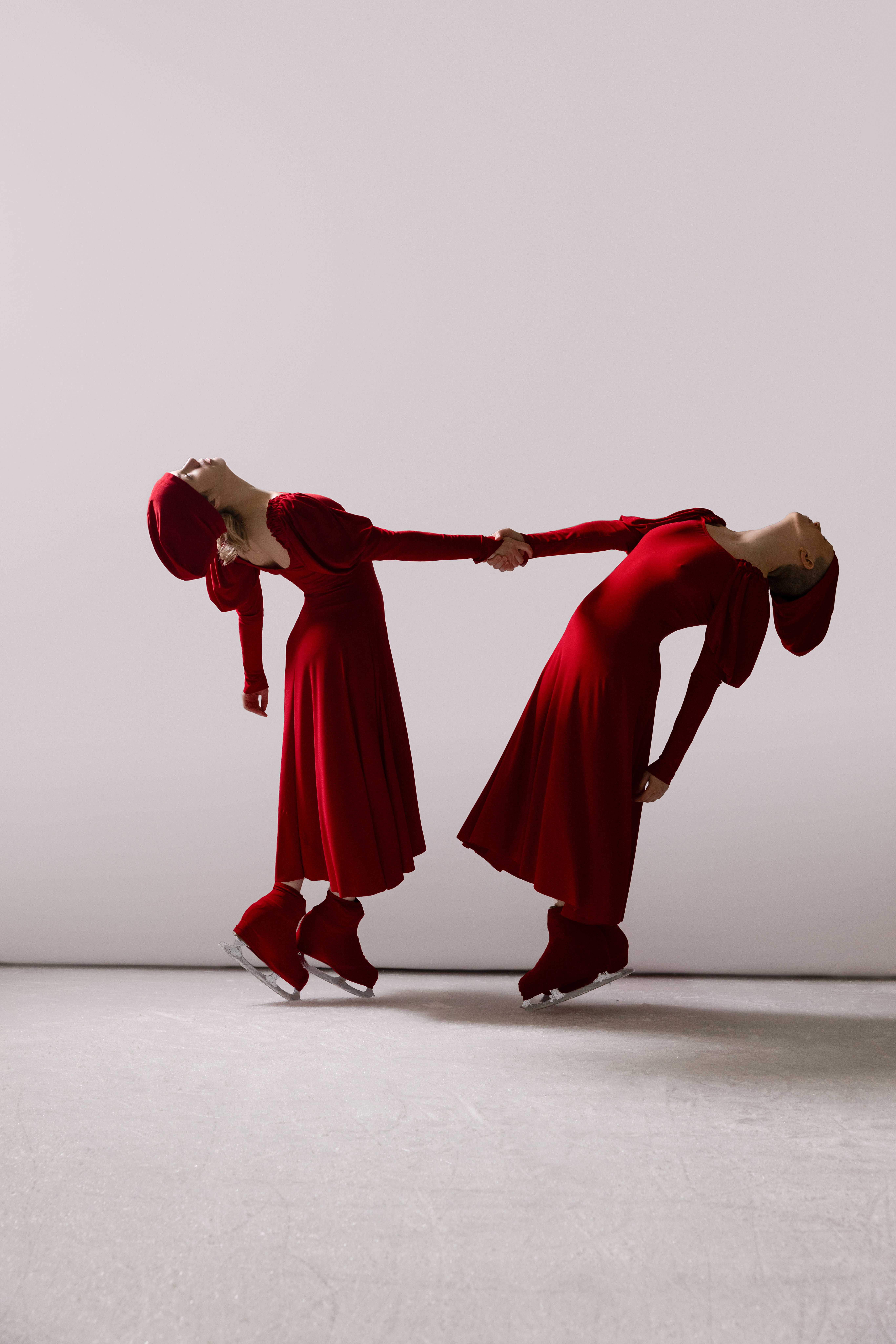
Divergence: bodies separate, garments resolve independently
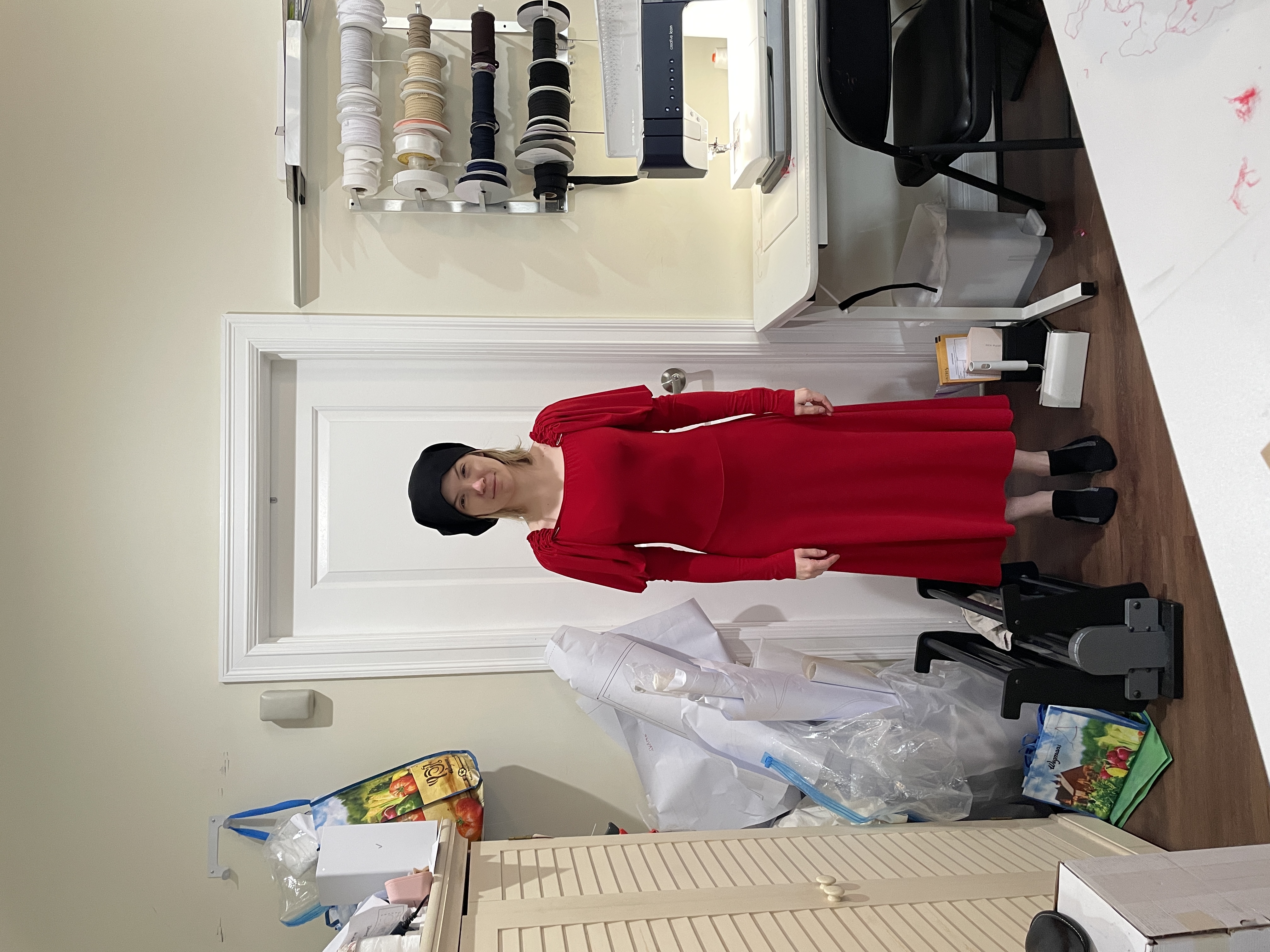
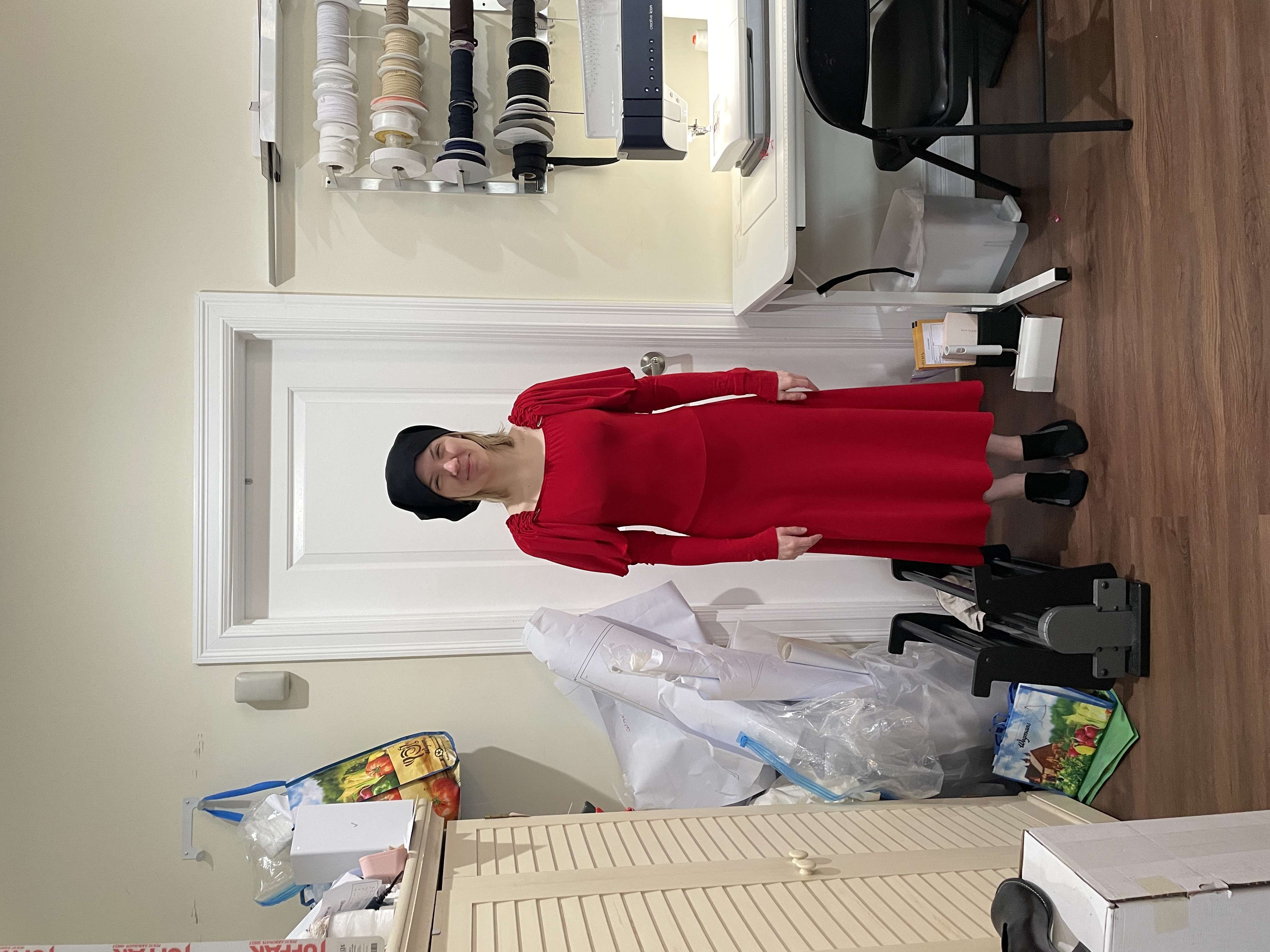
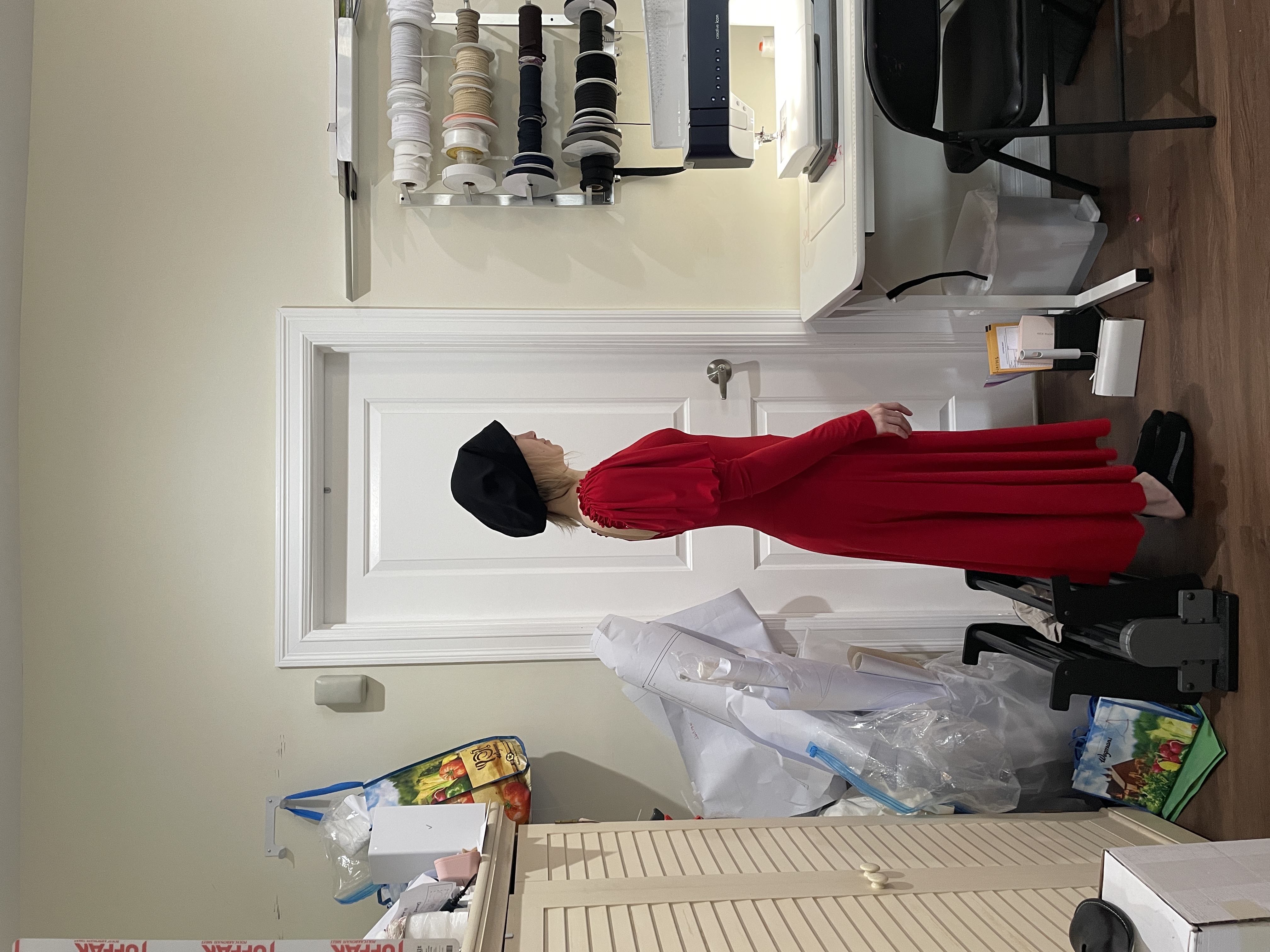
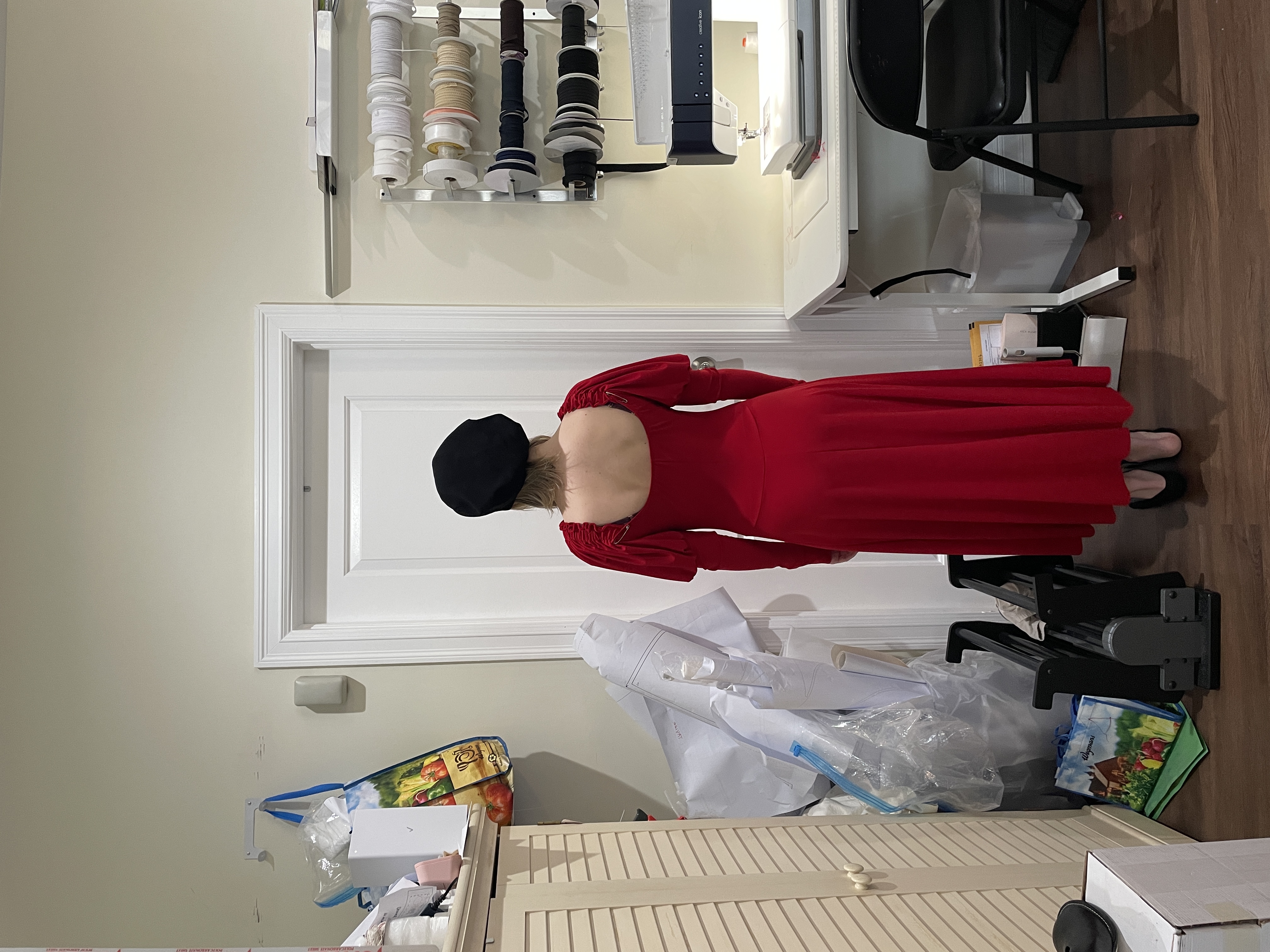
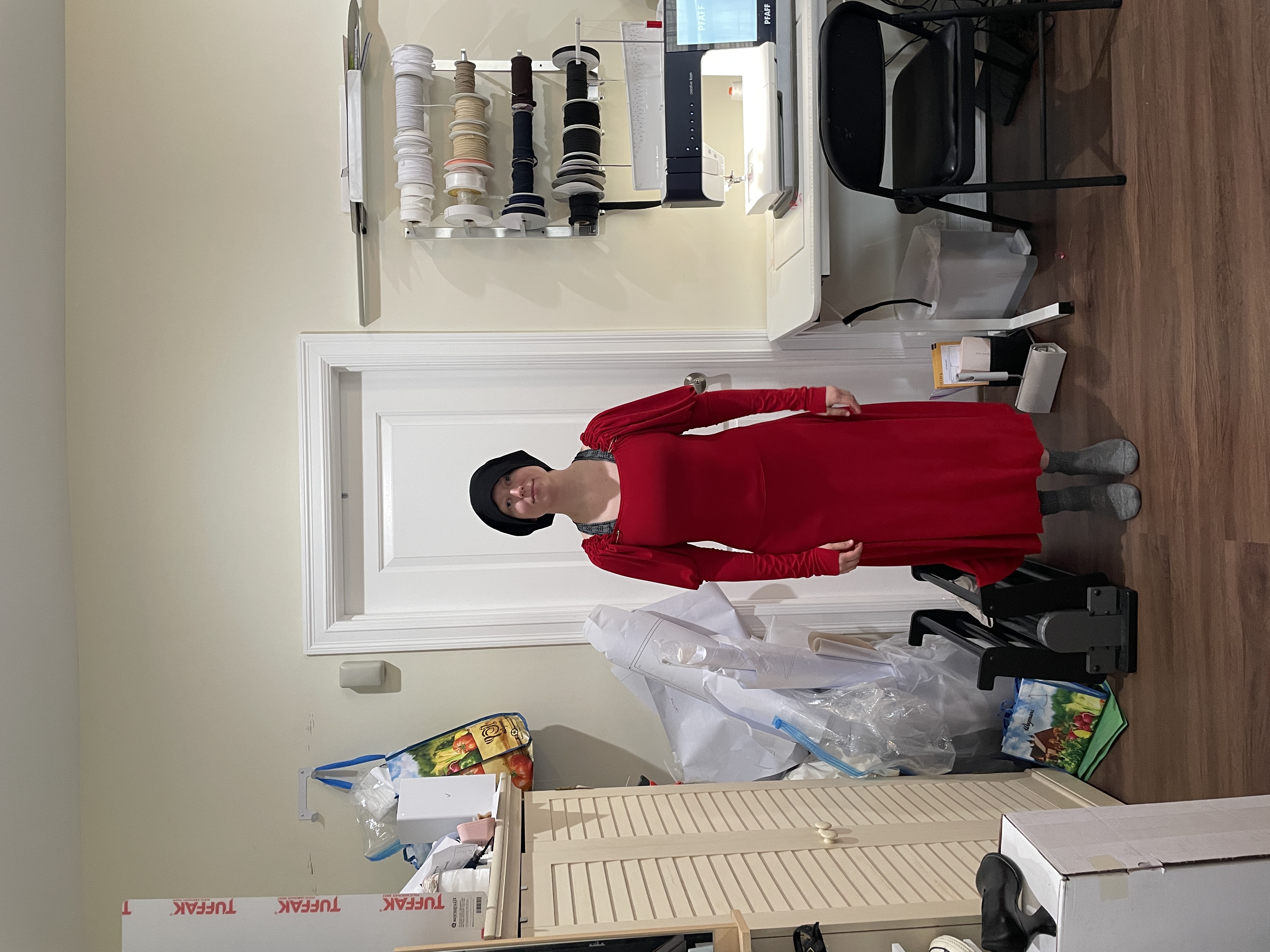
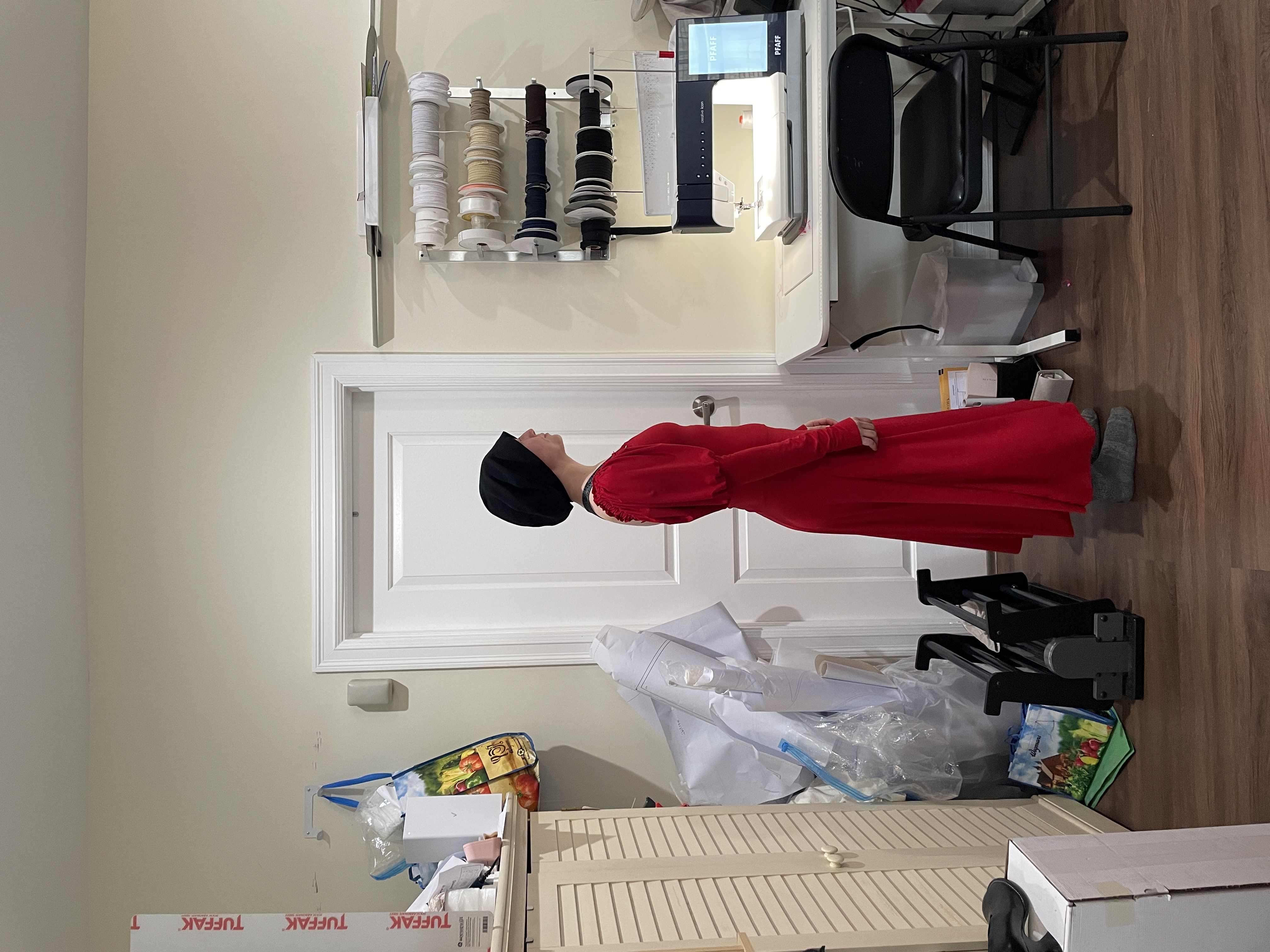
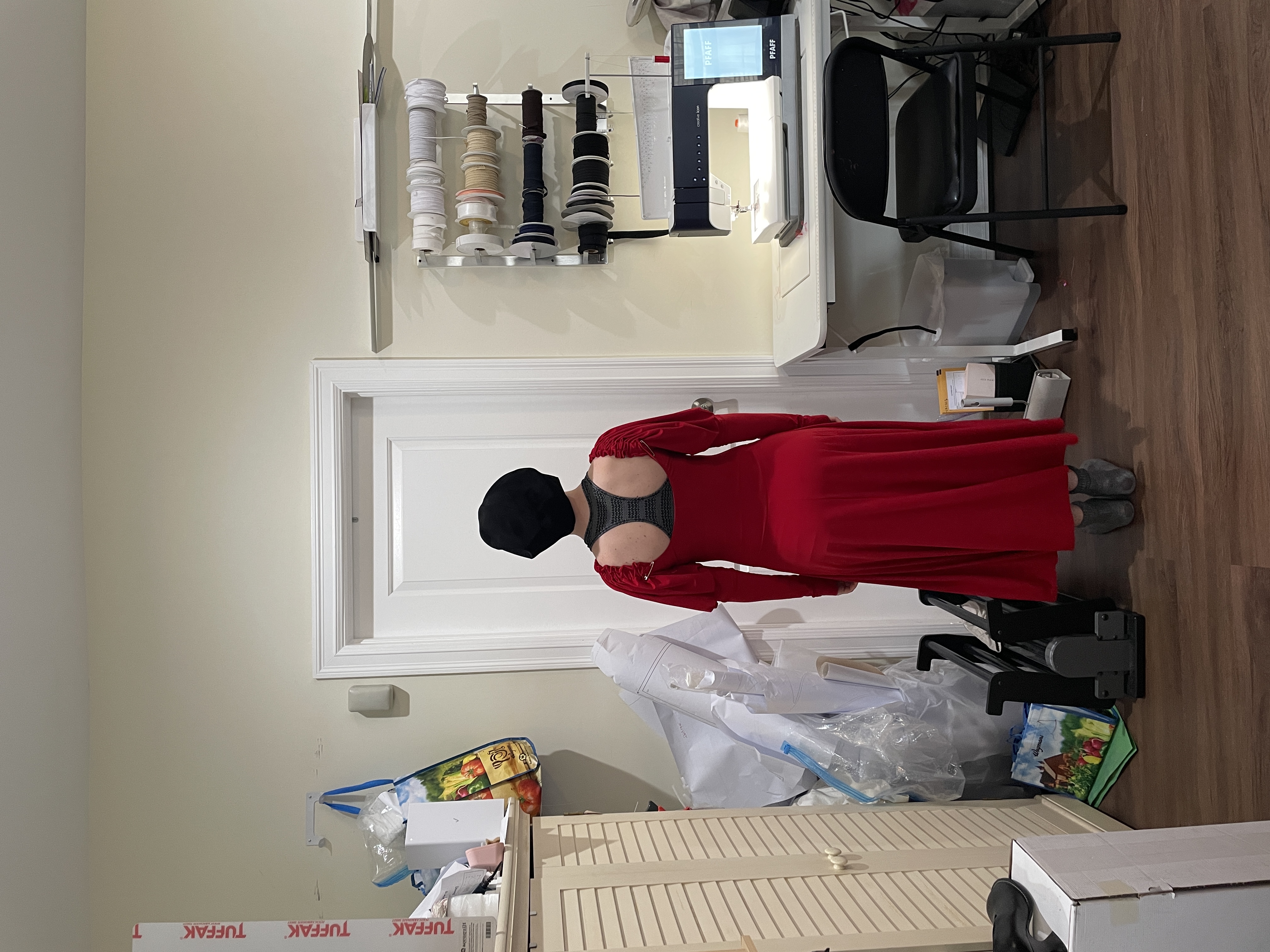
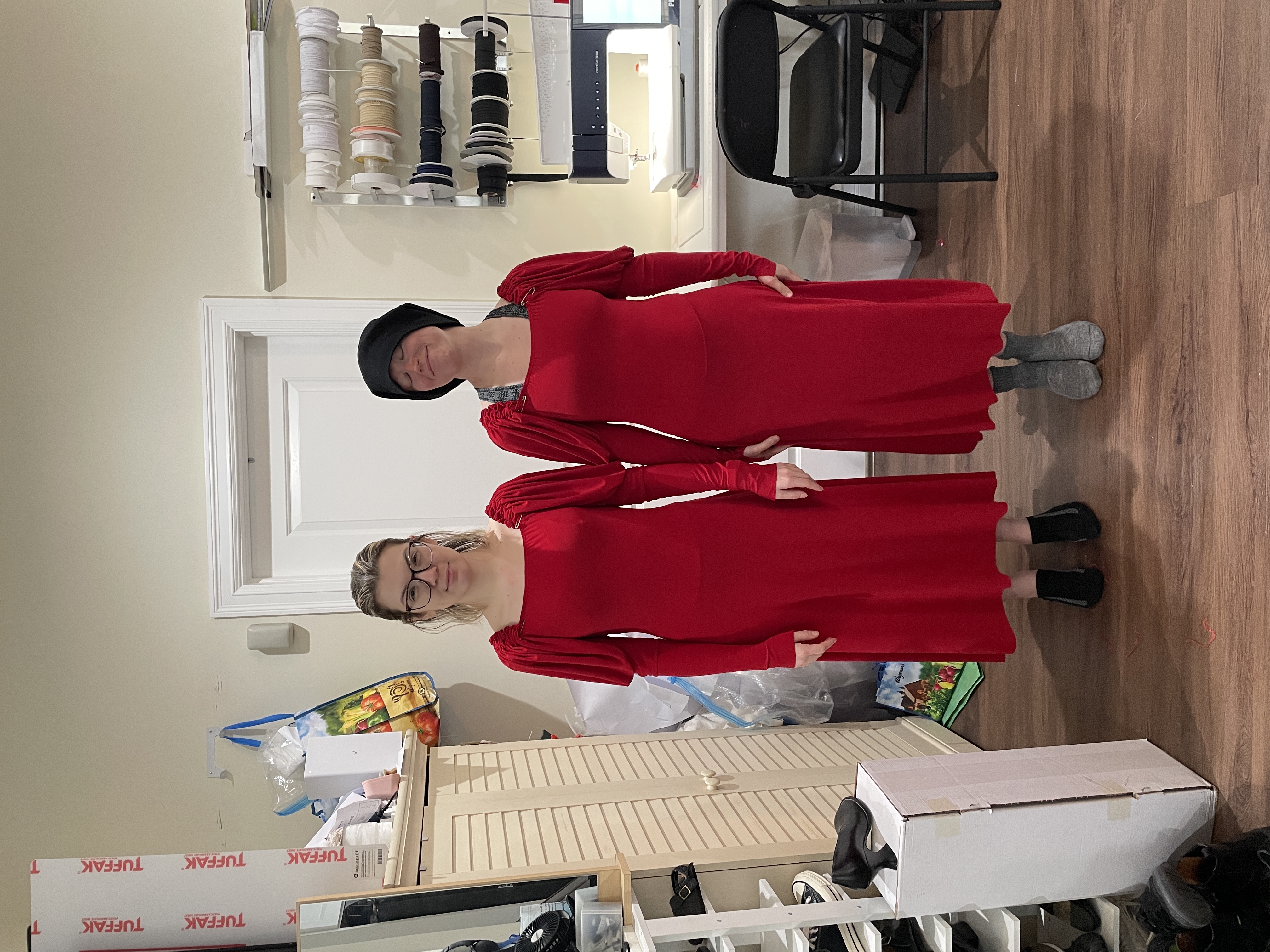
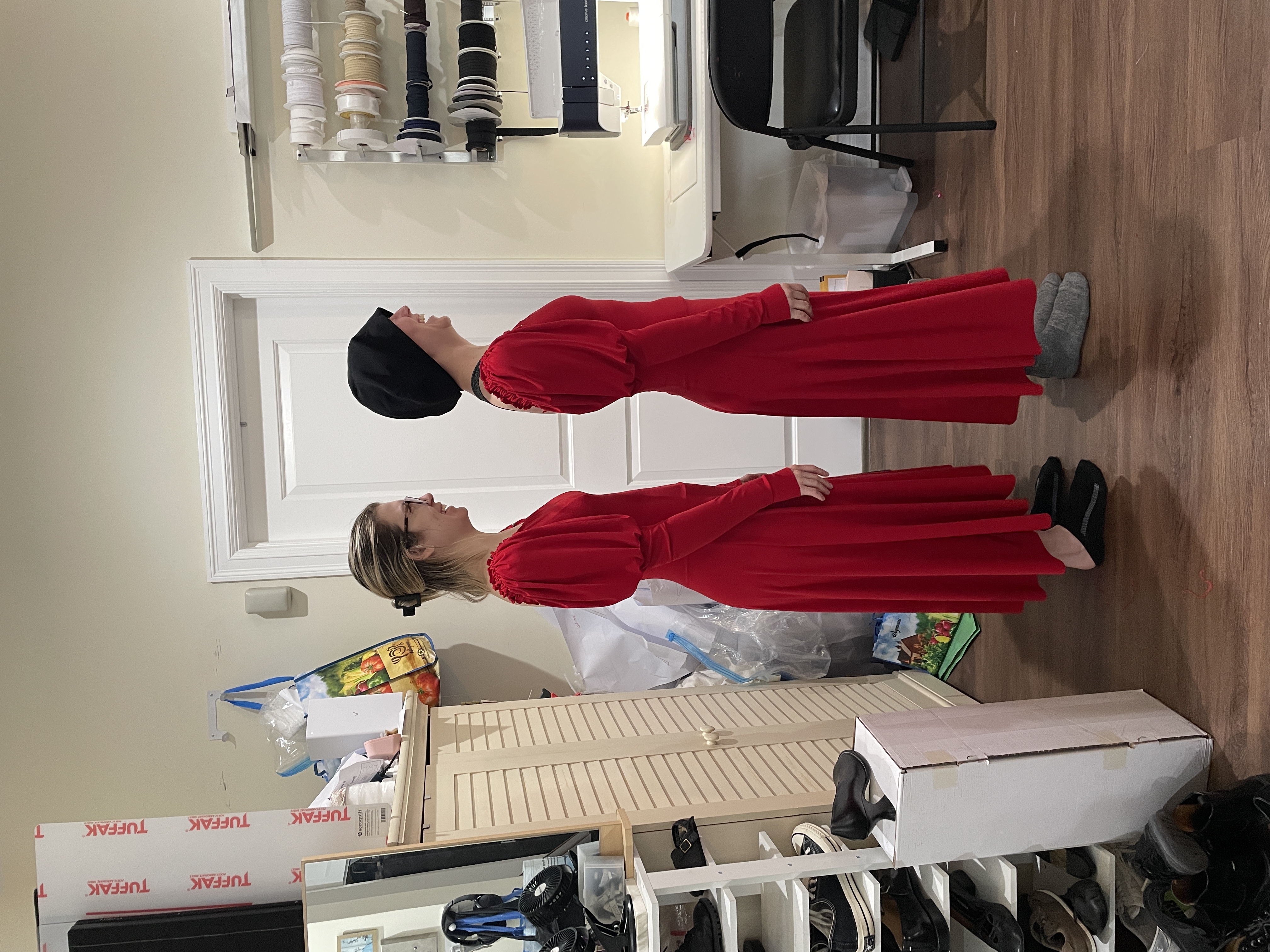
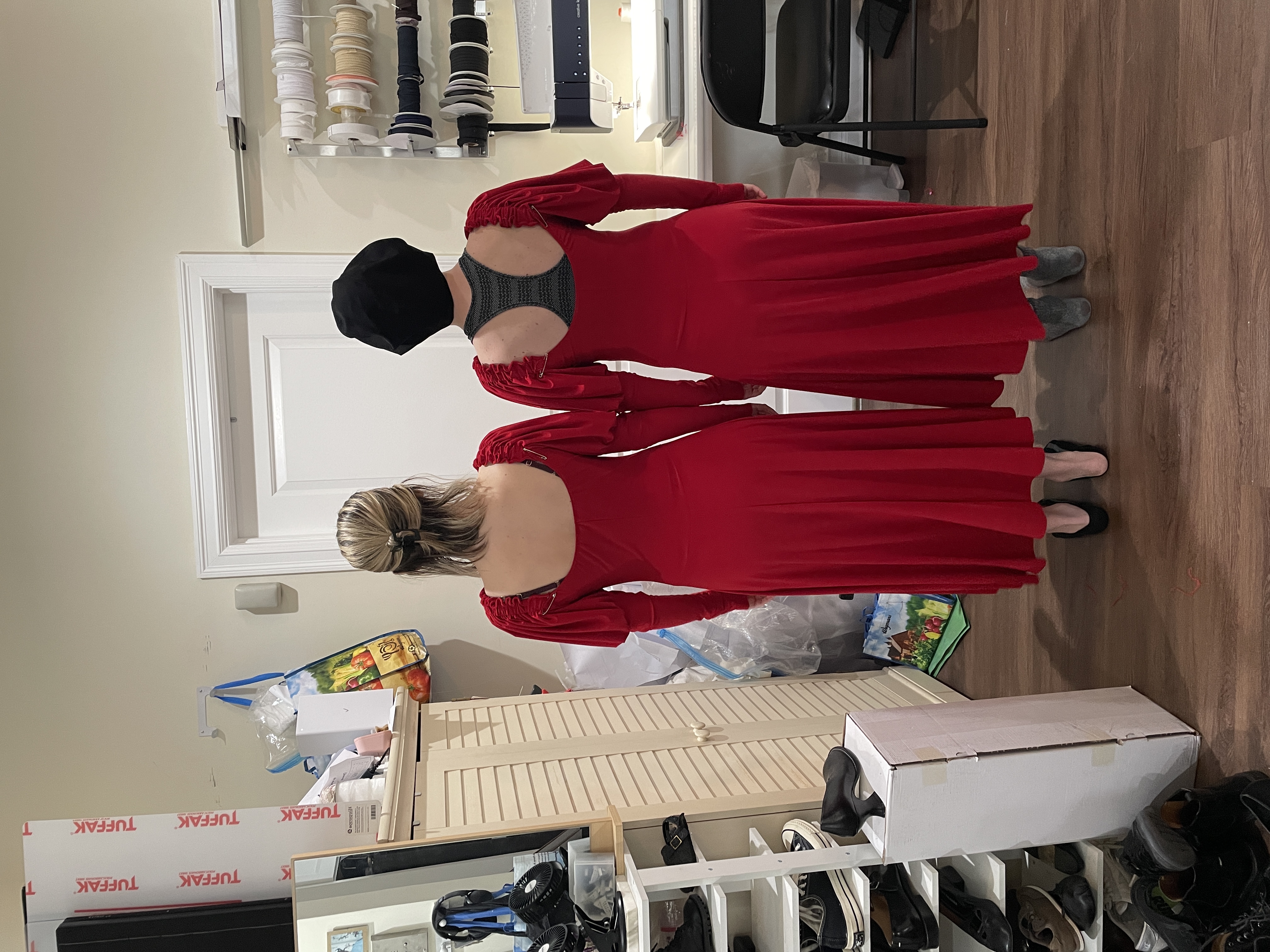
Shared pattern adjusted to individual form
Related Laboratory Investigations
Credits